



The Whole Truth: Preserving African American Family History in Full Color
23 September 2025 – Brandon A. Owens, Sr.
At African American Historical Research & Consulting (AAHRC), we are often contacted by families seeking help to document and preserve their histories. These projects frequently reveal stories of resilience, migration, and community-building, but they also bring to light complex truths, particularly when white or multiracial ancestors are part of the story. For many families, this raises a difficult but necessary question: What does it mean to tell the whole truth about a family’s history, even when some truths challenge long-held narratives or collective memory?
This question became especially important during a recent project for the Vickers-Washington family, a large African American family with roots in Alabama, South Carolina, and Ethiopia. As we built their family heritage website, the research uncovered not only stories of perseverance and success but also the intertwined legacies of white and black ancestry. For the Vickers-Washington family, confronting these complexities wasn’t about reconciliation or healing; it was about ensuring the historical record—both public and private—reflected the full reality of who they are and where they come from.
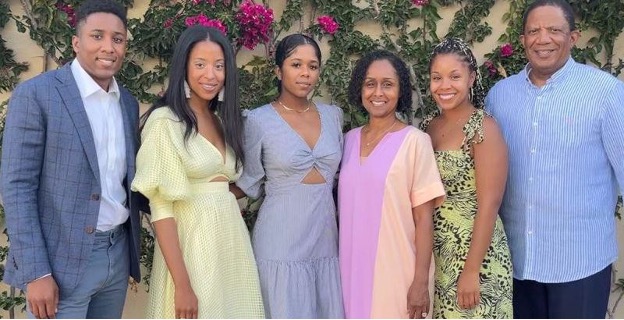
The Vickers-Washington family (left to right): Benjamin, Adrienne, Lydia, Janice, Lauren, and Dr. Selwyn Vickers. Image credit: Vickers-Washington Family Archives.
In many families, acknowledging white ancestors, especially those tied to slavery or other forms of racial exploitation, remains uncomfortable. Some enslavers raped enslaved women and produced children whose existence reveals both violence and survival. This history is neither silenced nor fully voiced; it lives in what I call quiet history—the spaces between pride and pain, between what is passed down and what is left unsaid. Families often choose compromise, telling a half-truth that preserves dignity while avoiding the wounds of exploitation. There is no single correct way to tell a family’s history. Each project should reflect the unique values, priorities, and limits of what families are prepared to share. These are deeply personal decisions, and as public historians, our role is not to impose one version of the story but to present the evidence with sensitivity and encourage dialogue about what “the whole truth” should look like.
For the Vickers-Washington family, telling their story meant commitment to inclusion, complexity, and depth. Parris Adams, among the first Black men in Alabama to register to vote in 1867, defied rigid racial categories when he married Adaline Collins in 1870. Collins, who, along with her siblings and parents, was listed as “white” in the 1850 Census, entered an illegal union under Alabama’s anti-miscegenation laws, which forbade marriage between persons of different races. Together, they identified as Black and raised children who identified as African American across multiple generations.
The Vickers-Washington website reflects their willingness to embrace inclusion and complexity. Archival records, photographs, oral histories, and genealogical findings were used to uncover and address contradictions in the family’s history. In a 2023 interview, Dr. John Vickers, Jr. recalled his white maternal great-grandmother, Safronia Alabama Adams—daughter of Parris and Adaline—whose blue eyes and presence at Decoration Days in the 1940s enriched rather than diminished the family’s story. Rather than avoiding difficult questions about relationships that crossed racial boundaries, the family and AAHRC worked together to contextualize these stories with honesty and respect, making their website a powerful resource for both relatives and the wider public.
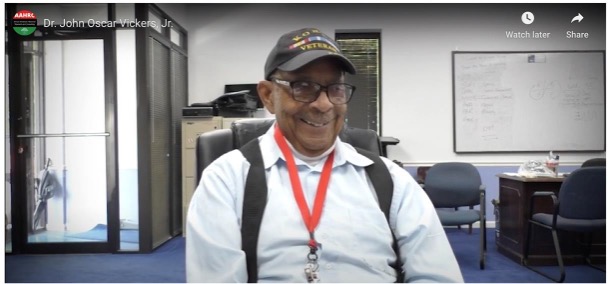
Dr. John O. Vickers, Jr., patriarch of the Vickers family, shares memories of white relatives. Photo credit: AAHRC & Vickers-Washington Family Archives.
This project also raised broader questions about how public historians engage with families when professional research standards and oral traditions collide. Many African American families have passed down stories through generations that emphasize survival and dignity while minimizing or omitting painful truths. These oral traditions are not false; they are shaped by the need to protect identity and pride in the face of historical erasure. However, archival documents, DNA evidence, and genealogical records often reveal layers of the past that were hidden, suppressed, or forgotten. As public historians, we must ask: How do we honor these oral traditions while also presenting documented truths that may challenge them?
One approach is to frame these narratives in conversation with each other rather than in conflict. Instead of declaring that a document proves or disproves an oral tradition, we can explore why family stories developed the way they did and what historical circumstances might have shaped those memories. For example, when families resist recognizing white ancestors, it is often due to a history of exploitation or violence. By contextualizing these histories, we can help families see that telling the whole truth does not diminish their story; it deepens it.
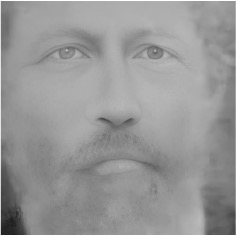
Parris Adams. Photo credit: AAHRC & Vickers-Washington Family Archives.
AAHRC often serves as a bridge between archival research and family memory. We begin projects by listening, asking families what stories matter most to them and what questions they hope to answer. As research unfolds, we share findings transparently, creating space for discussion, interpretation, and decision-making. In some cases, families choose to present their history with clear distinctions between oral tradition and documented records, allowing both to exist side by side. This collaborative process ensures the final product, whether a website, video, or historical marker, is not just factually accurate but also meaningful to those whose history it represents.
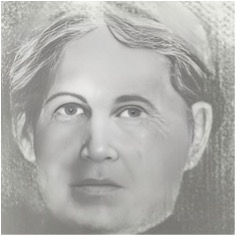
Adaline Collins Adams. Photo credit: AAHRC & Vickers-Washington Family Archives.
The Vickers-Washington project demonstrates how embracing racial complexity will not weaken a family’s narrative but strengthen it. By including Parris Adams, Adaline, and their white relatives, the family presented a history not only of perseverance but of truth—one that challenges the idea that African American genealogy must conform to a single, uncontaminated narrative of blackness. Instead, it reveals how race, identity, and family have intersected across generations in ways that are both painful and profound. Telling the whole truth is never easy; it requires courage from families and care from public historians. Yet when done with sensitivity, it creates a narrative that is richer, more layered, and deeply human, giving voice to every part of the story—even those once kept in silence.
~Brandon A. Owens, Sr., Ph.D., is the Chief Executive Officer and President of African American Historical Research & Consulting (AAHRC). Under his leadership, AAHRC won the 2024 NCPH Excellence in Consulting Award for exceptional contributions to public history through contract work and consulting.