



“I didn’t make him for you!”: horror and queer history in museum programming
30 October 2025 – Kevin Lukacs
Horror is a rich genre full of meaning for many people, including non-traditional museumgoers. A recent study showed that 35% of respondents felt museums were “not for people like me.” Even I, a museum professional, have often felt the same way. As the Curator of Education at the Daughters of the American Revolution (DAR) Museum from 2022 through mid-2025, I worked with the rest of the staff to diversify the museum’s audience in age, race, and lived experience. This essay focuses on one such approach—developing horror-themed programming and strategic marketing to have conversations about queer history.
The DAR Museum is a decorative arts museum in Washington, D.C., that tells the story of the American home. In 2022, as part of staff efforts to grow a more diverse audience through reinterpretation, programming, and marketing, I partnered with Sarah Kirspel, Coordinator of Engagement and Outreach, to create a Halloween program combining displays in the period rooms and a lecture on horror literature. As more historic sites engage with occult culture, the goal was to give a broad survey of historic themes including racist dogma pervading the works of H.P. Lovecraft and horror tropes into the modern era and the inherent queer composition of vampire literature.
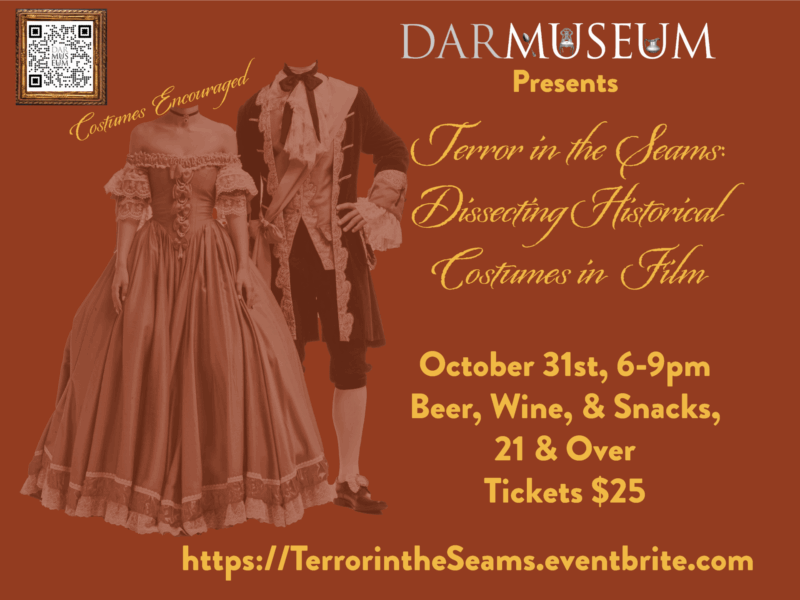
Sarah Kirspel created this digital flyer in 2024. The verb “dissecting” was intentionally used to create a more horror-coded program name that would appeal to our intended audience and possibly discourage our unintended audience. Costumes were encouraged. Image credit: Sarah Kirspel.
Of course, as Dr. Frank-N-Furter reminds Janet (“I didn’t make him for you!”) in queer classic The Rocky Horror Picture Show, not every experiment is meant for everyone. As we experimented with programming, senior staff cautioned us to be wary of some DAR audience members who were unsupportive of content outside of conservative history narratives, and it’s increasingly evident that we live in a culture where the existence and safety of queer people is controversial. Could we create a program that was valuable to a diverse audience while not upsetting the conservative membership that makes up much of the DAR?
We assumed few traditional DAR members would show up to the program, as they would be turned off by the word “horror.” There is a measurable cultural bias against horror as a genre, despite studies showing the popularity and benefits of the genre and the prevalence of horror icons in many counter-cultural movements. We wrote the content to touch upon themes of race and sexuality, while marketing the program in a way that would discourage potentially hostile audiences. The program name, “Terror in the Parlor: The Evolution of the American Horror Story,” and our social media marketing video created a whimsical tone with horror vibes to appeal to a more diverse target audience. We found that content that was overly whimsical at the top would quickly turn away our core audience but would see long-term engagement from new audiences.
The event largely attracted millennials who had never been to the museum before. A handful of DAR members attended, including the Curator General. The appearance of this DAR officer charged with representing the museum on the executive board raised the stakes, yet the post-program survey results were overwhelmingly positive. Some respondents wished the talk was longer and wanted more focus on cultural themes and impact. In a discussion with the museum director, the Curator General noted that she was uncomfortable with the queer history discussion but “people seemed to like it.” In fact, our attendees cheered at the inclusion of Anne Rice and Twilight. The experiment had been a success, opening a discussion involving race and queer history with little pushback. We had another successful Halloween program in 2023 on haunted portraits, “Terror in the Gallery.” It was well-received and the audience continued to grow.
In 2024, the Halloween program was co-presented with curator Alden O’Brien and her exhibit, Sewn in America, to look at fashion in period-piece horror films. I established the history and cultural relevance of the films, including the connection to queer history, and Alden analyzed the fashion. The focus on textiles and O’Brien’s popularity with DAR members was bound to attract more traditional audience members at a time when homophobic and anti-trans narratives were gaining prominence during the presidential election, coupled with an ongoing controversy within the DAR over a bylaws change that made it hypothetically easier for transwomen to join.
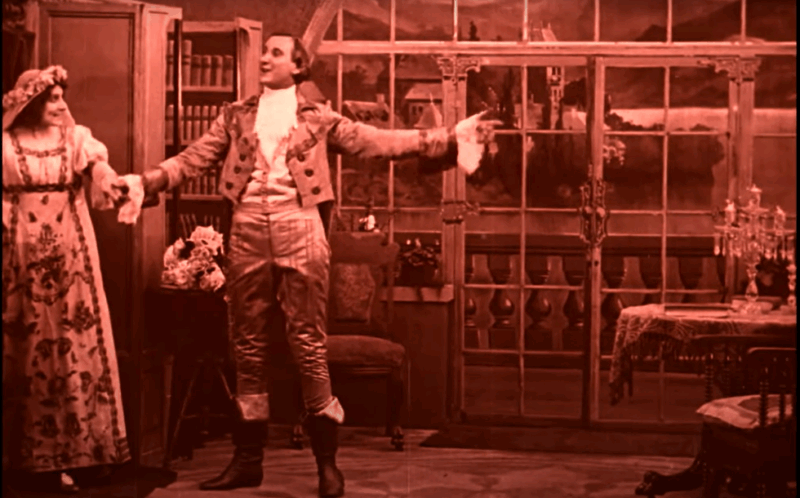
This screenshot from the 1910 “Frankenstein” film produced by Thomas Edison’s film company inspired the 2024 program. Our curator aptly described the scene’s costumes as “the 1910s trying to do the 1790s.” Image credit: Library of Congress.
O’Brien recommended an introduction to the talk that established the historical interconnectedness of queer history, horror, and history. I utilized primary source documentation and Google nGram to show the queer history of horror, from changing vocabulary, to Bram Stoker’s crush on Walt Whitman, to subsequent adaptations’ handling of Anne Rice’s queer romances. To reach the audience we wanted, our young educator team created a marketing video that would appeal to their peers using our unofficial skeleton mascot, Mrs. Living-History. The program attracted local influencers and media, selling out in record time.
That night, we discovered a significant portion of attendees had been to previous Halloween events at the museum, yet the audience was more diverse than ever. When we opened with the history of queerness in horror literature, a group of older white women began to murmur in the back and left in a huff. The post-program surveys were overwhelmingly positive, except for one comment reading: “why did he spend so much time talking about the gays?” My colleagues and I reflected on this survey response for days, ultimately deciding that this was a point of pride.
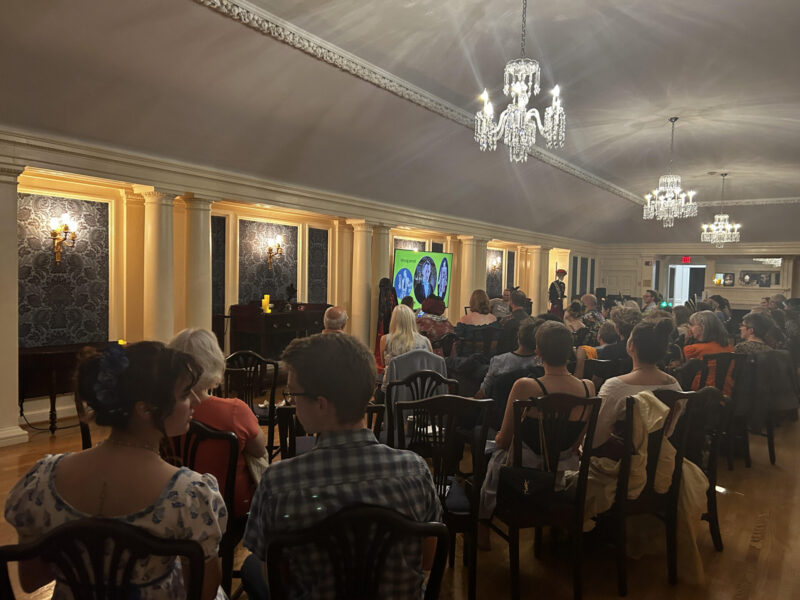
Many of the participants in the 2024 program came in costume. Over several years we developed a wonderful and diverse community of participants, all sharing their joy in horror. Photo credit: Caroline Lovell.
It’s far past time for public historians to stop catering to audiences who want culturally conservative, white-washed versions of history. I chafe at the thought that we ever tried to curtail our content for people who balk at Interview with the Vampire but idolize symbols of violence and white nationalism. More public history sites should engage in entertaining, appealing content, and I hope they use that content to engage in serious discussions around critical histories. Horror is fun, popular, and a gateway to meaningful interpretation.
By the summer of 2025, I and many of the museum staff, had left due to increasing hostility from the DAR administration towards our goals and programing. This will be detailed in the special labor issue of The Public Historian coming in 2026. Our programs were never just about history or horror or Halloween or fashion. They were about inclusion, community building, and having fun. Unfortunately, there are sites where that is still a radical and unwelcome thing to do.
~Kevin Lukacs is a public historian active in the Washington, D.C. area. He loves the Mothman, comic books, and being a power couple with his spouse. He’s fiercely passionate about public history, Michel-Rolph Trouillot, and bringing shenanigans and a sense of whimsy to museums.
Nicely written. And Happy Birthday! Walt
Thank you for this, Kevin! Well done!
Excellent article! Thank you for your efforts. This continual tension between the “old guard” and new audiences speaks to the ongoing relevance challenge of our history institutions, and your experience articulates that tension perfectly. It continues to be so confusing to me that sold-out events, new attendees, and enthusiasm for programming aren’t valid metrics in comparison to the opinions of an ever-growing minority in our historic spaces. I’m sorry you ultimately had to leave and know you’ll continue to do wonderful things.