


Why the K–12 classroom matters for public history
11 November 2026 – Donna Neary
Millions of K-12 students encounter public history every day in classrooms, but classroom teachers are seldom included in conversations about their impact on the field. K-12 educators interpret the past, teach students how to analyze primary sources, and connect national stories to our local communities, helping students understand why these stories matter. K-12 classrooms are essential sites of public history, and The Coolidge National Medal of Honor Heritage Center’s Teacher Fellowship illustrates how teachers are public historians guiding and embracing student agency.
The Fellowship took twenty K–12 teachers from Tennessee and Georgia to Gettysburg, Pennsylvania, during the second week of July to explore why place matters. This annual professional learning program prepares educators to develop place-based learning as a tool for teaching history, and, I argue, to serve as public historians in their classrooms. I and other Fellows listened to historians and battlefield guides interpret the landscape, then discussed learning experiences to help our students connect history with their lives.
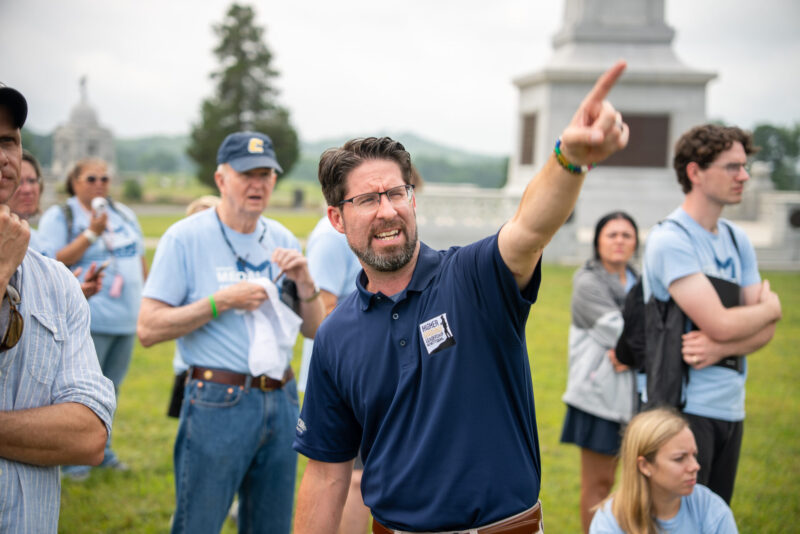
Britt Isenberg, Vice President of Community and Civic Engagement at Gettysburg Foundation and a Licensed Battlefield Guide, gives a tour to Coolidge National Medal of Honor Heritage Center Fellows at Gettysburg National Military Park in July 2026. Image credit: Coolidge National Medal of Honor Heritage Center, Chattanooga, TN. Creator credit: Cooper Hueblur.
Rooted in Chattanooga, birthplace of the Medal of Honor, the fellowship uses the Battle of Gettysburg as a case study in teaching public history. Teachers explore place-based learning and how civic engagement, critical thinking, and primary source analysis help students develop historical awareness and connect the past to their communities.
The Medal of Honor (MOH) recipients and the six character values associated with the MOH—courage, sacrifice, patriotism, citizenship, integrity, and commitment—are critical components of the Fellowship. Fellows research and write lessons centered on stories of valor and prepare evidence-based explorations of the deeds and outcomes of MOH recipients with activities and programming to guide teachers in translating scholarship into classroom experiences.

Coolidge Medal of Honor Heritage Center Teacher Fellows travel along the historic Gettysburg Railway, discussing their experiences and immersing themselves in the surrounding landscape. Image credit: Coolidge National Medal of Honor Heritage Center, Chattanooga, TN. Creator credit: Cooper Hueblur.
But how do the experiences of this fellowship position the work as public history? Fellows create lessons with a series of assignments to craft a narrative that brings stories of courage and sacrifice to life. Teacher Fellows agree to design a lesson based on Medal of Honor recipients as an outcome of the fellowship. Fellow Tarah Kemp, a K-5 culinary teacher in Chattanooga, used her knowledge of culture and food to explore the stories of valor and service of MOH recipients through a cookbook designed for students. Tarah celebrates food’s “remarkable ability to make history personal.” She designs culinary experiences that help students understand that behind every battle were individuals struggling to survive, families adapting to uncertainty, and communities finding creative ways to care for one another. By challenging students to work with rationed ingredients and substitute foods when supplies run out, she teaches resourcefulness, sacrifice, resilience, and the realities of daily life during times of conflict.
Fellow Haley Kidd teaches Medieval World History in Tennessee, a subject that takes students to times and places far removed from their own lives. Through her fellowship, including meeting a Medal of Honor recipient and exploring the historic landscape at Gettysburg, Haley began to see new ways to connect students to the past through artifacts, primary sources, personal stories, and community experts. Previously, she had viewed place-based learning as difficult to achieve when teaching distant historical periods and locations. Visiting Gettysburg helped her recognize that she could bring those connections into her classroom, even when visiting the historic places themselves was not possible. In her lesson, students explored how individuals demonstrated courage, sacrifice, integrity, commitment, patriotism, and citizenship by challenging the expectations of their times, and how their actions became part of broader national stories.
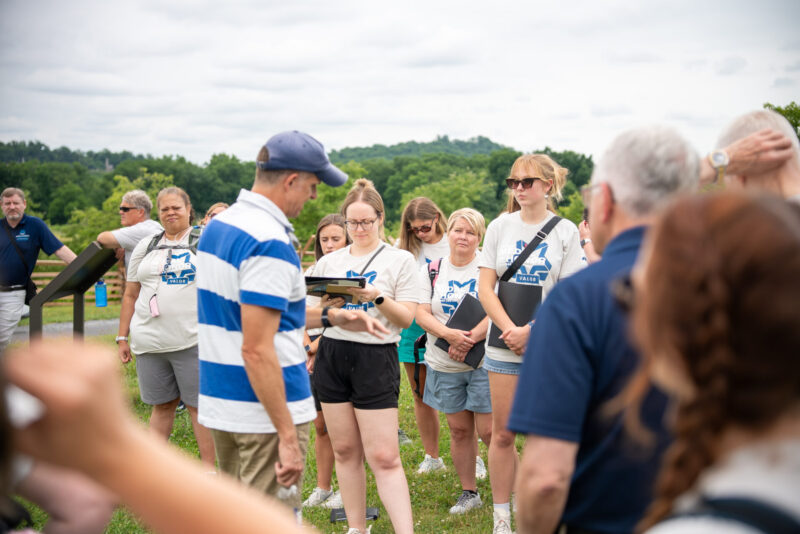
Coolidge National Medal of Honor Heritage Center Fellow Haley Kidd consults a map at the Gettysburg National Military Park in July 2026. Image credit: Coolidge National Medal of Honor Heritage Center, Chattanooga, TN. Creator credit: Cooper Hueblur.
The fellowship led me to reevaluate how public history supports my own teaching and research. My lesson focus was immigration, specifically the experiences that led Irish and German immigrants to serve in the Civil War and shape the memory of that conflict. The fellowship helped me see how teachers can connect the practices of public historians with the everyday work of teaching. Highlighting stories of service by immigrants resonated with the multilingual and first- and second-generation students that I teach. Public history guides students to see themselves in historical narratives and to model historical research methods. Educators identify primary sources, including images, documents, laws, and transcripts of court actions, relying on documents in the public domain, often from the Library of Congress and National Archives. Developing the critical thinking skills of students who explore these lessons, and their understanding of documentation and evidence, are critical goals of the Fellowship.
K-12 teachers interpret evidence, present multiple perspectives, connect local stories to national narratives, and invite students to ask questions about memory, identity, and citizenship. Positioning classrooms as powerful locations for exhibitions, programs, and conversations about public history increases the value of public education. When teachers model how to engage with historical resources, classrooms become active places where history is interpreted, debated, and connected to community life. Archives preserve documents; museums preserve artifacts; battlefields preserve landscapes. Teachers preserve understanding of those resources. Through the Fellowship, Tarah connected public history to food and daily life, Haley adapted place-based historical inquiry to distant times and places, and my immigration lesson connected students’ belonging to broader national narratives. Together, Fellows’ lessons demonstrate how K-12 teachers act as public historians, developing the critical thinking skills and civic dispositions students need to become informed, engaged citizens.
~Donna M. Neary is an educator, author, and public historian whose work centers on equity, language, and migration, advancing inclusive, student-centered learning for multilingual learners and English learners in K–12 public education. A Re-Imagining Migration Belonging Ecosystems Education Fellow, Coolidge National Medal of Honor Heritage Center Teacher Fellow, and 2018 Kentucky Outstanding Social Studies Teacher, she is recognized for developing innovative programs and curricula that expand belonging, agency, and academic success for immigrant-origin students.