



Building a national park through advocacy: the Blackwell School National Historic Site
16 December 2025 – Cristóbal López
advocacy groups, education, historic preservation, National Park Service, local history, National Register of Historic Places
The National Park Service’s ability to interpret the breadth of American history that is reflected in its more than four hundred sites is fragile. The fate of one of these, the Blackwell School National Historic Site, serves as an example of how quickly gains made in this effort can be undone. Yet, the case also shows how direct and indirect advocacy can be a vital tool for protecting national historic sites after they are established.
From 1909 until 1965, the Blackwell School served as a segregated school for Mexican American students in Marfa, Texas. In 2006, alumni formed the Blackwell School Alliance to save the two remaining buildings from demolition. Over the next decade, their preservation efforts elevated the Blackwell School from a local story to national one and secured its status on the National Register of Historic Places in 2019. That same year, Gretel Enck, then president of the Blackwell School Alliance, met with US Representative Will Hurd, the congressman representing the area, and pitched the idea of establishing the Blackwell School as a national park site. Representative Hurd encouraged her to connect with the National Parks Conservation Association (NPCA).
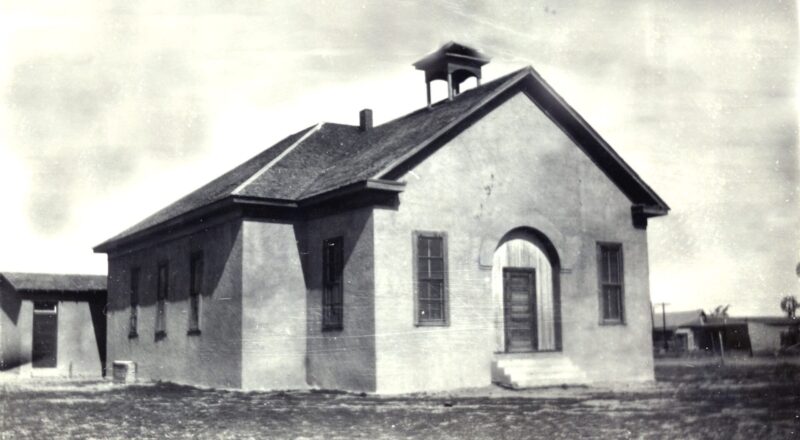
The Blackwell School in Marfa, Texas, during the 1920s. The schoolhouse, initially named the Ward School, was renamed the Blackwell School in the 1940s after the school’s principal, Jesse Blackwell. Photo credit: Marfa and Presidio County Museum.
Founded in 1919 as a non-partisan and non-governmental organization, the NPCA advocates for the protection and enhancement of national parks across the country. Within the last decade, the association has led efforts to expand the stories told within the national park system, and played key roles in establishing the Stonewall National Monument and Amache National Historic Site.
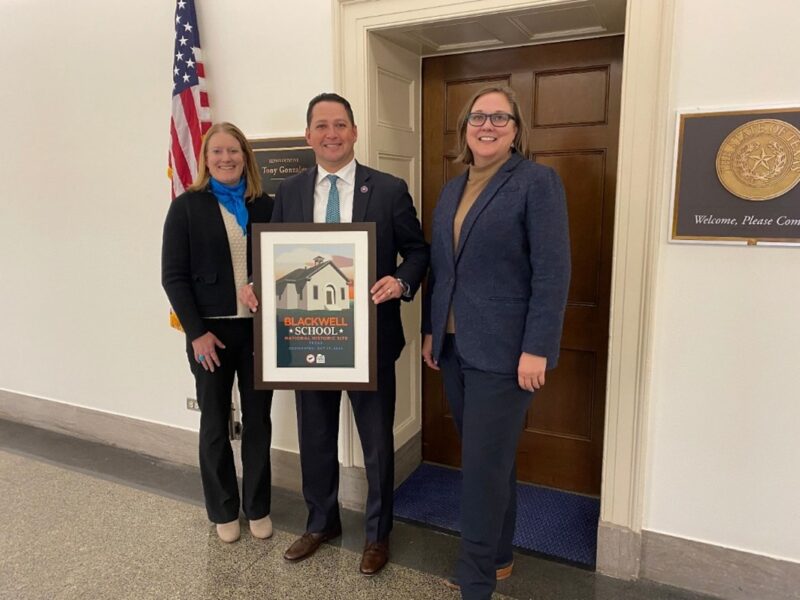
From left to right: Cary Dupuy, NPCA Texas Regional Director; US Representative Tony Gonzales; and Gretel Enck, then president of the Blackwell School Alliance, in Washington DC., 2022. Photo credit: NPCA.
In 2020, the Blackwell School Alliance partnered with NPCA to advocate for the inclusion of the Blackwell School into the National Park Service system. This effort included both direct advocacy, such as meeting with members of Congress and legislative staff to argue for introducing a bill to establish the site, and indirect advocacy, which included working with the local community to generate support in Marfa. As a result of both advocacy campaigns, Representative Tony Gonzales introduced the Blackwell School National Historic Site Act the following year.
I joined NPCA as an intern during the summer of 2022, while I was completing my MA in history at the University of Texas at San Antonio. During my internship, I assisted in facilitating a community meeting in Marfa to gather input for the site’s potential designation. Community members shared their excitement about the prospect of Marfa becoming home to a new national park site, and their concerns about how increased tourism might strain public infrastructure––a reminder of the importance of seeking community input in public history.
On October 17, 2022, President Joe Biden signed the Blackwell School National Historic Site Act into law, designating Blackwell School National Historic Site as the 430th unit of the NPS. However, the site would not formally be established until July 17, 2024. This two-year gap reflected the behind-the-scenes work required to transfer ownership of the school from Marfa Independent School District to the Department of the Interior (DOI)––a step required before the NPS could take on stewardship of the school. During this time, I was hired at NPCA as a full-time staff member to assist with the site’s transition.
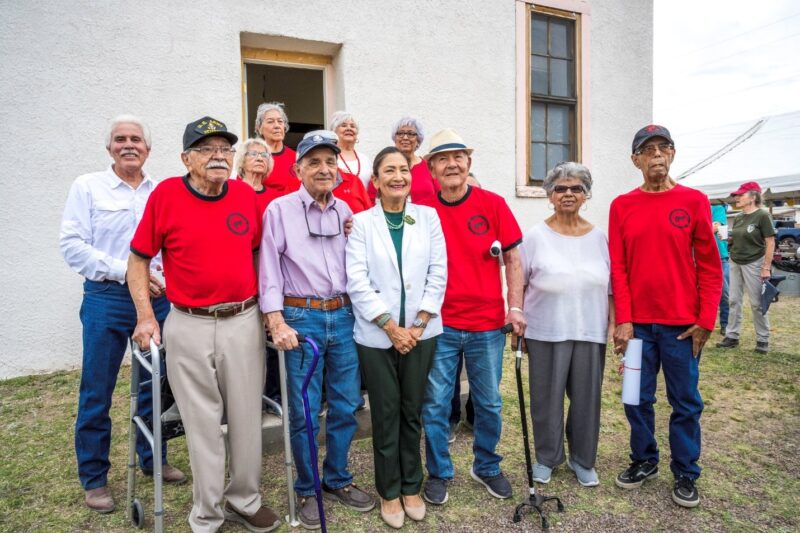
Then Secretary of the Interior Deb Haaland stands between Blackwell School alumni during the establishment celebration in September 2024. Photo credit: NPCA.
Following the DOI’s acquisition of the school, Deb Haaland, then Secretary of the Interior, and Chuck Sams, then Director of the NPS, joined the Marfa community for a celebration to commemorate this milestone. In September 2024, the future of Blackwell School seemed bright.
Since then, however, policies and executive orders imposed by the Trump administration have stalled Blackwell School’s progress. In January 2025, the administration enacted a hiring freeze, which has hindered the site’s ability to hire full-time staff, limiting its hours of operation to weekends. In addition, the staff cannot produce the necessary management documents, such as a Comprehensive Interpretive Plan that would provide guidelines for new volunteer programs, tours, and museum exhibitions.
During National Park Advocacy Week in April 2025, the Blackwell School Alliance joined NPCA to call on Congress to support the national park they helped establish. Their presence on Capitol Hill showed how community voices continue to shape the future of the site after its establishment. A few months later, during the House Interior Appropriations Committee markups period, members of Congress recognized that single superintendents across the NPS were “managing multiple national park units across the country, including the Blackwell School National Historic Site,” and requested information from NPS on the management of these parks. This small victory can be attributed to persistent direct and indirect advocacy efforts.
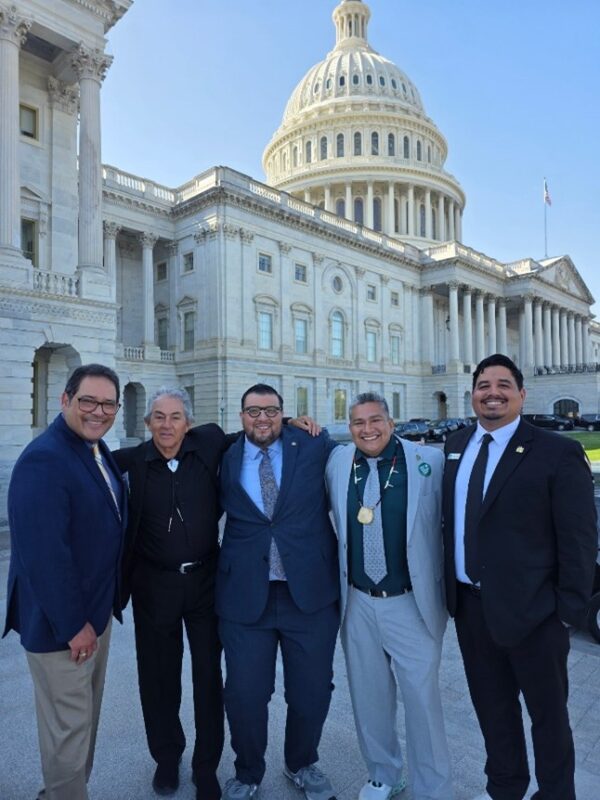
From left to right: David Vela, member of NPCA board of directors and former acting director of the NPS; John Lujan, retired NPS Superintendent and vice-president of the Blackwell School Alliance; Daniel Hernendez, president of the Blackwell School Alliance; Richard Diaz, NPCA Texas Regional Council Member; Cristóbal López, NPCA Texas Program Manager, in 2025, outside the US Capitol in Washington DC. Photo credit: NPCA.
At NPCA, we’re often asked what can be done to ensure national park sites like Blackwell School are protected and have adequate resources. Our answer is always the same: advocate!
Advocacy can take many forms, such as calling or writing your member of Congress, signing on to NPCA’s Action Alerts, or even joining NPCA during our National Park Advocacy Week in Washington DC. All such forms of advocacy can make a difference.
The successes and challenges of Blackwell School National Historic Site highlight the necessity for advocacy in public history. If national parks are to remain our nation’s greatest storytellers, we must continue to advocate on their behalf. While the road ahead may seem challenging, Blackwell School alumni who used their voices to uplift the Blackwell School into the fabric of American history remind us that change happens when we advocate.
About the Author:
~Cristóbal López is the Texas Program Manager for the National Parks Conservation Association. Cristobal earned his MA in History in 2022 from UT San Antonio, and his BA in history from Tarleton State University.