



Carving space for AAPI public historians
09 June 2026 – Susan Huynh
What do you do when you find yourself alone in the room? That’s how I typically find myself in the public history field as an Asian American woman. When I first entered the field as an interpreter at a historic site, I didn’t realize what a toll that would have on me over time. I experienced racist comments, microaggressions, and even had my racial identity stripped from me. While these experiences are difficult to face, it wasn’t my first (nor will it be the last) time experiencing racism in a public-facing role. Unfortunately, this is a reality many public historians of color experience.
But one way to address these unfortunate truths is to have a supportive network and community. The start of my public history network was almost made up entirely of white women. It didn’t surprise me given my location in North Carolina and the composition of the public history workforce. I am thankful for my close group of supporters and mentors, but I knew they couldn’t truly understand my experience of being a minority or my constant feeling of not belonging in the field.
I continued to navigate those feelings while attending the museum studies master’s program at the University of North Carolina at Greensboro (UNCG). When I decided to attend graduate school, I promised myself I would incorporate Asian American and Pacific Islander (AAPI) perspectives into projects or papers at every opportunity. During my first semester, I had my first chance to do so as a final project for a digital history course. I was inspired by North Carolina State University Libraries’ Asian and Asian American Community Historical Timeline to develop a digital exhibit examining the everyday lives of AAPI students at UNCG. However, when I met with my professor, Erin Lawrimore, to discuss my idea, she told me there simply wasn’t enough archival material to do this project.
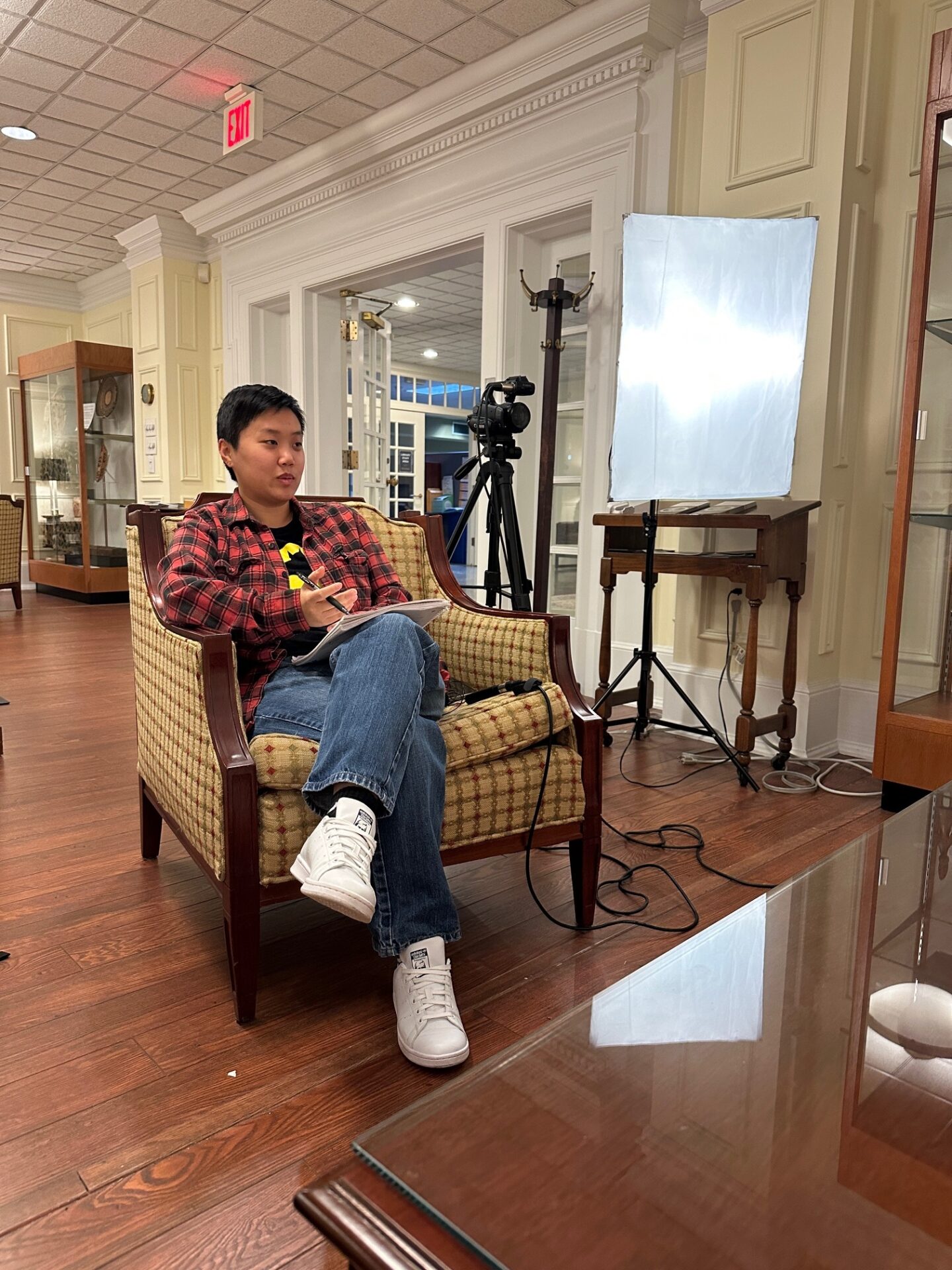
Susan conducted her oral history interviews in UNCG SCUA’s Hodges Reading Room, Greensboro, NC. Photo courtesy of Susan Huynh.
What do you do when there aren’t enough primary sources for a history project? You create your own! I pivoted by conducting an oral history project that examined the experiences of UNCG’s AAPI community. Lawrimore connected me with Scott Hinshaw, an archivist and oral historian, to add the oral histories I conducted into UNCG’s Special Collections and University Archives’ (SCUA) Institutional Memory Collection. It preserves faculty, staff, students, and alumni’s experiences at UNCG. This project was the start of a major project I would complete throughout graduate school, where I learned about exhibition design, forging community partnerships, and project management.
A major concern I had with my project was that students would be hesitant to talk with me. However, I had the opposite problem. I had more students who wanted to share their stories with me than I had the capacity to handle! I conducted and processed six oral history interviews in about three months for my digital history project. This experience made me realize two things. First, AAPI students wanted a platform to talk about their UNCG experience. Second, I could carve out space for myself where I was no longer alone. As a result of this project, opportunities arose for others to benefit from it and feel seen, too.
Seeking a work environment without the dearth of AAPI public historians that I noticed in North Carolina, I sought an internship at the Wing Luke Museum in Seattle, Washington. There, I finally experienced what it was like to be part of a majority. With nearly every staff member at the Wing Luke Museum as part of the AAPI community, I felt like I belonged for the first time in my professional career. My internship there was informative and restorative. I learned how powerful it was to be seen and deeply understood through shared experiences. Most importantly, I left Seattle knowing that there is space for me in the public history field.
When I returned to North Carolina, I had a renewed sense of purpose and expanded my digital history project into my capstone project. I interviewed additional AAPI community members at UNCG. Based on their feedback, I developed a physical exhibition and hosted a panel discussion with them. This was how my project, Hear Us, See Us: Stories from the Asians and Asian Americans in the UNCG Community, was created. It was a direct result of our desire for the greater UNCG community to hear our stories and see more AAPI representation. When Hear Us, See Us was completed, I contributed 14 interviews to UNCG’s SCUA’s Institutional Memory Collection.
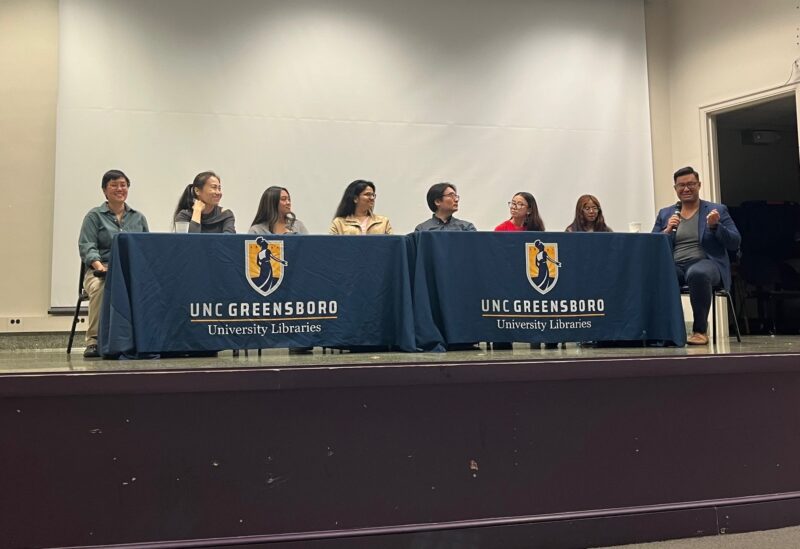
“Hear Us, See Us” panel event at the University of North Carolina at Greensboro on April 22, 2025. Photo credit: Susan Huynh.
I presented Hear Us, See Us at a poster session and attended the Asian American and Pacific Islander Working Group session at NCPH in 2025. I participated in discussions addressing the same challenges I experienced. The NCPH AAPI Working Group focuses on increasing AAPI public historians’ presence in the field through networking and community building. I collaborated closely with the working group to expand their AAPI historians and organizations directories to help build a network geared towards connecting AAPI communities throughout the United States and Canada. Through this project, I learned about many grassroots AAPI public projects that push to have shared history recognized. It was empowering to see collective efforts to raise awareness about AAPI history.
For most of my public history journey, I felt I didn’t have a place in the field because I rarely saw people who looked like me doing public history work. But I have learned that there are established communities beyond my own experience of isolation. I found it by traveling to prominent AAPI communities and connecting with like-minded AAPI advocates. Most importantly, I discovered that by continuing to seek out spaces for the AAPI community, which includes myself, I can be the one to open doors for incoming AAPI public historians. It is only with more supportive networks and spaces that we can continue to welcome more AAPI public historians into the field, and they don’t have to be alone in a room.
~Susan Huynh is a graduate of the Museum Studies Masters program at the University of North Carolina at Greensboro. Her research interests includes AAPI history in the United States, especially the American South, and women’s and gender history. Susan is currently a historical interpreter at House in the Horseshoe State Historic Site.
Susan, thank you for sharing your story! As someone working in public history, I was deeply inspired by your determination to create space when the sources, networks, and representation you needed didn’t seem to exist. Your decision to build that space yourself through oral history, community partnerships, and advocacy is a powerful reminder of what public history can do at its best, help people feel seen, heard, and valued.
I was especially moved by your reflection on finding community and realizing that you didn’t have to remain alone in the room. The work you’ve done through Hear Us, See Us and your efforts with the NCPH AAPI Working Group are opening doors for others and ensuring that future public historians can see themselves reflected in the field!