



Trump’s Attacks on National Parks is an Attack on Public History
04 December 2025 – Victoria Villaseñor
Within the first few months of Donald Trump’s second presidential term, he and the Department of Government Efficiency (DOGE) waged a war on national parks. Through massive staff layoffs, drastic funding cuts, and attempts to censor interpretation, this administration is undermining public access to our lands and our nation’s diverse histories. As a public historian, I am deeply concerned about the precedent the Trump Administration is setting in relation to the protection and dissemination of our nation’s natural and cultural resources. How will national parks recover from these impacts, and how will they be managed in years to come?
Public History at the core of the National Park Service
When President Woodrow Wilson signed the Organic Act in 1916, he established the National Park Service (NPS) to “conserve the scenery and the natural and historic objects and the wildlife therein” while ensuring their enjoyment for “future generations.” This mission closely aligns with the principles of public history: making history and storytelling accessible, equitable, and enduring.
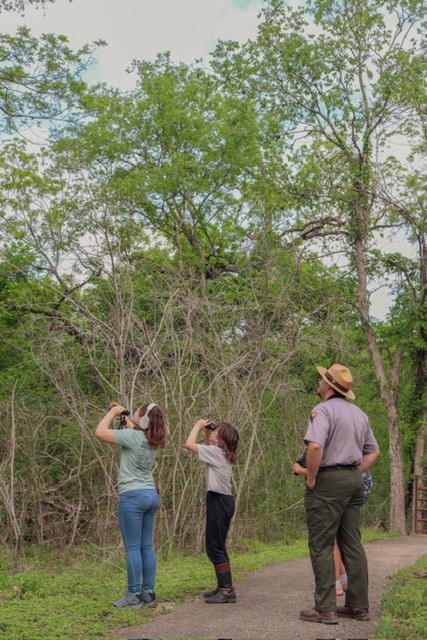
Bird watching at Mission San Juan. Photo courtesy of Andrew Shirey.
Over the past century, the NPS has embraced its role in public education, facilitating deeper engagement with seldom-told stories of American history. Park sites have served as neutral, inclusive spaces for discovery and reflection. The fair and unbiased interpretations of history and land preservation have expanded our understanding of the diverse groups, events, and legacies that have shaped this country. Additionally, national parks are one of the few free institutions of history and learning outside of the classroom; more than three hundred of the 433 national park sites are fee-free.
Equally important, the NPS has long produced vital historiography. Providing resources for academics, educators, and community partners, these contributions have immensely supported our understanding of local history. For example, at San Antonio Missions National Historical Park (SAAN)–my local park–the cultural resource and interpretation teams have collaborated diligently with community members and Indigenous groups who can trace their lineage to the first mission inhabitants. SAAN staff have conducted oral histories, preserved primary sources, created accessible repositories for these resources, and they actively incorporate these groups’ histories into their interpretive plan and public events.
Attacking parks, therefore, is not just a policy decision–it is an attack on equitable and accessible storytelling.
The Human Cost of Staff Cuts
In February, DOGE ordered the widespread firing of more than 1,000 national park employees. This encompassed interpretation staff, law enforcement, scientists, archivists, and others filling key roles essential for the maintenance and preservation of national parks’ land and history. After public outrage forced partial reinstatement, the administration quietly initiated a second wave of cuts in May, targeting an additional 1,500 staff.
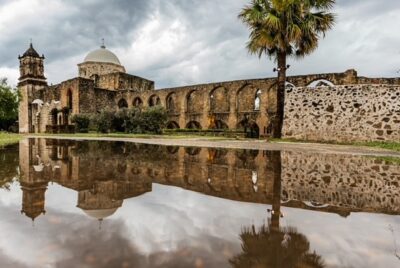
Mission San José. Photo courtesy of Andrew Shirey.
At SAAN, the impact was almost immediate. During this time, I worked for the park’s friends’ group–Mission Heritage Partners–and witnessed firsthand how these cuts affected our rangers and park operations. Staff shortages reduced public programming and limited visitor services. Uncertainty grew in the local communities that depend on these mission sites for education, recreation, and cultural continuity. SAAN is a unique park site because each mission site is an active parish and gathering space. The park and the community rely on interpreters, curators, and historians to preserve living traditions while telling complex stories of colonization and cultural survival. These roles are now especially vulnerable.
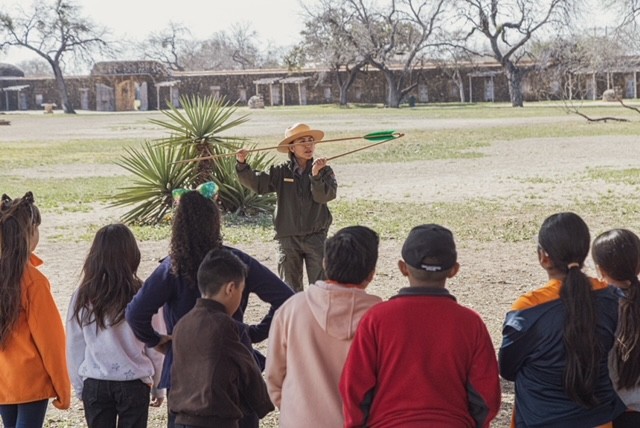
Education program at San Antonio Missions National Historic Park. Photo courtesy of Andrew Shirey.
Beyond forced layoffs, morale among rangers is plummeting. Many who once considered the NPS their dream career are leaving due to overwhelming workloads and diminished support. According to the National Parks Conservation Association (NPCA), DOGE layoffs combined with resignations have led to a 24% decrease in NPS staffing across the NPS.
The recent 41-day government shutdown–the longest shutdown in American history–added fuel to the growing fire of park staff discontent. Park staff who waited in limbo further contemplated their loyalty to the park service as their jobs were being used as political pawns.
Furthermore, the administration’s proposed $900 million budget cut, which was introduced in May, could reduce NPS funding by 75%. It would effectively wipe out the budgets and staffing of at least 350 national park sites–a majority of which are smaller historic sites with already limited staff and resources. Without adequate staff, operations such as routine maintenance will be unsustainable. Uncontrolled visitation, unchecked damage, and neglect of fragile historical structures are inevitable.
Rewriting the Story: Censorship in Parks
In June 2025, the NPS ordered all park sites to post new signage at all sites inviting visitors to flag “any signs or other information that are negative about either past or living Americans.” This directive followed Trump’s March 27th executive order, “Restoring Truth and Sanity to American History”. On the surface, this may seem like harmless feedback. In practice, however, these signs could walk back the headway national parks have made in their critical interpretation of widely accepted historical narratives. At SAAN, this work has produced critical analysis of Spanish colonization and its enduring effects on Indigenous communities. In collaboration with Indigenous groups, local universities, and other experts, SAAN brings forth unsettling stories of forced cultural conversion of Indigenous communities’ religion, language, and customs. Further, the establishment of this site as a national park forced many descendants off the properties they inherited from their indigenous ancestors. These experiences have created generational trauma which SAAN has been working to counteract through collaboration and presenting a more inclusive history. Under this new policy, such efforts could cease, and these complex narratives could be erased.
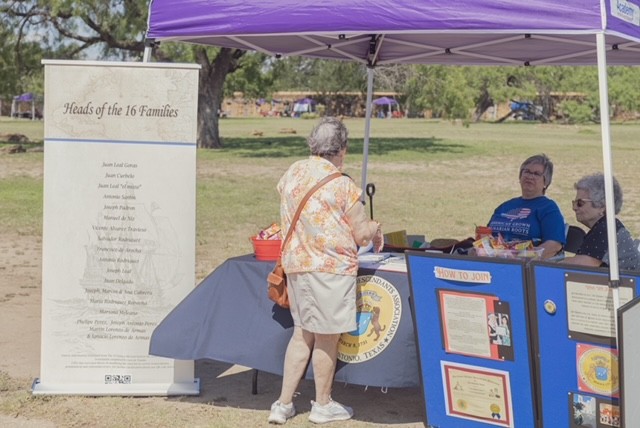
History & Genealogy Day at San Antonio Missions National Historical Park. Photo courtesy of Andrew Shirey.
It is also unknown exactly how parks would be made to respond to any requests to change their interpretative signage. Parks may be forced to divert already scarce funds to revise signage, or staff may self-censor out of fear. Either way, this tactic threatens to silence diverse perspectives may weaken public trust.
Why this Matters
If these attacks on the National Park Service persist, the damage may be irreversible. The NPS is one of the largest public history institutions in the United States, and continued attacks on storytelling will dismantle the NPS’s integrity and longevity.
At a time when public education and open discourse face unprecedented challenges, national parks remain vital, grounded spaces of democratic learning and dialogue. To weaken them is to weaken reliable historiography. As historians, educators, and citizens, we must ask: How can we help? The NPCA is a great place to start. NPCA covers all park-related issues nationally and locally. NPCA provides forms at the end of each news story which readers can fill out and send to the associated representative depending on which park or region is being covered.
Additionally, some parks have dedicated friends’ groups who conduct advocacy and fundraising on behalf of their park and can provide resources for the public to share stories and donate. For instance, Mission Heritage Partners is the official friends’ group of San Antonio Missions National Historical Park and makes up a significant amount of the park’s annual funding. With all the aforementioned challenges, organizations like MHP will have to supplement more funds than usual for their parks.
Preserving national parks mean more than protecting land and buildings–it means safeguarding the stories, truths, and voices that make up the fabric of our country’s history.
Further reading:
The Dismantling of Our National Parks and Public Lands · National Parks Conservation Association
NPCA created a comprehensive list of all executive orders issued this year to erase DEI initiatives in parks.
~Victoria Villaseñor is a public historian from San Antonio, Texas, and currently serves on the National Parks Conservation Association’s Next Generation Advisory Council.
Handles: Instagram – @vvsenor, Facebook and LinkedIn – Victoria Villaseñor