



What counts as success? Public history advocacy in Lancaster County, Pennsylvania
09 September 2026 – Eric Schubert and Evan Hanzelman
Does historic preservation in Lancaster County, Pennsylvania, and across the United States succeed? The answer depends on how success is defined. If preservation is measured only by whether every historic building survives, then it will always fall short. For public historians and preservation advocates, however, success includes building public awareness, creating long-term protections, and laying the groundwork for future action. Because different communities and stakeholders define success differently, public historians should look beyond whether preservation efforts simply succeed or fail and instead consider how they strengthen a community’s ability to recognize, value, and protect its historic places over time. Preservation’s greatest achievements are measured not only by the number of buildings saved, but also by the institutions, policies, public engagement, and stewardship that make future preservation possible.
Much of preservation work happens before the public ever notices, through zoning hearings, deed restrictions, municipal planning discussions, research, and ongoing relationship-building between property owners and preservation professionals. When residents engage with local organizations through events, newsletters, or consultations, preservation becomes part of civic life, rather than an external intervention. Community trust is central. Equally important is early documentation. Many preservation challenges escalate because historic resources are not identified until they are already threatened. Surveys, research, and public engagement help identify at-risk places before crisis moments occur.
Preservation success may be defined differently by different communities and stakeholders. A property owner may prioritize financial feasibility, a municipal official economic development, and preservation advocates historical integrity. These priorities often overlap but do not always align. As a result, preservation success takes many forms. It may mean saving a building, securing a preservation easement, educating the public, or building partnerships that make future preservation possible. Although these outcomes are less visible than a ribbon-cutting, they are essential to long-term stewardship.
Preservationists are also often asked to think in absolutes — a building is either saved or demolished, a campaign succeeds or fails, a zoning effort is approved or denied. In practice, preservation work is far more complex, shaped by competing priorities, limited resources, and changing political conditions. In Lancaster County, Pennsylvania, preservationists have spent decades operating in a landscape of recurring challenges. Historic buildings are demolished or significantly altered, developers often move faster than advocacy efforts, funding is limited, and municipal priorities shift. Yet, preservation work continues despite these pressures, raising the central question, what actually counts as success?
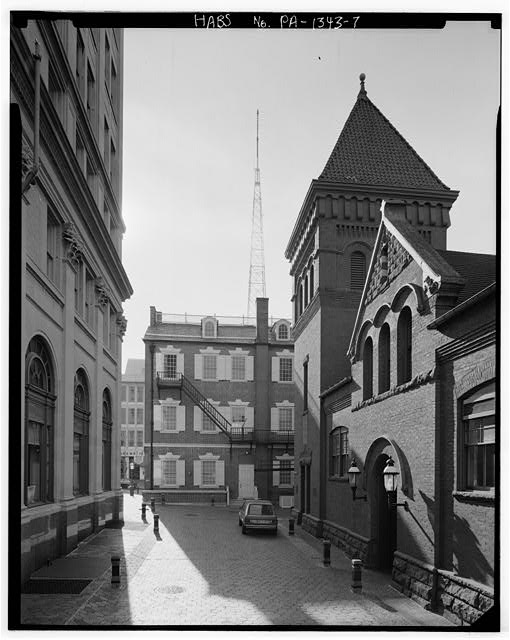
Historic American Buildings Survey. Old City Hall, Penn Square, Lancaster, Lancaster County, Pennsylvania (HABS PA-1343). Photograph, summer 1981. Photo credit: Library of Congress Prints and Photographs Division.
Old City Hall in Lancaster has long served as a landmark in the county’s historic built environment. Documentation through the Historic American Buildings Survey reflects the broader preservation efforts that help record and protect significant places for future generations.
Since 1966, the Historic Preservation Trust of Lancaster County especially has worked to answer this question and preserve the county’s historic and architectural heritage through advocacy, education, easements, and direct intervention. The organization emerged during Lancaster’s urban renewal era, a period of mid-20th century redevelopment when demolition and large-scale construction reshaped cities across the United States. Lancaster City and surrounding communities were no exception and experienced significant redevelopment pressure. The Trust was founded because preservationists recognized that historic places can disappear quickly when no coordinated effort exists to protect them.
Buildings like the Gunzenhauser Bakery have been lost, while others, like the Roslyn Carriage house , have been preserved. Today, Lancaster County is widely regarded as preservation-minded, with nearly two dozen historical societies, museums, preservation commissions, and nonprofit organizations supporting public history work. Together, these institutions form the county’s preservation infrastructure, reflected in active historic districts, widespread adaptive reuse, and broad public support. Even so, it is nearly impossible to win every preservation battle, making it essential to recognize both the successes achieved and the challenges that remain. One important tool is the historic preservation easement, a legal agreement attached to a property deed that restricts demolition or major alteration, even when ownership changes. The Historic Preservation Trust of Lancaster County holds easements on dozens of properties throughout the county, including landmarks such as White Chimneys. These agreements shift preservation from short-term advocacy to long-term legal protection.
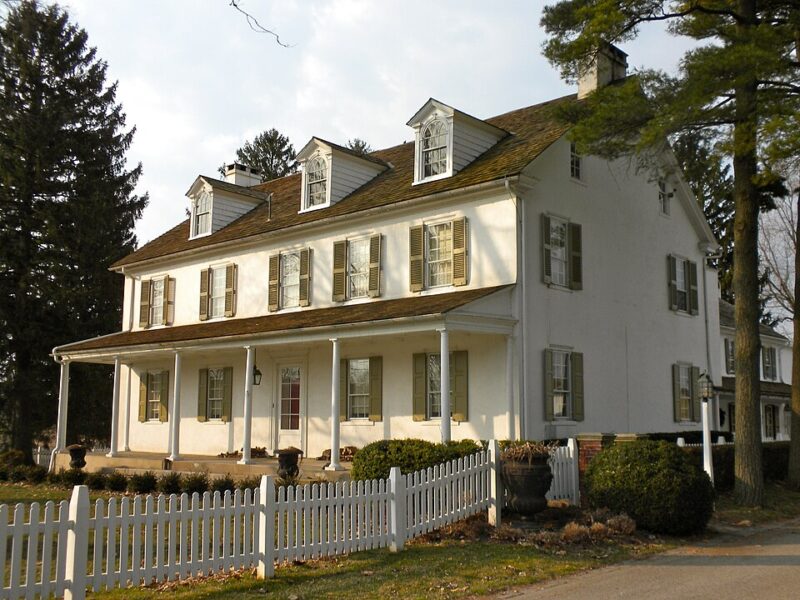
White Chimneys, Gap, Pennsylvania. Photo credit: Smallbones (2010), released into the public domain via Wikimedia Commons. White Chimneys – a house on the NRHP since April 1, 1975. one mile (1.6 km) northwest of Gap, PA, on Lincoln Highway In Lancaster, PA. The Historic Preservation Trust of Lancaster County has a historic easement on this property and it is an example of preservation in action.

Another especially illustrative example of multifaceted preservation in action is the Stevens and Smith Center in Lancaster City. The homes associated with abolitionist politician Thaddeus Stevens and businesswoman Lydia Hamilton Smith faced years of uncertainty before preservation efforts gained momentum. Today, the site interprets African American history, abolition, and political life within the physical spaces where Stevens and Smith lived and worked. Yet the significance of the project extends beyond physical restoration. Preservationists, community advocates, nonprofit organizations, and public officials spent years building partnerships, securing funding, and developing public support. Viewed this way, the achievement was not only restoring the buildings, but also creating a sustained coalition capable of interpreting and supporting this history over time.
At the same time, preservationists must acknowledge that loss matters. The demolition of a historic building represents the permanent loss of physical fabric, community memory, and cultural heritage, and it can carry a real emotional and professional sting, even when preservation efforts have raised awareness. Advocates who invest years in research, organizing, and public outreach inevitably experience setbacks. Recognizing those losses does not diminish preservation’s successes, it underscores why long-term stewardship and public engagement remain essential.
Ultimately, preservation is about more than the survival of individual buildings. In Lancaster County especially, it is an ongoing process of cultivating awareness, stewardship, and a shared understanding of place. That broader perspective has sustained preservation work for more than half a century. In the end, what matters is not only what is preserved, but what communities come to see as worth preserving. That shift in perception may be preservation’s most enduring legacy.
~Eric Schubert is a public historian, board member and executive committee member of the Historic Preservation Trust of Lancaster County, internationally featured genealogist, and human identification expert featured on Good Morning America, People Magazine, and more. As a White House Historical Association NextGen Leader, his award-winning, collaborative scholarship has focused on figures like W. Miller Barbour and his prospect for freedom, Barr Spangler, Sarah Tyson Rorer, and others.
~Evan Hanzelman is Vice President of the Historic Preservation Trust of Lancaster County, where he advances public appreciation of the region’s historic architecture and preservation efforts. His research focuses on prominent local figures, particularly those connected to the American Revolution and the Civil War.
Enjoyed this article. Many things going on behind the scene that I was not aware of and enjoying learning about them.