So how did the small-scale artisans at Fringe fit into the proposals put forward by the master developer candidates at the March meeting? The short answer is: ambiguously. They were clearly seen by the developers as both part of the hipness of the neighborhood and part of the set of problems–what in an earlier era of urban redevelopment was more bluntly termed “blight”–that the proposals aimed to overcome. Read More
At the 2014 annual National Council on Public History conference in Monterey, several of us came together for a roundtable discussion on “Sustaining Historic Preservation Through Community Engagement.” The roundtable was organized and facilitated by Theodore Karamanski from Loyola University and Kristen Baldwin Deathridge from Appalachian State University. Read More
On a cold March evening this past winter, my students and I caught a bus from Davis Square, near Tufts University, to attend a public meeting in Union Square, at the other end of Somerville, Massachusetts. Within the generally-pricey Boston real estate market of the past two or three decades, Union Square has remained relatively affordable and as a result has been something of a haven for artists, artisans, low-income immigrants, and small, often marginal businesses. Read More
Editor’s Note: This is the fourth piece in a series on the “crisis” in the humanities. A post introducing the series can be found here.
In the past few years, the airwaves have been filled with angst about the state of the humanities, primarily in college and university humanities departments. Read More
Last August, fans of the Colbert Report saw Duke University President Richard Brodhead encourage study in the humanities as essential to a balanced education. The interview segment can be seen here. Brodhead’s appearance was part of a marketing campaign engineered by the American Academy of Arts and Sciences (AAAS) that was designed to advance support for the humanities in much the same way that the National Academy of Sciences had promoted Science, Technology, Engineering, and Math (STEM) with its 2007 report Rising above the Gathering Storm. Read More
Editor’s Note: This piece continues a series of posts related to the Guantánamo Public Memory Project, a collaboration of public history programs across the country to raise awareness of the long history of the US naval base at Guantánamo Bay (GTMO) and foster dialogue on its future. Read More
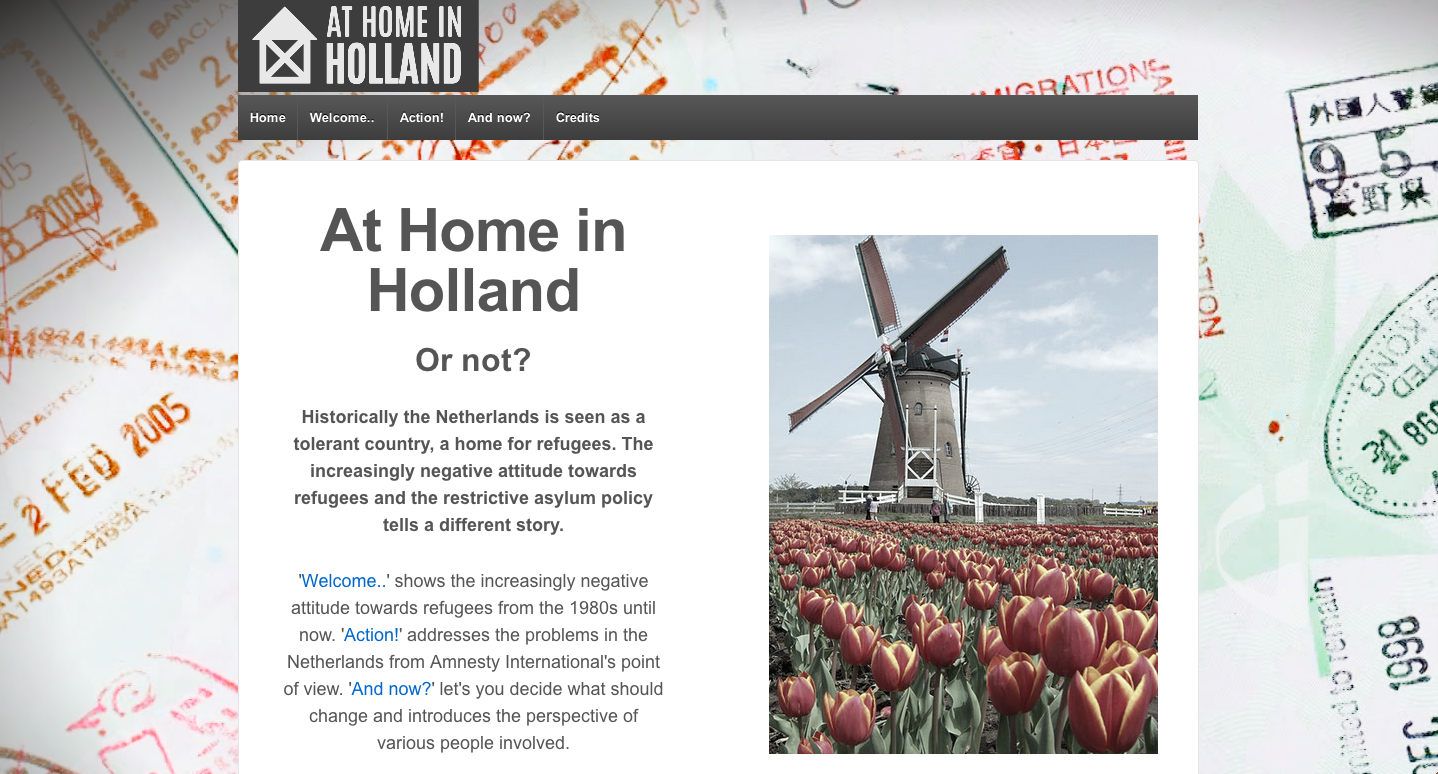
“At Home in Holland,” a new digital history project by students at the University of Amsterdam, responds to the way that hostile reactions to immigrants have undermined the traditional idea of Dutch tolerance and hospitality in recent years. The current Dutch asylum policy was developed in the 1980s. Read More
On May 7, the US House of Representatives overwhelmingly passed a bill authorizing the creation of a commission to explore the feasibility of establishing a women’s history museum on the National Mall. Yet many women’s historians and museum professionals are not celebrating. Read More
Sign Up to Receive News and Announcements Emails from NCPH
You may unsubscribe or change your preferences at anytime by emailing [email protected] Cavanaugh Hall 127, 425 University Blvd., Indianapolis, IN 46202-5140 (317) 274-2716 [email protected]




![From [http://www.nunes.house.gov/tours.htm] {{PD-USGov}}](https://ncph.org/wp-content/uploads/2014/05/Capitol_dome.jpg)