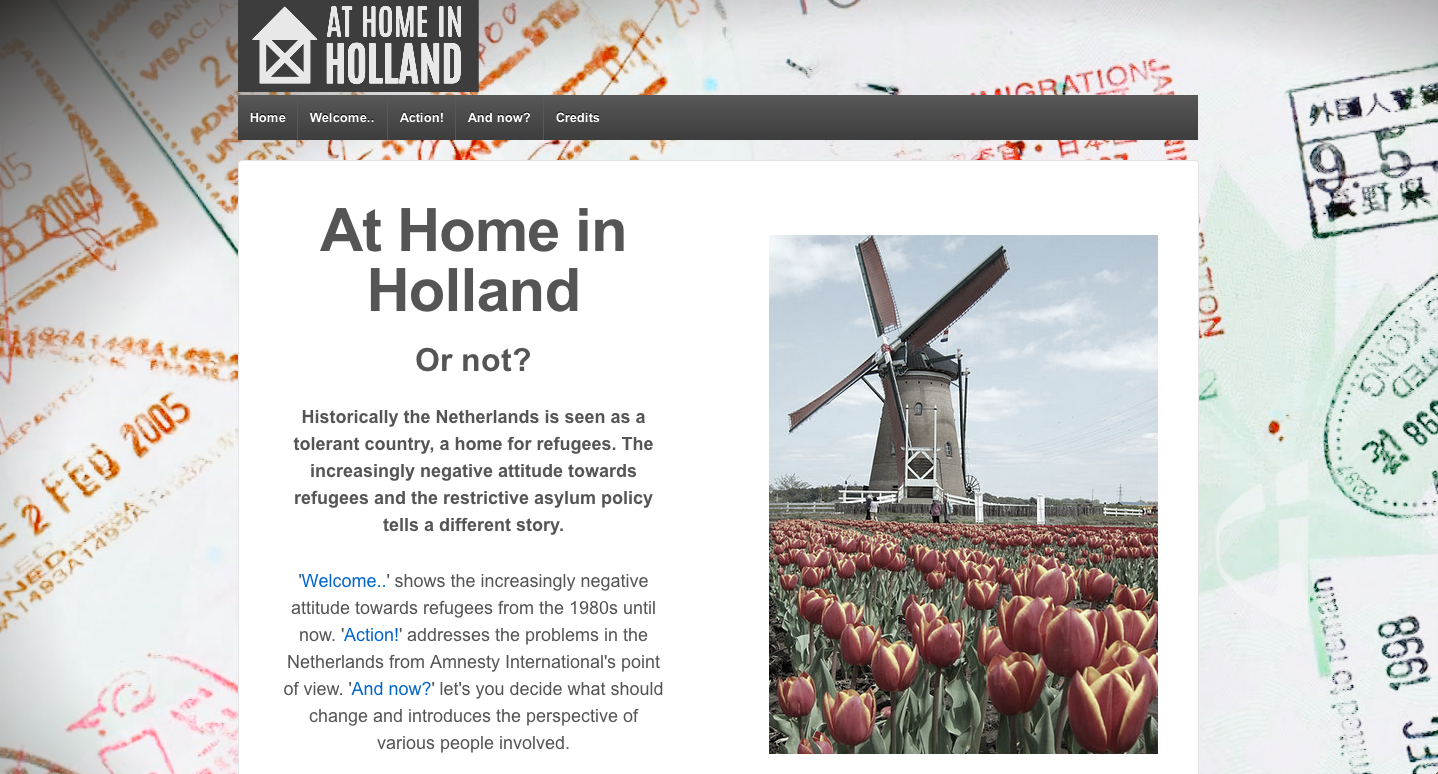
“At Home in Holland,” a new digital history project by students at the University of Amsterdam, responds to the way that hostile reactions to immigrants have undermined the traditional idea of Dutch tolerance and hospitality in recent years. The current Dutch asylum policy was developed in the 1980s. Read More
In early 1950, developers opened a “park and shop” center in suburban Washington, DC. By 1950 “park and shop” was an established commercial property type, and the phrase was in common usage (by general public and developers). Media coverage of its opening focused on the spacious new supermarket and other retail establishments, as well as on a state-of-the-art theater with late-Art Deco detailing, designed by a nationally-recognized architect. Read More
EDU: Summer archeology project seeks volunteers (experience not necessary) for excavation at Wiawaka Holiday House – June 16-July 11, 2014, Lake George, New York, U.S. Read More
I remember well the day that I received my first copy of my first book, Independence Hall in American Memory. I picked it up in person from the offices of the University of Pennsylvania Press and could barely manage the walk home because of the temptation to stop, admire the beautiful dust jacket, open those pages, smell that new-book smell, and read. Read More
AWARD:Friend of History Award from the Organization of American Historians for an institution or organization, or an individual working primarily outside college or university settings, for outstanding support of historical research, the public presentation of American history, or the work of the OAH. Read More
We asked and you shared! One hundred sixty-six respondents participated in the NCPH New Professional and Graduate Student Committee survey, offering their input for creating a consumer’s guide to public history. Now officially titled “Public History Navigator: How to Choose and Thrive in a Graduate Program,” this exciting project will provide one tool to address shared concerns about the “perfect storm”–the phrase National Council for Public History Past President Bob Weyeneth used to describe the public history training and jobs crisis. Read More
Editor’s note: We are beginning a new series on the Consultants Corner, Ask a Consulting Archivist. In the series, we will interview archivists about their careers, including how they first got started in consulting work, challenges they face, and current projects.Read More
The TV network HISTORY announces a three-day series premiering this Monday (Memorial Day in the US) which treats the two world wars as a linked event—what Winston Churchill called “the second Thirty Years’ War.” Narrated by actor Jeremy Renner (The Hurt Locker), World Wars tells the story of three decades of conflict through the eyes of political and military leaders like Churchill, Hitler, Roosevelt, Tojo, and Mussolini. Read More
Sonya Michel’s recent post brings the behind-the-scenes issues that have plagued the National Women’s History Museum (NWHM) project for years into public view. In 2012, when the Huffington Post reported “National Women’s History Museum Makes Little Progress in 16 Years,” it listed a catalog of concerns, from the overblown CV of the Chief Executive Officer (CEO) to financial irregularities. Read More
Sign Up to Receive News and Announcements Emails from NCPH
You may unsubscribe or change your preferences at anytime by emailing [email protected] Cavanaugh Hall 127, 425 University Blvd., Indianapolis, IN 46202-5140 (317) 274-2716 [email protected]


 “At Home in Holland,” a new digital history project by students at the University of Amsterdam, responds to the way that hostile reactions to immigrants have undermined the traditional idea of Dutch tolerance and hospitality in recent years. The current Dutch asylum policy was developed in the 1980s. Read More

