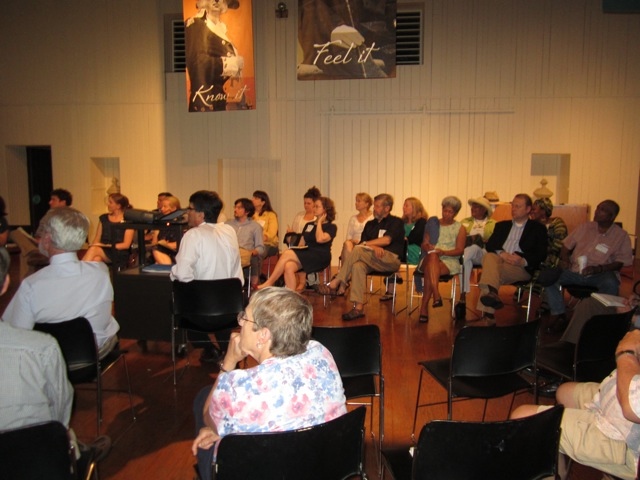
This is the third post in a series to discuss the genesis of the idea for the “What Employers Seek in Public History Graduates” session at the 2013 National Council on Public History meeting in Ottawa. Session panelists will continue to share their thoughts on the topic in entries in the coming weeks. Read More
This is the second post in a series to discuss the genesis of the idea for the “What Employers Seek in Public History Graduates” session at the 2013 National Council on Public History meeting in Ottawa. Session panelists will continue share their thoughts on the topic in entries in the coming weeks. Read More
Located in Proctor, Vermont, The Vermont Marble Museum tells the story of the Vermont Marble Company — once the largest marble company in the world. Prominent buildings and monuments all over the United States and the world were made by the Vermont Marble Company including the Thomas Jefferson Memorial, the US Supreme Court Building and the Tomb of the Unknown Soldier. Read More
This is an initial post in a series to discuss the genesis of the idea for the “What Employers Seek in Public History Graduates” session at the 2013 National Council on Public History meeting in Ottawa. Session panelists will share their thoughts on the topic in entries in the coming weeks. Read More
I recently watched a documentary on, of all things, happiness. The film, “Happy,” focused on the study of happiness (positive psychology) and what makes people happy and when, along with the intrinsic and extrinsic factors that contribute or detract from happiness. Read More
To address the issue of how to make historic designation and documentation a part of Cliveden’s ongoing dialogue with its various publics, the site sponsored a forum themed around the question “Do National Historic Landmarks Represent Our Historic Values?” This event was an opportunity to bring together community members, museum professionals, and preservationists from the Germantown area to discuss the NHL process, our research for the nomination, and moreover the changing meaning of Cliveden’s history today, all while enlivening what can otherwise seem on the surface to be a closed and static process of filling out a bureaucratic form. Read More
Although the central story of Historic St. Mary’s City is about its time as the first capital of Maryland in the 17th century, its space contains many more stories from later eras. One is the 19th-century story of slavery and freedom at a large slave plantation. Read More
Around the time that I took on my current position with The Trustees of Reservations, the organization made an internal change: our historic resources department became the cultural landscapes department, our historic resources staff the cultural resources staff. Why was this significant? Read More
1997 was the hardest year of my adult life. During that year my marriage of 15 years ended in divorce; during that same year, my employer, a nationally prominent museum of American cultural history, began to transform itself into a children’s museum, and eliminated the position of “senior historian” that I had held for the previous seven years. Read More
Sign Up to Receive News and Announcements Emails from NCPH
You may unsubscribe or change your preferences at anytime by emailing [email protected] Cavanaugh Hall 127, 425 University Blvd., Indianapolis, IN 46202-5140 (317) 274-2716 [email protected]




 This is the third post in a series to discuss the genesis of the idea for the “What Employers Seek in Public History Graduates” session at the 2013 National Council on Public History meeting in Ottawa. Session panelists will continue to share their thoughts on the topic in entries in the coming weeks. Read More