How many times has someone told you that you have the coolest job? I’ve heard this comment at various points in my career, and admittedly, I have had the opportunity to work on some really fun history projects. Read More
The 2015 Annual Meeting of the National Council on Public History will take place from April 15-18, 2015, in Nashville, Tennessee. The conference theme is “History on the Edge.”
Edges are where exciting things happen. Some are stark boundaries, marking clear beginnings and ends, while others are blurred contact zones.
CFP: “Historical Auto/Biographies in the Arts,” an international conference in English and French, March 25-26 (Le Mans, France), March 27 (Angers, France), 2015
DEADLINE: June 15, 2014
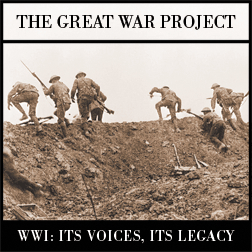
That was all that a young man shopping recently at a farmers market in Santa Monica, California, could say about World War I. He’s not alone. Most Americans seem to know very little about the war, which somehow has gotten lost in our collective memory about our past. Read More
In December 2013, an African American man was detained by Decatur, Georgia, police after he was seen leaving his home. An officer issued a suspicious person alert based on the “reasonable articulable suspicion” premise–the legal basis for many states’ “stop and frisk” laws. Read More
“Sequester” was a dirty word during last year’s conference season. At the March 2013 conference of the George Wright Society in Denver, attendance was down nearly 75 percent because of travel limitations put into place right before the meeting. At the National Council on Public History meeting in Ottawa a few weeks later, I noticed a number of my colleagues were absent. Read More
Regular visitors to the Public History Commons may have noticed that we’ve undergone a slight facelift recently. The History@Work blog, initially the sole occupant of this site, has gradually been joined by other projects: the News Feed, The Public Historian’s digital space, and now our new Library. Read More
Donald Kohrs is Branch Library Specialist at the Miller Library of Stanford University’s Hopkins Marine Station in Pacific Grove. For his presentation at the National Council on Public History conference last week in Monterey, California, Don shared his recent findings associated with summer gatherings of the Pacific Coast Assembly of the Chautauqua Literary and Science Circle (1880-1926) in Pacific Grove. Read More
Sign Up to Receive News and Announcements Emails from NCPH
You may unsubscribe or change your preferences at anytime by emailing [email protected] Cavanaugh Hall 127, 425 University Blvd., Indianapolis, IN 46202-5140 (317) 274-2716 [email protected]