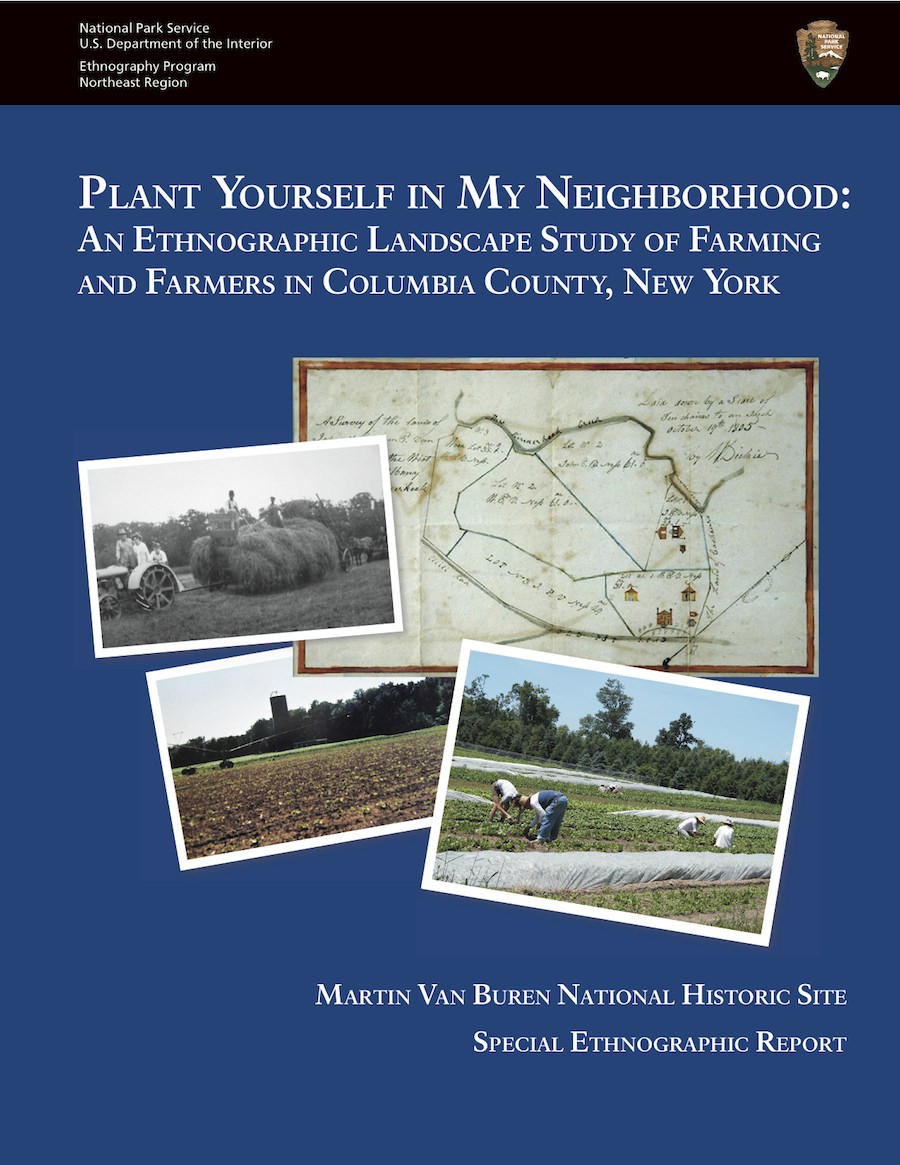
Editors’ Note: This series showcases the winners of the National Council on Public History’s annual awards for the best new work in the field. Today’s post is by Cathy Stanton, winner of the 2013 NCPH Excellence in Consulting Award in the individual category for “Plant Yourself in My Neighborhood: An Ethnographic Landscape Study of Farming and Farmers in Columbia County, New York.”Read More
As senior director of the five public program departments at the Indiana Historical Society I regularly work with interns and faculty, and I regularly employ graduates from history programs. I ask several specific questions when am sifting through applicants:
Tomorrow may be April Fool’s Day, but don’t be fooled into forgetting about about the monthly Consultants’ TweetChat! April 1, 2013, at 4:00 p.m. Eastern Standard Time will mark our sixth monthly NCPH Consultants TweetChat. This month, the topic is the Ottawa conference. Read More
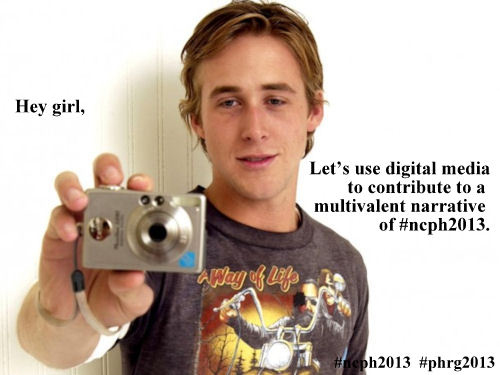
You may have noticed by now that Public History Ryan Gosling has been reappearing in select locations. His handlers, Rachel Boyle and Anne Cullen, will be presenting a paper on last year’s PHRG phenomenon as part of a panel on “Connecting Communities” at the National Council on Public History meeting in Ottawa next month, and we’ve been very happy to have their help for some advance conference promotion. Read More
Hiring a Co-Editor for The Public Historian. The Mid-Atlantic Regional Center for the Humanities is accepting applications for a Public Historian in Residence who will co-edit NCPH and UCSB’s journal.
Consultants’ Monthly TweetChat Monday, April 1, at 4pm Eastern will mark the sixth monthly NCPH Consultants TweetChat.
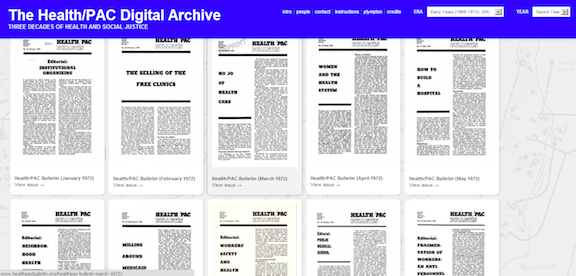
The Health/PAC Digital Archive is a complete collection of the influential Health/PAC Bulletin, which was published for nearly three decades until Health/PAC closed in 1994. Full-text searchable, it amounts to a documentary history of mid- to late-20th Century American health policy and politics. Read More
It is May 1, 1981. A jury of eight internationally renowned architects and sculptors has announced its pick for the design of the Vietnam Veterans Memorial, set to be constructed at the western end of the Constitution Gardens on the National Mall in Washington, D.C.
Pick up a penny. On one side, we observe Lincoln as he was; on the other side, Lincoln as we have chosen to remember him. Public historians face the challenges and rewards of interpreting history for a population obsessed as much with “authenticity” as “legacy.” Read More
Sign Up to Receive News and Announcements Emails from NCPH
You may unsubscribe or change your preferences at anytime by emailing [email protected] Cavanaugh Hall 127, 425 University Blvd., Indianapolis, IN 46202-5140 (317) 274-2716 [email protected]