Editor’s note: This post continues a series commemorating the anniversary of the National Historic Preservation Act by examining a past article published in The Public Historian, describing its significance, and relating it to contemporary conversations in historic preservation.
Growing up as an American Indian boy in Oklahoma, I struggled every April 22nd with “89er Day,” an elementary school mini-holiday that celebrated the 1889 opening of central Oklahoma to white settlement. Read More
Editor’s Note: This series showcases the winners of the National Council on Public History’s awards for the best new work in the field. Today’s post is by Julia C. Wells, author of “In the Shadow of the Butcher: The Limits to Confronting Colonial Legacies Through Commemoration in South Africa,” The Public Historian Vol 36, No 2.Read More
Editor’s Note: This series showcases the winners of the National Council on Public History’s awards for the best new work in the field. Today’s post is by Justin L.C. Eldridge, a government historian with the Naval History and Heritage Command, whose monograph First in Class Acquisition Challenges received Honorable Mention for the Michael C.Read More
Editor’s Note: This series showcases the winners of the National Council on Public History’s awards for the best new work in the field. Today’s post is by Beth Bullock, Jayd Buteaux, and Leslie Morton, students in the Public History Program at the University of North Carolina-Wilmington. Read More
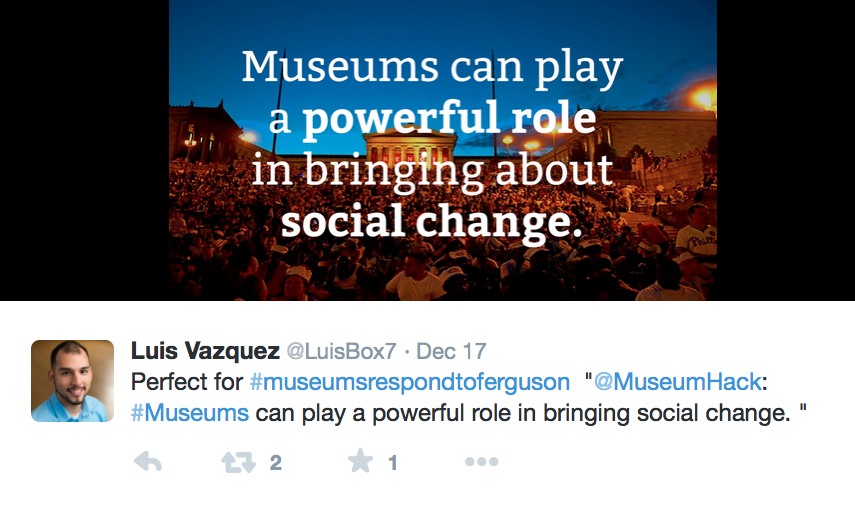
I have always thought of public history as a tool to assist us in mediating unchartered territory. More specifically, museums can serve as public forums to tackle persistent forms of oppression that have escaped clear resolve. This vision seems particularly relevant today. Read More
Are there too many public history programs? Where is the field going, and what can professional organizations do to ensure that it remains vital in the years to come? For the past year, a task force organized by the National Council on Public History (NCPH), the Organization of American Historians, the American Historical Association, and the American Association for State and Local History has investigated questions about the current landscape of public history training and employment. Read More
In early 2014, a small historical society outside of Portland, Oregon, circulated a request for proposals (RFP). Having received a grant from their local government, they sought to hire a curator for a one-year contract. The duties of the curator included: inventorying and assessing collections, developing and implementing a policy and procedural structures for managing collections, creating an interpretative plan, developing a public services strategy, and staffing the museum every weekend. Read More
On May 30, 1995, wearing an orange construction helmet, I stood behind a makeshift barricade on E. 13th Street in New York City. Hundreds of squatters faced off against larger numbers of riot police who were armed with a tank and supported by snipers on the surrounding buildings. Read More
Public historians rely on images, audio, and film to engage the public and interpret the past. But almost every professional has experienced confusion over copyright restrictions or faced expensive licensing agreements. Some of us may get by with using images from the public domain, but many historical images remain under copyright. Read More
Sign Up to Receive News and Announcements Emails from NCPH
You may unsubscribe or change your preferences at anytime by emailing [email protected] Cavanaugh Hall 127, 425 University Blvd., Indianapolis, IN 46202-5140 (317) 274-2716 [email protected]