In 2004, I completed my MA graduate program in History with a sure sense of what was going to happen next: teach for a year, and then start a Ph.D. program. By 2007, I wasn’t sure if a Ph.D. was in my future and started exploring other options. Read More
There are many transitions we go through when we leave graduate programs and start working as public historians. A hard one for me was the transition from student to role model and possible mentor to others working in the field of history. Read More
As a professor at a community college, I am typically absorbed in teaching, focused on my classes and students–as many as five classes and upwards of 120-150 students per semester. But recently, I’ve been increasingly engaged in public history by way of developing an associate’s degree program in the field and through involvement in other activities, including the utilization of a restored 1808 manor house on campus, which was the centerpiece of a horse farm when the region had a thriving thoroughbred racing and breeding industry. Read More
When I graduated in 2009 from Texas State University with my Master’s degree in public history, I could not wait to go out into the world to apply the knowledge that I had gained while in school. Last year, I was invited back to my alma mater to speak to an Introduction to Public History class about my work and how my degree has helped. Read More
This fall, I began my second stint in graduate school. After earning a M.A. in Public History in 2007 and working for the federal government and a nonprofit organization for four years, I am now back in a university setting, enrolled in an American History PhD program. Read More
Our public history program works to help students develop an understanding of the role that history can play in fostering a sense of community identity. We also train students to practice as responsible and ethical professionals. Service-learning opportunities provide the core pedagogical method for both these goals. Read More
Beloved community activist Bob Moses once asked a family living in the Mississippi Delta, “How do you build and organize a community?” He was answered, “By throwing a ball into your neighbor’s yard; that way you have to cross the fence and engage in a dialogue with them. Read More
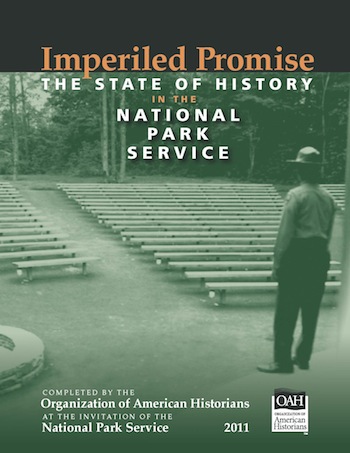
The NCPH/OAH conference brought to light a subject near to my heart this afternoon – history in the NPS. The panel consisted of Marla Miller, Gary Nash, David Thelen and Anne Mitchell Whisnant. On the docket was the discussion of their report on how the NPS stacks up in the history department. Read More
Each paragraph below presents a common public history work scenario that differs – a little or a lot – from traditional academy-based work. I am looking for comments, suggestions, alternative ideas, and specific examples of what is described. This was written as a centerpiece for a work session planned for the 2012 annual meeting, but is a topic that deserves widest possible exposure. Read More
Sign Up to Receive News and Announcements Emails from NCPH
You may unsubscribe or change your preferences at anytime by emailing [email protected] Cavanaugh Hall 127, 425 University Blvd., Indianapolis, IN 46202-5140 (317) 274-2716 [email protected]