Editor’s note: This post concludes a series commemorating the anniversary of the National Historic Preservation Act by examining a part article published in The Public Historian, describing its significance and relating it to contemporary conversations in historic preservation.
Historic preservation exists to tell stories of our journeys as a people and as a nation, but somehow along the way the stories of America’s African American, Latino, Asian, and Native American communities are erased or obscured as historians and preservationists tell the great American story. Read More
As I’ve read obsessively the news of campus protests these past few weeks and shared support for protesters both publicly on social media and privately in email conversations with college administrators, I’ve been challenged to think deeply about my position as both a public historian and a faculty member at a state university. Read More
In a surprising turn of events, the College Board re-revised the Advanced Placement United States History curriculum framework, releasing its newest version at the end of July. While the move by the Board, which had instituted a public comment period seeking feedback on the framework back in February, is not overly surprising, the reaction among many historians and among the opponents of the original revised framework is. Read More
Last September, an undergraduate approached me to inquire about potential internship opportunities. As a new faculty member in a department with no formal public history program, there were few established connections with local community partners that I could tap. Yet the main obstacle to placing this student in an internship was her need for income; as a single mother, she had to support herself and her son. Read More
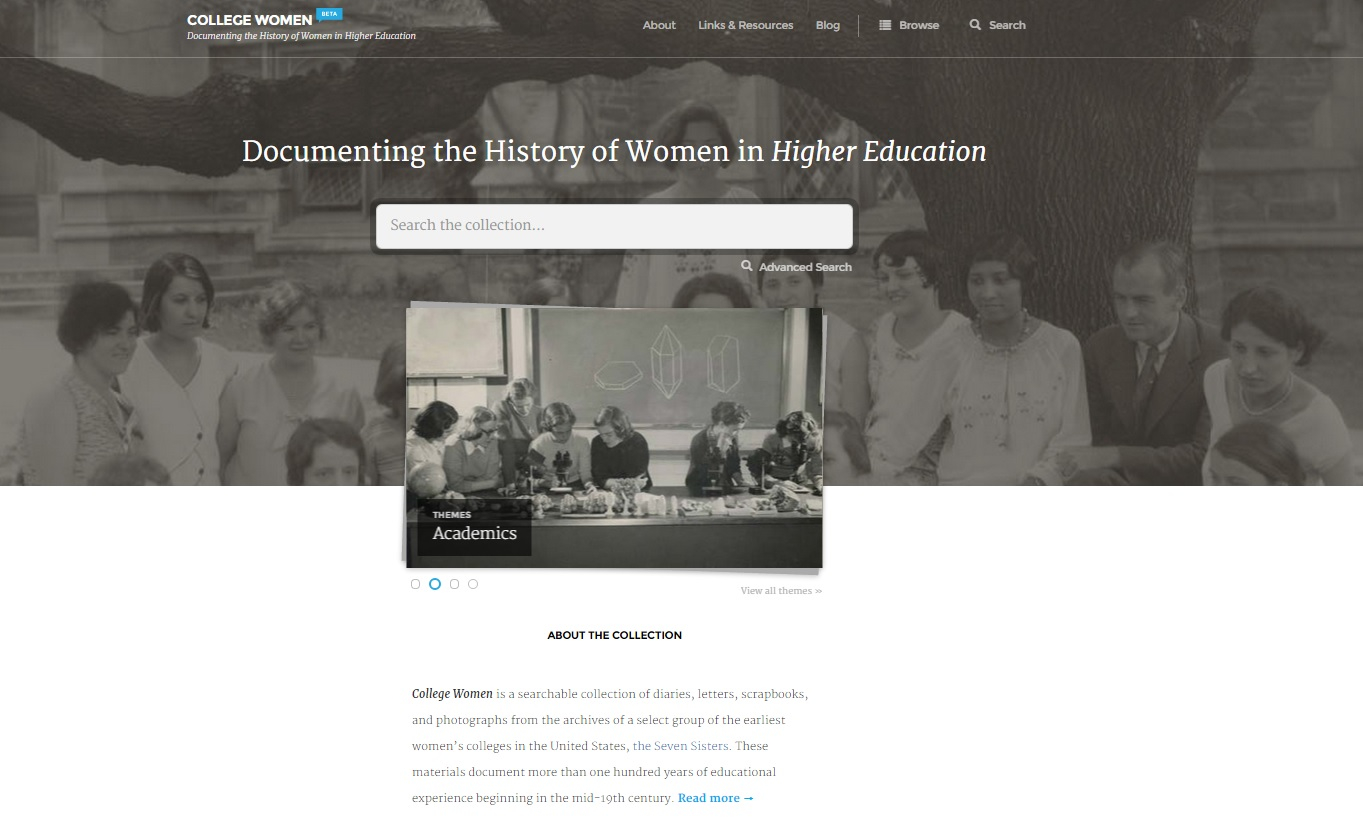
With the support of a one-year Foundations planning grant from the National Endowment for the Humanities, the seven women’s colleges once known as the “Seven Sisters” recently launched College Women: Documenting the History of Women in Higher Education. College Women brings together digitized letters, diaries, scrapbooks, and photographs of women who attended Barnard, Bryn Mawr, Mount Holyoke, Smith, Vassar, Wellesley, and Radcliffe (now the Schlesinger Library, Radcliffe Institute for Advanced Study, Harvard University). Read More
What constitutes success for a public history graduate program? A strong placement record? Student mastery of a set of professional skills? Or perhaps cultivation of our discipline’s habits of mind?
One might say, “It depends”–on whom you ask, when you ask them, and why you want to know. Read More
The Curriculum and Training Committee of the National Council on Public History has prepared a draft best practices document, “Best Practices for Establishing and Developing a Public History Program.” This document is intended to supplement the existing best practices documents on MA programs in public history, public history for undergraduate students, and certificate programs in public history. Read More
It is often said that everyone should work in the customer service industry at some point in their lives so that they can understand what it’s like to interact with the world from the other side of the cash register. I feel the same way about traditional building trades. Read More
Hardball history that places historians at the center of politics, advocacy, and activism can be a difficult journey, but it can also be inspiring. My introduction to public history coincided with the 2006 unveiling of a controversial downtown revitalization plan in the city of El Paso, Texas. Read More
Sign Up to Receive News and Announcements Emails from NCPH
You may unsubscribe or change your preferences at anytime by emailing [email protected] Cavanaugh Hall 127, 425 University Blvd., Indianapolis, IN 46202-5140 (317) 274-2716 [email protected]