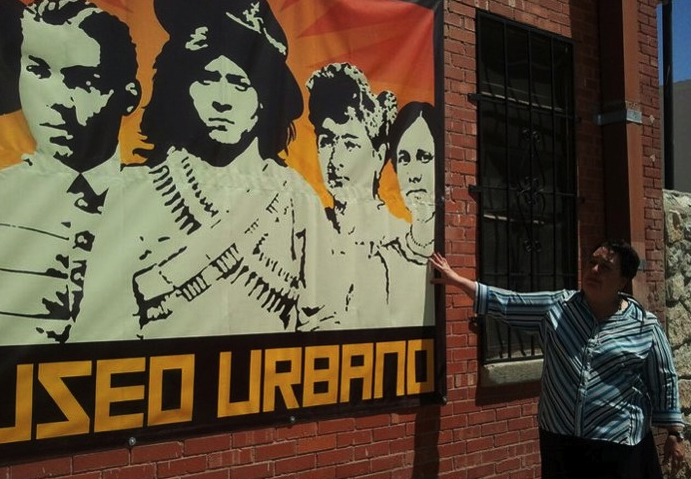
Hardball history that places historians at the center of politics, advocacy, and activism can be a difficult journey, but it can also be inspiring. My introduction to public history coincided with the 2006 unveiling of a controversial downtown revitalization plan in the city of El Paso, Texas. Read More
“You know who has money to help you.” I responded to this truth by listing three millionaires from whom I would not accept funding for Museo Urbano, the public history project housed in the Department of History at the University of Texas at El Paso (UTEP). Read More
To borrow Shakespeare’s phrase, some public history work is born political, some becomes political, and some has politics thrust upon it. Whether we intentionally locate ourselves in controversial settings, have something blow up in our faces, or encounter less spectacular kinds of resistance or misunderstanding, we’re always on the edge of the political, even when we don’t set out to be. Read More
Over the past few years, I have been writing about gentrification and how it intersects with history in an Atlanta, Georgia, suburb. Twenty-five months and more than 50 interviews after I started talking with people and documenting neighborhood change in the Oakhurst area of Decatur, I met playwright Valetta Anderson, who works at Atlanta’s Woodruff Arts Center. Read More
How can public historians and their audiences come to terms with the traumatic and ongoing legacies of racism and slavery in the United States? This is the question motivating a project I’m currently working on in Philadelphia with a group of ex-offenders, ages 21 to 72. Read More
How should public historians address Officer Darren Wilson’s killing of Michael Brown, the grand jury’s decision, and protests in Ferguson and across the country? This is a vital question many of us are discussing on Twitter, Facebook, and in person. The discussion has broadened recently to include the grand jury decision not to indict Officer Daniel Pantaleo in the July chokehold death of Eric Garner, and the Justice Department’s citation of the Cleveland Police Department for civil rights abuses. Read More
As a public-historian-in-training and recovering theater nerd, I attended last month’s Great Chicago Fire Festival with high hopes. Redmoon Theater–one of the city’s most innovative companies–staged an elaborate pageant on the Chicago River commemorating the infamous 1871 fire that destroyed much of the city. Read More
Editor’s Note: This piece continues a series of posts related to the Guantánamo Public Memory Project, a collaboration of public history programs across the country to raise awareness of the long history of the US naval base at Guantánamo Bay (GTMO) and foster dialogue on its future. Read More
As part of a larger project focusing on the history and legacy of cotton-picking and sharecropping in the Mississippi Delta, the non-profit organization Khafre, Inc. is holding weekly sessions throughout the summer of 2014 to gather memories and oral histories from people with roots in the Delta region, especially older African Americans with first-hand knowledge of work in “America’s Cotton Kingdom.” Read More
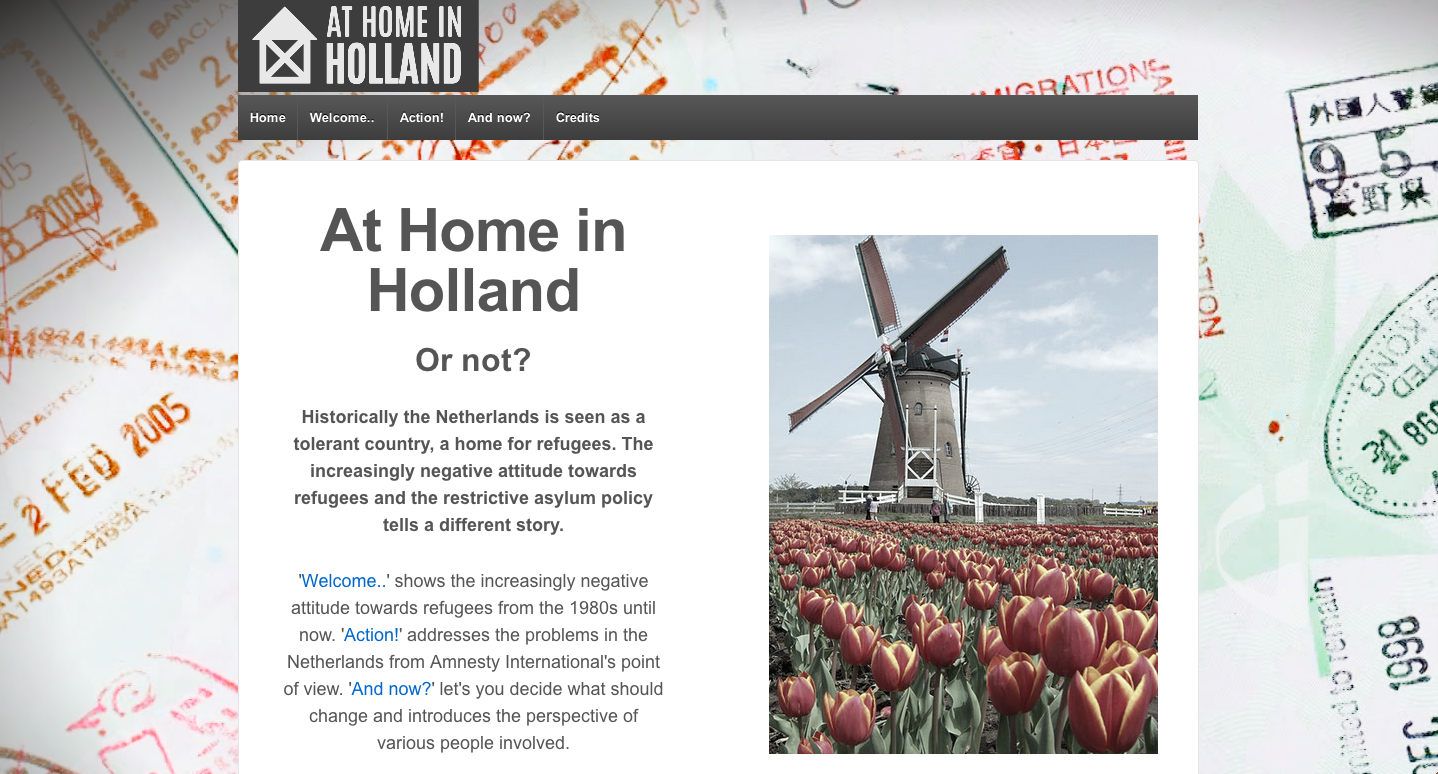
“At Home in Holland,” a new digital history project by students at the University of Amsterdam, responds to the way that hostile reactions to immigrants have undermined the traditional idea of Dutch tolerance and hospitality in recent years. The current Dutch asylum policy was developed in the 1980s. Read More
Sign Up to Receive News and Announcements Emails from NCPH
You may unsubscribe or change your preferences at anytime by emailing [email protected] Cavanaugh Hall 127, 425 University Blvd., Indianapolis, IN 46202-5140 (317) 274-2716 [email protected]