This fall, I began my second stint in graduate school. After earning a M.A. in Public History in 2007 and working for the federal government and a nonprofit organization for four years, I am now back in a university setting, enrolled in an American History PhD program. Read More
During the 2012 Annual Meeting of the NCPH in Milwaukee, I had the opportunity to talk with fellow public history educators about issues related to labor. It became clear to me that there are widely divergent expectations placed on public history faculty by their home institutions. Read More
Our public history program works to help students develop an understanding of the role that history can play in fostering a sense of community identity. We also train students to practice as responsible and ethical professionals. Service-learning opportunities provide the core pedagogical method for both these goals. Read More
“The one thing I’ve learned from this experience about public history is that I don’t want anything to do with it.”
Charlotte–a talented, enthusiastic graduate student in our History department–made this statement as she was reflecting on her first foray into the realm of public history. Read More
Beloved community activist Bob Moses once asked a family living in the Mississippi Delta, “How do you build and organize a community?” He was answered, “By throwing a ball into your neighbor’s yard; that way you have to cross the fence and engage in a dialogue with them. Read More
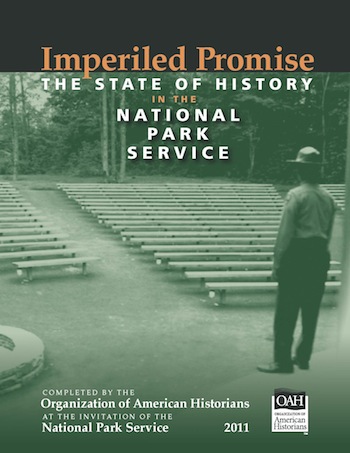
The NCPH/OAH conference brought to light a subject near to my heart this afternoon – history in the NPS. The panel consisted of Marla Miller, Gary Nash, David Thelen and Anne Mitchell Whisnant. On the docket was the discussion of their report on how the NPS stacks up in the history department. Read More
The “unconference” movement is barely a decade old (Tom Scheinfeldt noted in our capstone session that the first one he attended was in Silicon Valley in 2004) but it’s clear that for many people–perhaps particularly for public historians–it offers a welcome alternative to more formal conference formats. Read More
We’re trying something new at this year’s NCPH/OAH conference, with due acknowledgement to Apple: a “genius bar” of experienced digital historians who will be available to answer questions on a wide range of topics, problems, and platforms. Our “Digital Drop-In” can be found in Exhibit Hall D Foyer, near the registration area, from 1:30 to 4:30 p.m. Read More
Each paragraph below presents a common public history work scenario that differs – a little or a lot – from traditional academy-based work. I am looking for comments, suggestions, alternative ideas, and specific examples of what is described. This was written as a centerpiece for a work session planned for the 2012 annual meeting, but is a topic that deserves widest possible exposure. Read More
Maybe you, too, have been to professional development workshops during which you discuss the “digital natives” supposedly filling our classrooms. Our students served as the IT departments in their own homes during their childhoods, so we often make the mistake of assuming that any technological task is second nature to them. Read More
Sign Up to Receive News and Announcements Emails from NCPH
You may unsubscribe or change your preferences at anytime by emailing [email protected] Cavanaugh Hall 127, 425 University Blvd., Indianapolis, IN 46202-5140 (317) 274-2716 [email protected]




 This fall, I began my second stint in graduate school. After earning a M.A. in Public History in 2007 and working for the federal government and a nonprofit organization for four years, I am now back in a university setting, enrolled in an American History PhD program. Read More