I’d never held a duck decoy in my hands before and certainly not one that was important enough to be in a museum’s collection. It was my first day as education curator at the Tuckerton Seaport Museum in Tuckerton, New Jersey, and along with Jackie Stewart, the director of the folklife center (it was her first day, too), I was organizing a small exhibit for the nature center. Read More
Portland’s gentrification and redevelopment attracted the attention of Loretta Lees, a United Kingdom professor with family in Maine. She documented the rehabilitation of residential, commercial, and industrial properties and the reconfiguration of public spaces in Portland’s upgrading downtown neighborhoods. Read More
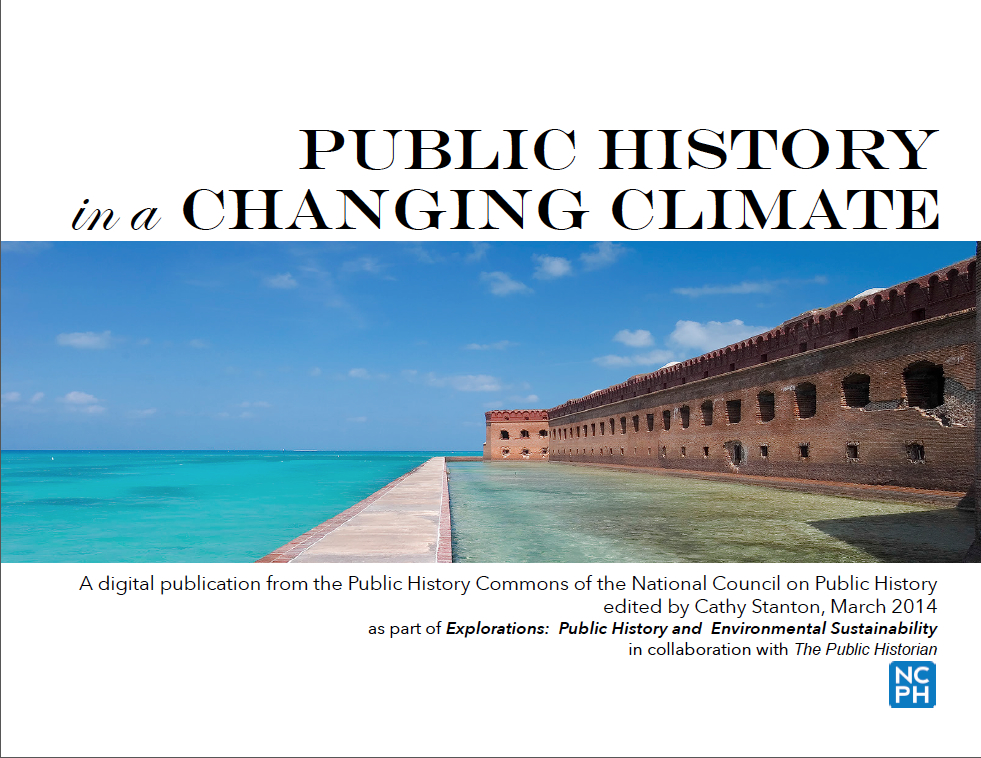
Conference-goers at the National Council on Public History’s annual meeting in Monterey, California, last March were given an advance look at a digital anthology compiled to complement the conference theme of “Sustainable Public History.” Containing some materials from this blog, some from previous conference working groups focusing on environmental issues, and some new materials, the anthology, called “Public History in a Changing Climate,” was an effort to gather together some of the threads of what is still an emergent discussion within the field. Read More
On July 17, Miami-Dade County Commissioners—several Cuban-Americans among them—approved a controversial plan to construct a Cuban Exile History Museum (CEHM) alongside Biscayne Bay. Few would deny the importance of the Cuban community to Miami’s rise from sleepy getaway to sprawling “gateway to the Americas.” Read More
To submit an item for the News Feed, send an email to: news[at]publichistorycommons.org
CFP: 11th Annual Loyola University Chicago History Graduate Student Conference welcomes proposals from public history and digital humanities – Nov. 15, 2014, Chicago, Illinois, US
DEADLINE: Sept. 8, 2014
Sam Smith’s blacksmith shop is part living history laboratory and part urban sustainability experiment. He is a former history major who turned passions for the past and metalworking into a business that produces objects, artisans, and history in contested space on the edge of a gentrifying Portland, Maine, neighborhood. Read More
Navigating copyright for images is tricky and presents one of the biggest challenges in my work as an Exhibitions Researcher at the Indiana Historical Society. Although I admit to only a rudimentary understanding of copyright, this is where open access comes in very handy. Read More
Thanks to the exponential increase in availability of digitized collections, possibilities in exhibit research have drastically expanded. Digital collections have become essential tools that help ensure the success of projects with limited budgets and tight deadlines, which most public historians might agree is just about every project. Read More
Sign Up to Receive News and Announcements Emails from NCPH
You may unsubscribe or change your preferences at anytime by emailing [email protected] Cavanaugh Hall 127, 425 University Blvd., Indianapolis, IN 46202-5140 (317) 274-2716 [email protected]