Turn to the sixth page of the 2013 Program of the American Historical Association and you will spot a genial turn of phrase: “the malleable PhD.” It refers to the idea—already engrained in the practice of public history—that graduate training need not limit one to a tenure-track teaching career. Read More
In our last History@Work post, we charted the recent burst of academic public history jobs in the past few years. This year’s job market has continued the trend, with thirty jobs seeking either major or minor public history specialties posted on the Academic Wiki. Read More
This is an initial post in a series to discuss the genesis of the idea for the “What Employers Seek in Public History Graduates” session at the 2013 National Council on Public History meeting in Ottawa. Session panelists will share their thoughts on the topic in entries in the coming weeks. Read More
Happy New Year all you historians out in cyberspace! Tomorrow, Monday, January 7, at 6:00 p.m. Eastern Standard Time will mark our third monthly NCPH Consultants TweetChat. This month, we will discuss the ins and outs of crafting a solid project proposal. Read More
I recently watched a documentary on, of all things, happiness. The film, “Happy,” focused on the study of happiness (positive psychology) and what makes people happy and when, along with the intrinsic and extrinsic factors that contribute or detract from happiness. Read More
The Medical Heritage Library (MHL) is a virtual gateway to tens of thousands of digitized medical rare books, pamphlets, journals and films contributed by several of the world’s leading medical libraries. Open access to these materials through the Internet Archive enables scholars and the general public alike to explore the “interrelated nature of medicine and society, both to inform contemporary medicine and strengthen understanding of the world in which we live.” Read More
Doing public programs is never easy, but it is the most immediate and rewarding way to engage directly with your audience. This past semester, the Cooperstown Graduate Program’s oral history project experimented with a new type of public program. Taking our cue from the statewide “Community Conversations” sponsored by the New York Council for the Humanities, which also provided funding for our project, we decided to use our large archive of oral histories as the basis for a series of dialogues about important environmental topics. Read More
There’s a show on the website Hulu you may have seen, called “Up to Speed” with host Timothy “Speed” Levitch and director Richard Linklater. Speed is a licensed tour guide—kind of—advising us that “to truly travel is to appreciate the beauty in the unexpected.” Read More
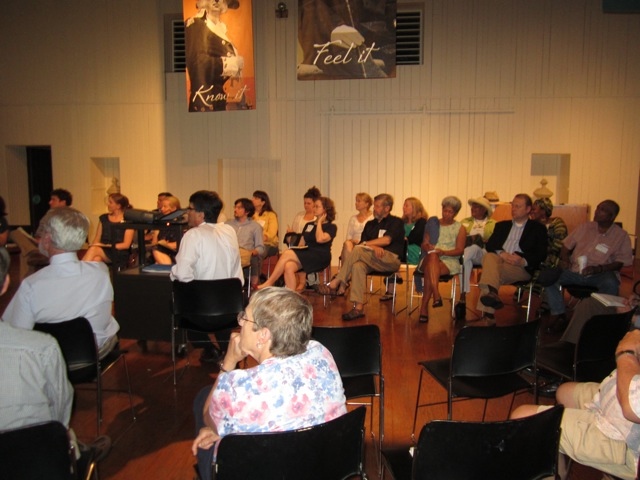
To address the issue of how to make historic designation and documentation a part of Cliveden’s ongoing dialogue with its various publics, the site sponsored a forum themed around the question “Do National Historic Landmarks Represent Our Historic Values?” This event was an opportunity to bring together community members, museum professionals, and preservationists from the Germantown area to discuss the NHL process, our research for the nomination, and moreover the changing meaning of Cliveden’s history today, all while enlivening what can otherwise seem on the surface to be a closed and static process of filling out a bureaucratic form. Read More
Sign Up to Receive News and Announcements Emails from NCPH
You may unsubscribe or change your preferences at anytime by emailing [email protected] Cavanaugh Hall 127, 425 University Blvd., Indianapolis, IN 46202-5140 (317) 274-2716 [email protected]




 Turn to the sixth page of the 2013 Program of the American Historical Association and you will spot a genial turn of phrase: “the malleable PhD.” It refers to the idea—already engrained in the practice of public history—that graduate training need not limit one to a tenure-track teaching career. Read More