The Public History Program at the University of South Carolina welcomes comments on a new website, “Slavery at South Carolina College, 1801–1865: The Foundations of the University of South Carolina.” While many American colleges and universities in recent years have been researching their historical connections to the institution of racial slavery, this website is the first public acknowledgement of the role of slaves and slavery at the antebellum college that became the University of South Carolina. Read More
For most of us, music videos don’t immediately bring to mind historical engagement. What’s more reflective of the current epoch than a viral YouTube video featuring feline euphony or Rebecca Black’s ultra-present-focused “Friday”?
But Arcade Fire’s “Wilderness Downtown” collaboration with Chris Milk, featuring their hit 2010 single, “We Used to Wait,” is a remarkable exception to this rule. Read More
The Smithsonian is, of course, not the only institution associated with the federal government that maintains an archive about its own history. The National Park Service, for example, has made a substantial investment in documenting the histories of its parks. Read More
Maps are more than pieces of paper. They are stories, conversations, lives and songs lived out in a place and are inseparable from the political and cultural contexts in which they are used. (A. Warren, cited in Giacomo Rambaldi, “Who Owns the Map Legend?
The Toynbee Tiler’s main style, in Philadelphia’s Center City.
At its heart an exhibition is a display of objects, grouped together by a shared theme, style or message, and designed for public consumption. In the award-winning 2011 documentary Resurrect Dead: The Mystery of the Toynbee Tiles, four men from Philadelphia search for the creator of an idiosyncratic series of public art pieces that, in its consistency and repetition, can be seen as an exhibition. Read More
I have been traveling to and from Chile for various reasons at various times since 2005, acquiring a deep appreciation for the country and its cultural subtleties and social mores—to say nothing of a Spanish accent steeped in Chilean slang. But if I have learned anything since my initial days, it is that one must exercise sensitivity when approaching the dictatorial past. Read More
On my walk from the commuter rail station to Tufts University the other day, I was struck by a kind of instant stage set or living history environment or nostalgic theme park created by an organic food delivery truck trailer parked behind the Porter Square Shopping Center in Cambridge.
The summer TV season is just around the corner, and I can’t wait. It’s a guilty pleasure that I don’t usually brag about to my academic colleagues, but I adore summer TV. Summer television, like beach reading, is supposed to be entertaining – romance and intrigue without the burden of a challenging plotline. Read More
Car ads are like little zeitgeist-meters. They’re amazingly responsive to all kinds of social anxieties, which they instantly repackage in ways that allow us to continue feeling good about driving. Feeling nationally or personally emasculated? Concerned about the transition into being a soccer mom? Read More
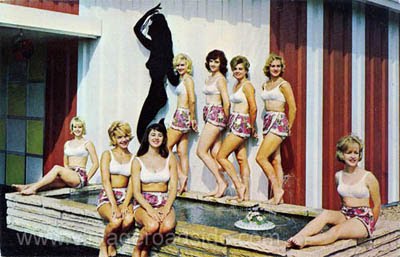
In this post, Vintage Roadside’s first for “Off the Wall,” we’d like to introduce ourselves by touching on our motivation for launching our preservation-themed business followed by a brief review of a symposium we presented this past summer on Aquarama, a wonderful 1960s mermaid attraction once found on Lake of the Ozarks in Osage Beach, Missouri. Read More
Sign Up to Receive News and Announcements Emails from NCPH
You may unsubscribe or change your preferences at anytime by emailing [email protected] Cavanaugh Hall 127, 425 University Blvd., Indianapolis, IN 46202-5140 (317) 274-2716 [email protected]




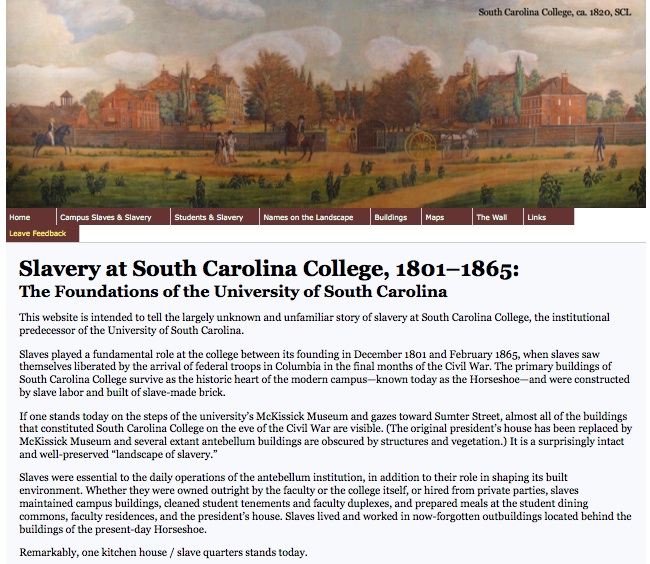 The Public History Program at the University of South Carolina welcomes comments on a new website, “Slavery at South Carolina College, 1801–1865: The Foundations of the University of South Carolina.” While many American colleges and universities in recent years have been researching their historical connections to the institution of racial slavery, this website is the first public acknowledgement of the role of slaves and slavery at the antebellum college that became the University of South Carolina. Read More