In 2004, I completed my MA graduate program in History with a sure sense of what was going to happen next: teach for a year, and then start a Ph.D. program. By 2007, I wasn’t sure if a Ph.D. was in my future and started exploring other options. Read More
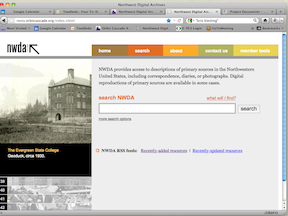
With the completion of a year-long grant project this month, participants in Northwest Digital Archives’ Expanding Access Grant will have exposed almost 500 new collections in Washington, Oregon, Idaho, and Montana through NWDA’s database. The database, which offers access to more than 11,500 finding aids for archival collections at thirty-seven institutions, is an efficient means for collection discovery and exposure at a wide variety of institutions and repositories. Read More
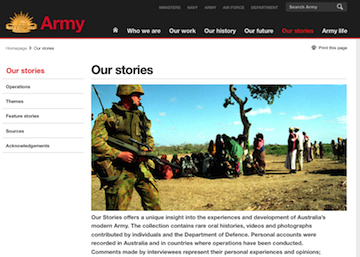
The Australian Army has a powerful story to tell. Our soldiers have contributed to shaping the Australian nation through service in war and peace operations for over 101 years. The popular focus of Australia’s military history tends to be on World War One, World War Two, Korea and Vietnam. Read More
The Southern landscape and many other parts of the United States remain pockmarked with state historical markers that demand reinterpretation or removal. One state historical marker noting the failure of New Orleans’ 17th Street Canal in the aftermath of Hurricane Katrina demonstrates that Louisiana has landed on the right side of this history. Read More
Today’s “Lightning Talk” session was a great one-hour showcase for about a dozen digital projects:
Larry Cebula: Spokane Historical, a web and mobile platform for telling stories of Spokane and Eastern Washington, developed by the Public History program at Eastern Washington University using Curatescape and Omeka
Cathy Stanton: History@Work (hey, that’s us)
Bobby Allen: University of North Carolina/Chapel Hill’s Digital Innovation Lab, an American-Studies-based project that is developing, testing, and documenting best-practice models for faculty and graduate student work in public humanities that integrates community engagement, digital technologies, and interdisciplinary inquiry
Andrew Hurley: the Virtual City Project, which uses three-dimensional imaging technologies to create electronic representations of lost historic landscapes
Trevor Owens: Viewshare, a free web application developed by the Library of Congress for curators and collections managers to create and customize unique, dynamic online views of images from their collections.
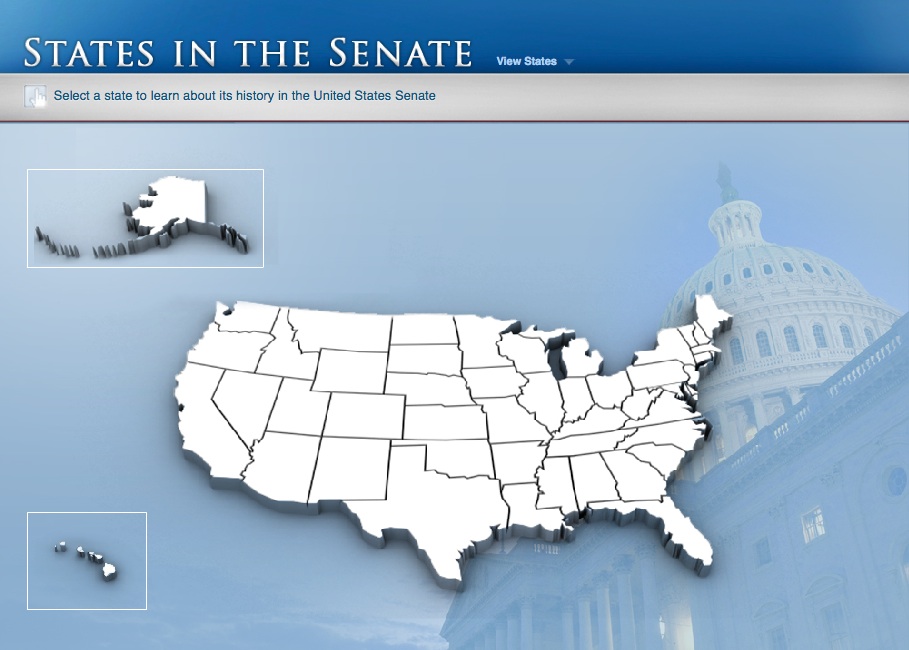
The U.S. Senate Historical Office presents a new online feature: States in the Senate. Each state has its own unique place in Senate history. Reminders that we are a union of states surround us as we walk the halls of the Senate office buildings and the U.S Read More
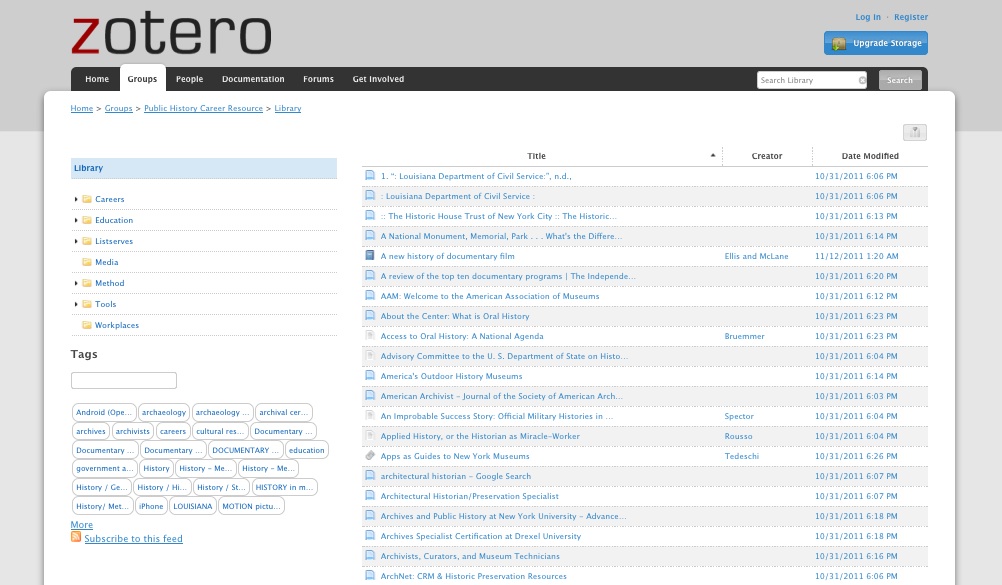
I am always happy to discover how often new media scholarship benefits traditional research as well as public history practice. My recent experience with one particular online project using Zotero demonstrates how new media innovation can invigorate our classroom instruction in unexpected ways. Read More
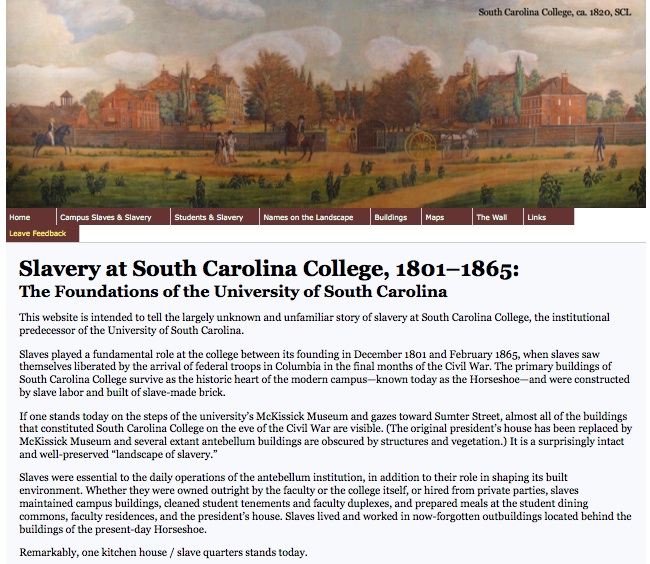
The Public History Program at the University of South Carolina welcomes comments on a new website, “Slavery at South Carolina College, 1801–1865: The Foundations of the University of South Carolina.” While many American colleges and universities in recent years have been researching their historical connections to the institution of racial slavery, this website is the first public acknowledgement of the role of slaves and slavery at the antebellum college that became the University of South Carolina. Read More
The Smithsonian is, of course, not the only institution associated with the federal government that maintains an archive about its own history. The National Park Service, for example, has made a substantial investment in documenting the histories of its parks. Read More
Sign Up to Receive News and Announcements Emails from NCPH
You may unsubscribe or change your preferences at anytime by emailing [email protected] Cavanaugh Hall 127, 425 University Blvd., Indianapolis, IN 46202-5140 (317) 274-2716 [email protected]