Despite their widespread encounter with issues of environmental sustainability in public history practice and a heightened concern about them, most respondents (54 percent) noted that their training in the former derived from individual study or interest rather than formal education.
As part of its ongoing efforts to facilitate greater mutual accommodation between sustainability and public history imperatives and to better define the NCPH’s role in that process, the NCPH Task Force on Sustainability and Public History conducted an online survey during September of 2013. Read More
For most of my experience as a public-historian-in-training, I did not often think about the arts in any purposeful way. I played in an orchestra from elementary school through college, have a not-so-secret love for musicals (my roommates are probably tired of hearing me sing Disney songs in the shower!), Read More
The History Relevance Campaign (HRC), for lack of a better name, is a grassroots movement made up of public historians who say it’s time to show why the study and practice of history develop life skills that contribute to a stronger citizenry and are crucial to our nation’s future. Read More
I do not know how many of the learned people who follow this forum know that 40 years ago today the United States government—and to point political fingers at political figures: President Richard Nixon, Secretary of State Henry Kissinger, and CIA Director Richard Helms—actively and illegally supported a bloody military coup that overthrew the democratically elected government in Chile. Read More
Over the past decade a growing number of public historians have responded to debates about climate change and the need for sustainable communities by making sustainability a central focus of their professional work. These efforts were initially informal, but as Leah Glaser described in a post earlier this year, in recent years there has been a push to incorporate issues of sustainability into the mission and work of the National Council on Public History. Read More
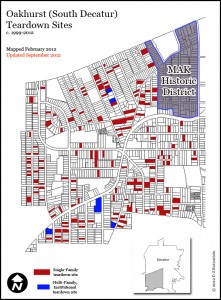
In 1975 the U.S. Department of Housing and Urban Development designated a one-square-mile part of Decatur, Georgia an Urban Homesteading Demonstration Program neighborhood. The designation meant that the city’s housing authority could sell distressed properties in its inventory to qualified buyers for one dollar. Read More
The first Keeper of the National Register of Historic Places turned 90 this month. He is well-known professionally and personally among those who worked on behalf of historic preservation in the United States in the 1950s and 1960s. William J. Murtagh is equally well-known to today’s generation of preservation teachers and students. Read More
Public historians have long engaged with environmental topics and environmental historians to explore the long-term material effects of the decisions, actions, and conceptions of people in the past. As we move toward the 2014 NCPH conference, with its theme of “Sustainable Public History,” this is a good moment to take stock of some of those disciplinary conversations and to think about how to move them forward in a time of accelerating environmental challenges and crises. Read More
It’s graduation season, also known as commencement. What better time to commence reflecting on the roles we want to play as historical consultants! Tomorrow, Monday, June 3rd, will bring you our eighth monthly Consultants’ Corner Tweetchat. The chat will be held at 4:00 p.m. Read More
Sign Up to Receive News and Announcements Emails from NCPH
You may unsubscribe or change your preferences at anytime by emailing [email protected] Cavanaugh Hall 127, 425 University Blvd., Indianapolis, IN 46202-5140 (317) 274-2716 [email protected]