Newporters like to boast that their city is home to the largest concentration of American buildings pre-dating 1800. It’s a hard claim to verify, but tallies aside, the City-by-the-Sea in Rhode Island is undoubtedly a patchwork of architectural delights reflecting its history as a powerful colonial entrepôt, a Gilded Age resort, a naval base, and currently a vibrant tourist destination. Read More
Our “Public History on the Edge of Nowhere” working group consisted of individuals from institutions that face issues of isolation due to physical location or a lack of awareness by the surrounding communities. In Nashville at the 2015 National Council on Public History conference, we sought to facilitate a group discussion centered on developing creative solutions for institutions lacking direct access to large populations. Read More
Gardens are personal. To some they are a way to grow food, to others a space of serene retreat, and to others still a background for celebrating culture and friendship. For many, they encompass a host of meanings and uses. How do we collect these ephemeral stories? Read More
Undertaking international projects presents challenges beyond the normal routine of archival and secondary research, oral interviews, writing, and revising. There are new issues, such as what language will the work ultimately be published in? What time frame will accommodate the needed international travel? Read More
I’ve always loved a public library. The public library in my hometown was just across the street from my dad’s office. In middle school, I would walk there after school and read books until my dad picked me up at five o’clock. Read More
In early 2014, a small historical society outside of Portland, Oregon, circulated a request for proposals (RFP). Having received a grant from their local government, they sought to hire a curator for a one-year contract. The duties of the curator included: inventorying and assessing collections, developing and implementing a policy and procedural structures for managing collections, creating an interpretative plan, developing a public services strategy, and staffing the museum every weekend. Read More
On May 30, 1995, wearing an orange construction helmet, I stood behind a makeshift barricade on E. 13th Street in New York City. Hundreds of squatters faced off against larger numbers of riot police who were armed with a tank and supported by snipers on the surrounding buildings. Read More
Hardball history that places historians at the center of politics, advocacy, and activism can be a difficult journey, but it can also be inspiring. My introduction to public history coincided with the 2006 unveiling of a controversial downtown revitalization plan in the city of El Paso, Texas. Read More
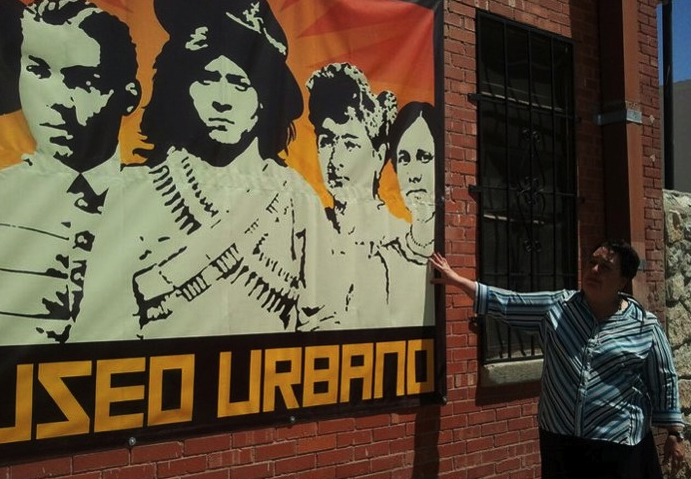
“You know who has money to help you.” I responded to this truth by listing three millionaires from whom I would not accept funding for Museo Urbano, the public history project housed in the Department of History at the University of Texas at El Paso (UTEP). Read More
Sign Up to Receive News and Announcements Emails from NCPH
You may unsubscribe or change your preferences at anytime by emailing [email protected] Cavanaugh Hall 127, 425 University Blvd., Indianapolis, IN 46202-5140 (317) 274-2716 [email protected]