On a recent conference call that connected public history practitioners from Bangladesh, Brazil, Italy, Spain, South Africa, and the U.S., one participant remarked on the utility of replicating historic site and museum programs from different geographic locations in others. Another extolled the benefits of sharing ideas, methods, and experiences across the different regions of the world. Read More
I recently watched a documentary on, of all things, happiness. The film, “Happy,” focused on the study of happiness (positive psychology) and what makes people happy and when, along with the intrinsic and extrinsic factors that contribute or detract from happiness. Read More
Doing public programs is never easy, but it is the most immediate and rewarding way to engage directly with your audience. This past semester, the Cooperstown Graduate Program’s oral history project experimented with a new type of public program. Taking our cue from the statewide “Community Conversations” sponsored by the New York Council for the Humanities, which also provided funding for our project, we decided to use our large archive of oral histories as the basis for a series of dialogues about important environmental topics. Read More
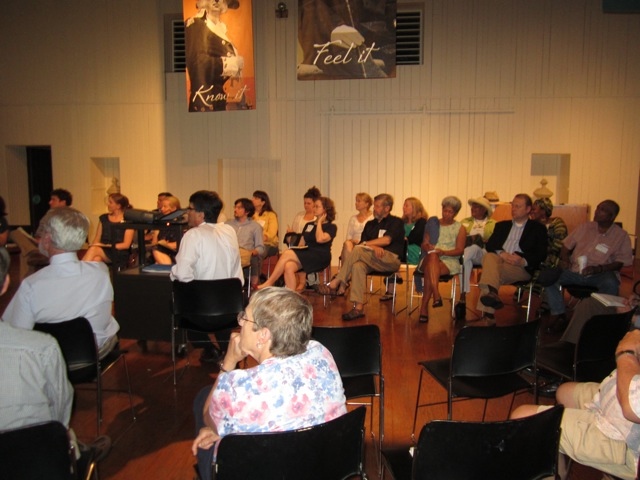
To address the issue of how to make historic designation and documentation a part of Cliveden’s ongoing dialogue with its various publics, the site sponsored a forum themed around the question “Do National Historic Landmarks Represent Our Historic Values?” This event was an opportunity to bring together community members, museum professionals, and preservationists from the Germantown area to discuss the NHL process, our research for the nomination, and moreover the changing meaning of Cliveden’s history today, all while enlivening what can otherwise seem on the surface to be a closed and static process of filling out a bureaucratic form. Read More
During the fall 2012 semester, I taught the third iteration of my undergraduate research seminar “Preserving Places, Making Spaces in Baltimore” for the Department of American Studies at UMBC. The class is designed to expose students to historical documentation skills as well as business practices that can be used in the non-profit world. Read More
In 2004, I completed my MA graduate program in History with a sure sense of what was going to happen next: teach for a year, and then start a Ph.D. program. By 2007, I wasn’t sure if a Ph.D. was in my future and started exploring other options. Read More
Maps are more than pieces of paper. They are stories, conversations, lives and songs lived out in a place and are inseparable from the political and cultural contexts in which they are used. (A. Warren, cited in Giacomo Rambaldi, “Who Owns the Map Legend?
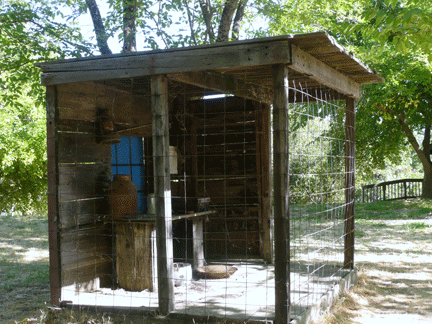
On a long and poorly charted road trip this past summer, I wandered into Lake Solano Park campground, located on the quiet banks of Putah Creek just off California Highway 128. The campground is on land originally populated by Patwin Indians, then homesteaded in 1875 by Daniel Tucker who managed a cattle and sheep operation and quarried limestone from local hills for area building foundations. Read More
Sign Up to Receive News and Announcements Emails from NCPH
You may unsubscribe or change your preferences at anytime by emailing [email protected] Cavanaugh Hall 127, 425 University Blvd., Indianapolis, IN 46202-5140 (317) 274-2716 [email protected]




 On a recent conference call that connected public history practitioners from Bangladesh, Brazil, Italy, Spain, South Africa, and the U.S., one participant remarked on the utility of replicating historic site and museum programs from different geographic locations in others. Another extolled the benefits of sharing ideas, methods, and experiences across the different regions of the world. Read More