Navigating copyright for images is tricky and presents one of the biggest challenges in my work as an Exhibitions Researcher at the Indiana Historical Society. Although I admit to only a rudimentary understanding of copyright, this is where open access comes in very handy. Read More
Thanks to the exponential increase in availability of digitized collections, possibilities in exhibit research have drastically expanded. Digital collections have become essential tools that help ensure the success of projects with limited budgets and tight deadlines, which most public historians might agree is just about every project. Read More
Many of us have discovered what promised to be an exciting oral history project through a Google search, only to be crestfallen when the linked web page was nothing more than a description of a trove of interviews kept in an ivory tower hundreds or thousands of miles away. Read More
In her thought-provoking post from November 2012, Mary Rizzo opened up a conversation about the relationship between the rapidly growing field of digital humanities and public history. Reflecting on a recent THATcamp meeting, Rizzo concluded that existing divisions between the producers and the critical thinkers of digital humanities projects had the potential to re-inscribe gender and racial hierarchies. Read More
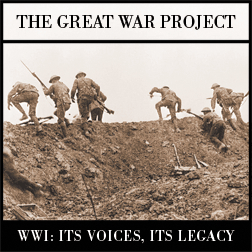
That was all that a young man shopping recently at a farmers market in Santa Monica, California, could say about World War I. He’s not alone. Most Americans seem to know very little about the war, which somehow has gotten lost in our collective memory about our past. Read More
At the third annual “lightning talks” session highlighting new (and some not so new) digital public history projects at the National Council on Public History conference, a dozen presenters showed off their work to a lunchtime audience.
Nathan Brown, digital projects librarian at New Mexico State University, showed the work the library has done in digitizing historical materials from the NMSU Cooperative Extension Service and Agricultural Experiment Station publications of the 19th and 20th centuries.
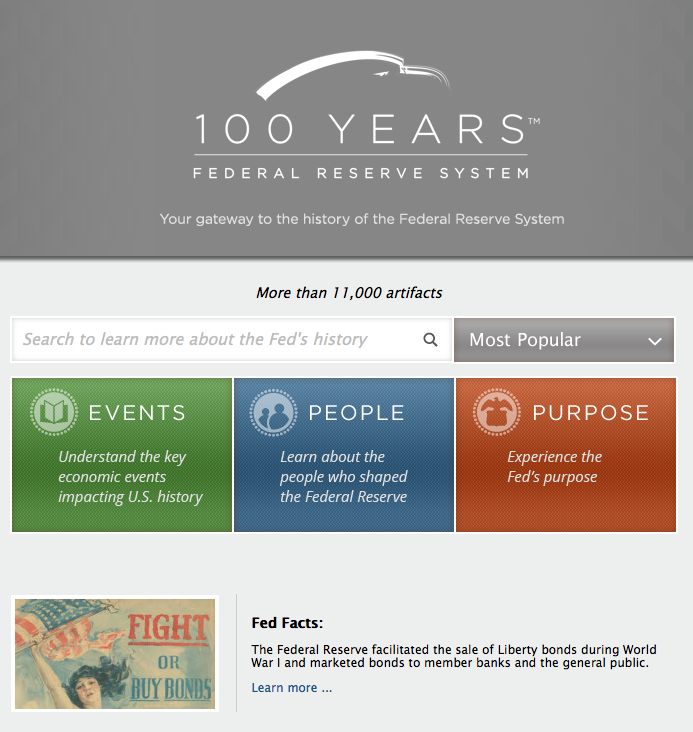
Dec. 23, 2013, marked the 100th anniversary of the passage of the Federal Reserve Act, which established the Federal Reserve as the central bank for the United States. Financial panics and bank runs plagued the nation during the 19th and early 20th centuries, and the Panic of 1907 prompted many Americans to call for a central bank. Read More
There is a misconception in our American culture that young professionals are proficient at using technology. However, discussions among historians, humanists, and prospective employers indicate that many public history graduates are entering the field without practical training or consideration of the complex intersection between digital technology and public history. Read More
Google “public history” and “climate change” and you’ll quickly realize that public historians are only just beginning to talk about how their work relates to the increasingly urgent questions posed by the earth’s rapidly changing climate. You could make a case that environmental public history is itself still in its infancy, even though it’s been more than two decades since Martin Melosi, in his President’s Annual Address to the National Council on Public History, issued a call for “environmental history [to] be a means to make the value of history better understood to the public.”[1] Read More
The newruskinarchives database website has recently been launched in response to the destruction last year of most of the archive of student records at Ruskin College, the historic trade union and labour movement college in Oxford.
There was much press coverage of the scandal and widespread criticism of the actions of the (now former) Principal, Audrey Mullender. Read More
Sign Up to Receive News and Announcements Emails from NCPH
You may unsubscribe or change your preferences at anytime by emailing [email protected] Cavanaugh Hall 127, 425 University Blvd., Indianapolis, IN 46202-5140 (317) 274-2716 [email protected]