The digital humanities are rapidly transforming both the discipline of history and the pedagogy of public history. When I taught my first Introduction to Public History course six years ago, my course schedule had two weeks devoted to digital history; today it occupies more than half of the semester. Read More
The American Historical Association created a great deal of discussion this week with a statement that “strongly encourages graduate programs and university libraries to adopt a policy that allows the embargoing of completed history PhD dissertations in digital form for as many as six years.” Read More
Editor’s Note: This piece continues a series of posts related to the Guantánamo Public Memory Project, a collaboration of public history programs across the country to raise awareness of the long history of the US naval base at Guantánamo Bay and foster dialogue on its future. Read More
We’ve all no doubt heard the line thrown back at us: “If you preservationists don’t want this building torn down, then why aren’t you putting your own money into it? How dare you tell a private owner that he can’t tear it down?” Read More
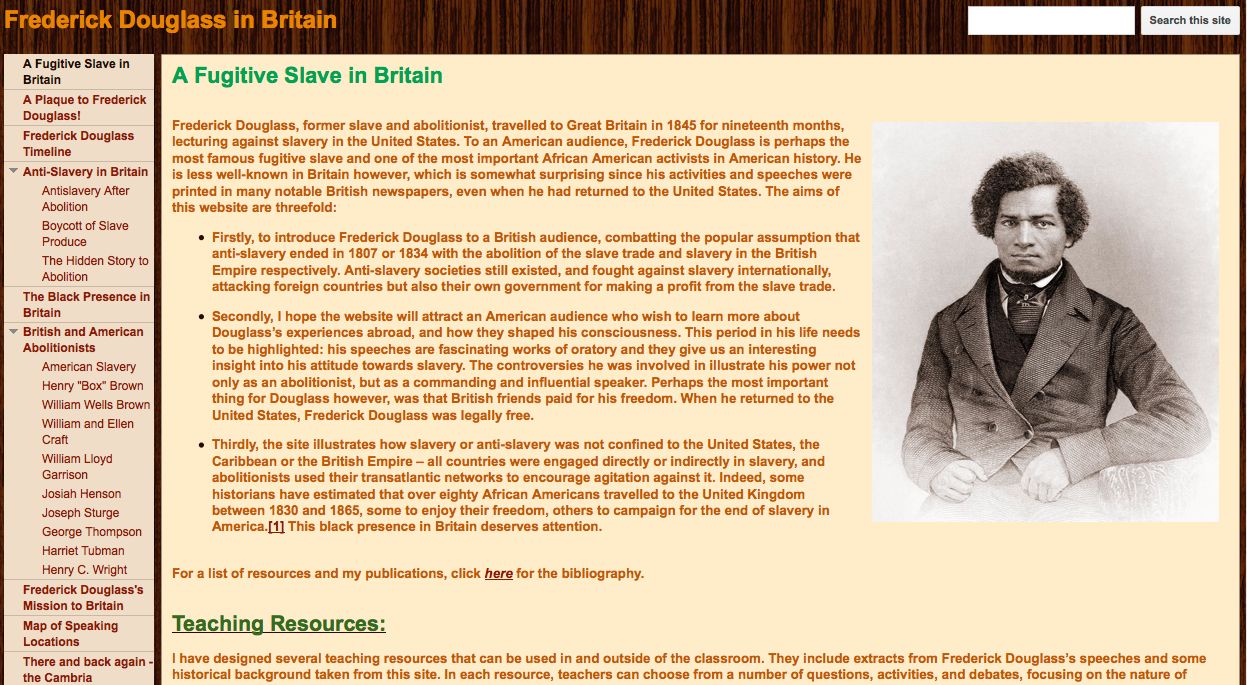
Frederick Douglass is one of the most famous African Americans in the United States, but few have heard of him in Britain. This demands redress, as in 1845 Douglass travelled to the British Isles for nearly two years, lecturing over three hundred times in cities across the country. Read More
Every fall I teach a course at the Chicago History Museum (CHM) for DePaul University students interested in museums and public history. Students become immersed in museum functions through behind the scenes tours and guest speakers from our staff. The students’ capstone experience includes group projects focused on CHM’s media, primarily researching, interviewing, and writing for posts to the Museum’s blog. Read More
During the month of May 2013, on www.senate.gov, the U.S. Senate Historical Office looks back 40 years to one of the Senate’s most important investigations. The Select Committee on Presidential Campaign Activities, more commonly known as the Watergate Committee, questioned the president’s closest advisors about the break-in and cover-up at the Watergate office complex and other “illegal and improper campaign practices” that occurred during the presidential campaign of 1972. Read More
There actually was a thunderstorm with lightning on Thursday night in Ottawa–it’s been an unsettled spring here, as in much of the northeast. The lightning on Friday, though, came in the form of a set of quick presentations at the NCPH conference on recent and emerging digital public history projects. Read More
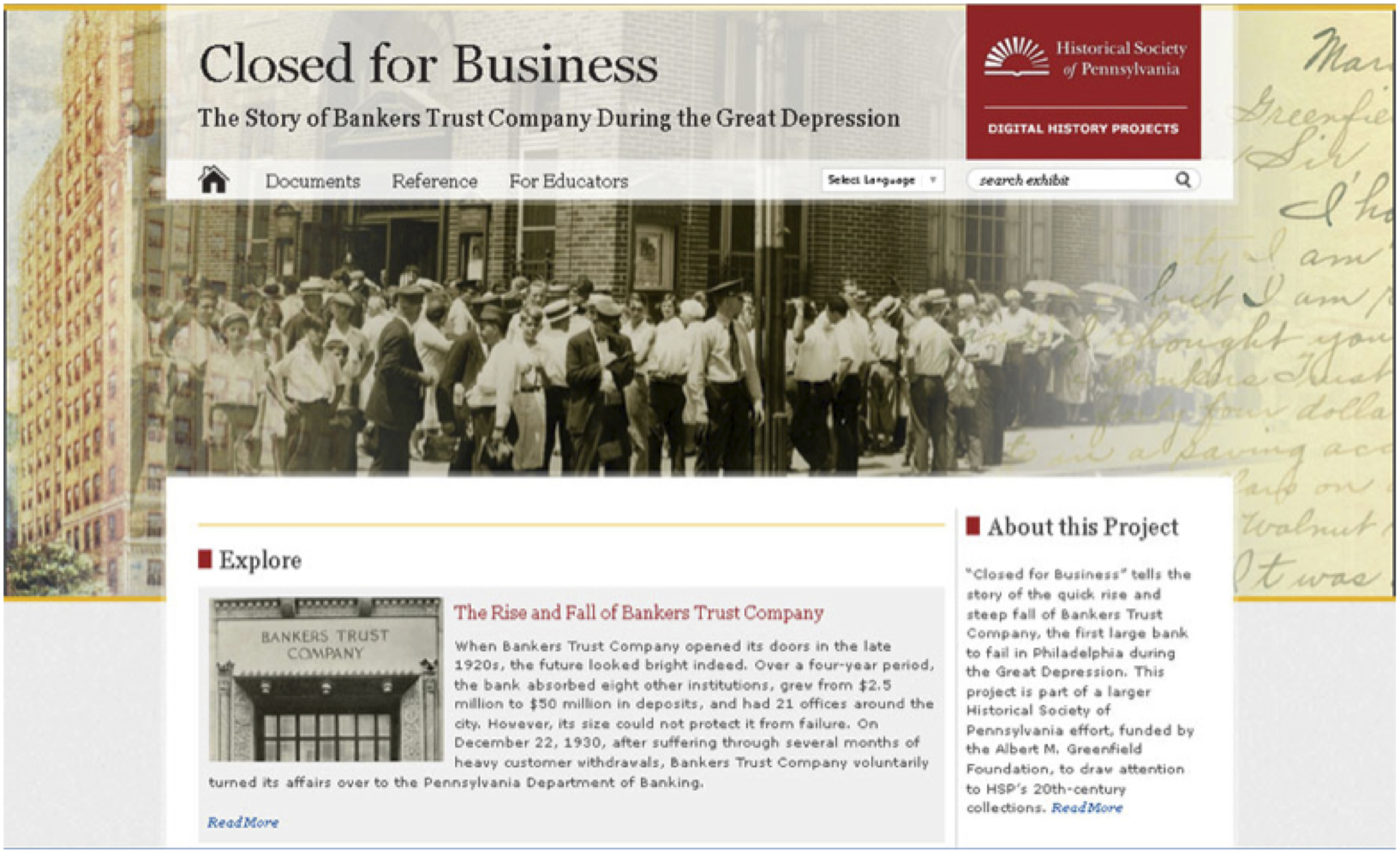
The Historical Society of Pennsylvania has launched “Closed for Business,” a new digital history project focused on the early years of the Great Depression and the December 1930 failure of a large Philadelphia bank, Bankers Trust Company.
The project was part of a larger effort funded by the Albert M. Read More
Sign Up to Receive News and Announcements Emails from NCPH
You may unsubscribe or change your preferences at anytime by emailing [email protected] Cavanaugh Hall 127, 425 University Blvd., Indianapolis, IN 46202-5140 (317) 274-2716 [email protected]




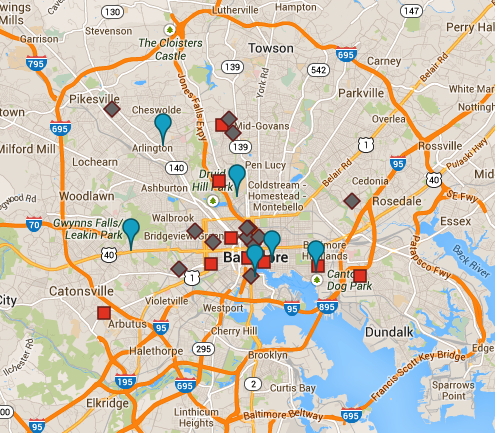 The turn to spatial history has been aided by the explosion of digital mapping tools. While there are many options for mapping out there (including HistoryPin as described by Aaron Cowan in a History@Work post earlier this year), one look at the projects being completed by leaders in the field like the Stanford Visualization Lab is both inspiring and terrifying. Read More