This past Sunday, June 10, the right-wing Corporation 11 de Septiembre held an homage to the dead dictator Augusto Pinochet under the auspices of a documentary screening at the iconic Teatro Caupolican in Santiago Centro. That day it was answered and challenged in sometimes violent ways by diverse sectors of society and weeks before when many of Santiago’s notably non-violent human rights organizations and sites of memory maneuvered to use legal and political recourse to prevent a ceremony that celebrated a leader infamous for overseeing an era of human rights violations. Read More
This is a personal letter. It is personal because I came to Chile to write and participate in the history of the museum project “National Stadium, National Memory,” whose aim is “the material establishment of national memory in respect… to the Concentration Camp… in 1973.” Read More
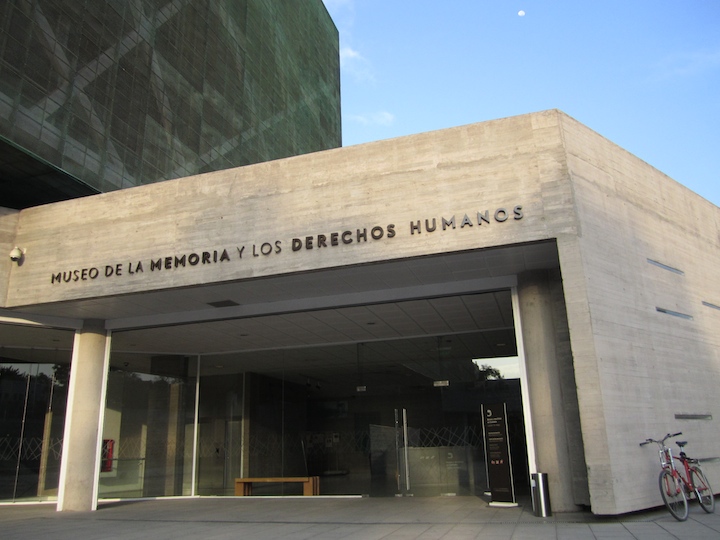
Since my September arrival in Chile, the Museum of Memory and Human Rights has become a common ground for my historical work, with handfuls of visits to its Center of Documentation for conversations and conferences, and the permanent exhibit. Although not a physical or recovered site connected to human rights violations, it sits squarely in the memory landscape of Chile, a barely-born institution that has made waves since its 2010 inauguration under then-President Michele Bachalet. Read More
The Southern landscape and many other parts of the United States remain pockmarked with state historical markers that demand reinterpretation or removal. One state historical marker noting the failure of New Orleans’ 17th Street Canal in the aftermath of Hurricane Katrina demonstrates that Louisiana has landed on the right side of this history. Read More
NCPH/OAH Annual Conference, Milwaukee, April 20, 2012
Panelists discussed specific ways historians can think about and contribute to solutions about climate change. Chair Phil Scarpino (IUPUI) began by asking, “Why should historians talk about the future? Read More
We have an ever-growing body of scholarship about how and why historic sites are created, but a panel today focuses on what happens when they close. Chaired by NPS Ranger Chuck Arning of the Blackstone River Valley National Heritage Corridor and featuring panelists Barbara Franco (Gettysburg Seminary Ridge Museum), Bob Beatty (American Association for State & Local History), Sheila Kirshbaum, Tsongas Industry History Center), and Bruce Beesley (Indiana State Museum & Historic Sites), the panel will offer ideas and best practices for making the best out of bad times. Read More
In Chile between 1973 and 1990, according to the 2004 National Commission on Political Imprisonment and Torture (The Valech Report), 1,132 sites were utilized as centers of detention, torture, and extermination. They ranged from hospitals and soccer stadiums to police precincts and private houses. Read More
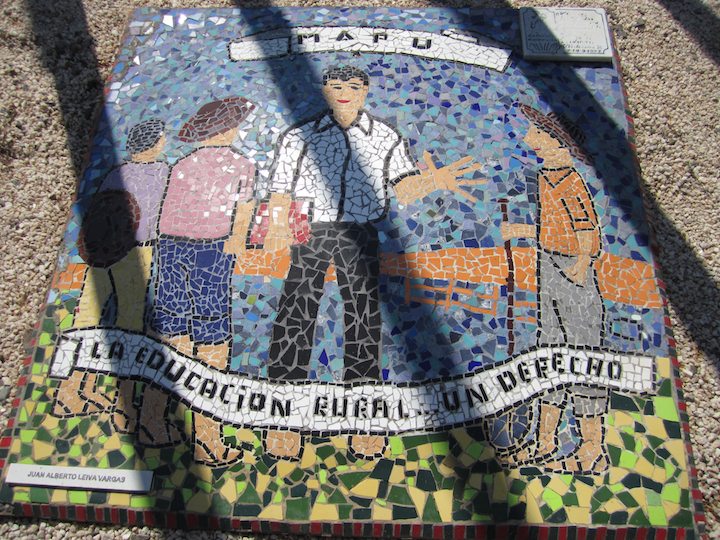
Raúl Lazo liked to ride horses. Luis Gaete worked with his hands in the fields. Juan Leiva believed rural education was a right. José Castro had a red tractor. Juan Leonardo, president of the Association of the Relatives of the Disappeared and Executed Detainees of Paine (AFDD-Paine), explained on a sunny countryside morning that this was a principal point of Memorial Paine: to (re)humanize those community members who fell victim to Pinochet’s repression in the rural region for which the memorial is named. Read More
Bike culture in Santiago de Chile has boomed in recent years, and today bicycles are veritable mainstays throughout the city. The reasons are many: an uptick in Chileans’ environmental consciousness, skyrocketing public transport prices and the slashing of services, and most importantly, according to the folks at Bicicultura, the cultural dissociation between bicycles and poverty. Read More
The Connecticut Coordinating Committee for the Promotion of History (CCCPH) has followed the AHA’s announcement of the “Tuning” project to establish core competencies in history with great interest. We believe this project will provide faculty with the time and resources to reflect on the essential skills of history and applaud the AHA’s attention to education. Read More
Sign Up to Receive News and Announcements Emails from NCPH
You may unsubscribe or change your preferences at anytime by emailing [email protected] Cavanaugh Hall 127, 425 University Blvd., Indianapolis, IN 46202-5140 (317) 274-2716 [email protected]