The New York Times blog recently posted a piece about the recent AHA conference in New Orleans. Touching briefly on panels about horses and trash in history, the author pauses momentarily to describe a discussion about “The Public Practice of History in a Digital Age.” Read More
Doing public programs is never easy, but it is the most immediate and rewarding way to engage directly with your audience. This past semester, the Cooperstown Graduate Program’s oral history project experimented with a new type of public program. Taking our cue from the statewide “Community Conversations” sponsored by the New York Council for the Humanities, which also provided funding for our project, we decided to use our large archive of oral histories as the basis for a series of dialogues about important environmental topics. Read More
In the course of moving Ruskin College, the trade union and labour movement college founded in central Oxford in 1899, from its prime location to a site on the outskirts of the city, the college has been re-branded and much of its archive destroyed or dispersed to other institutions. Read More
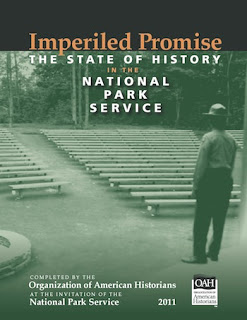
Last Friday, November 2, 2012, National Park Service personnel, public historians, academics, and graduate students from the Northeast met at the Massachusetts State Archives in Boston to discuss the Organization of American Historians’ recent report Imperiled Promise: The State of History in the National Park Service (2011). Read More
I got my first sense of how present the Mormon past is in Salt Lake City on the shuttle ride from the airport to the convention center where the American Association for State and Local History conference was taking place. The friendly woman in the seat behind me explained that she and her family were in town for the semi-annual Mormon general conference, and pointed out that you can still see the sweep of the founders’ vision in the extraordinary four- or even six-lane width of most of the major streets. Read More
“I am from a small agrarian town in northeastern Pennsylvania – just south of Binghamton, New York and north of Scranton, Pennsylvania,” is what I told people in Boston when I first moved to New England to start graduate school in 2008. Read More
NOTE: This post is part of a new and, we hope, semi-regular series in which public history educators share insights and observations about their use of “classic” texts in the public history classroom.
—
Michel Rolph Trouillot, historian, anthropologist, Haitian intellectual and University of Chicago professor, died in July at age 63. Read More
There are two sides sides to historic preservation. On one side preservationists work to save places, using community character and history to enhance the quality of living through transportation, smart growth, and sustainability. On the other we are seen as obstructionist, the party of “no,” and a limiting factor to the development and modernization of what a community wants to accomplish. Read More
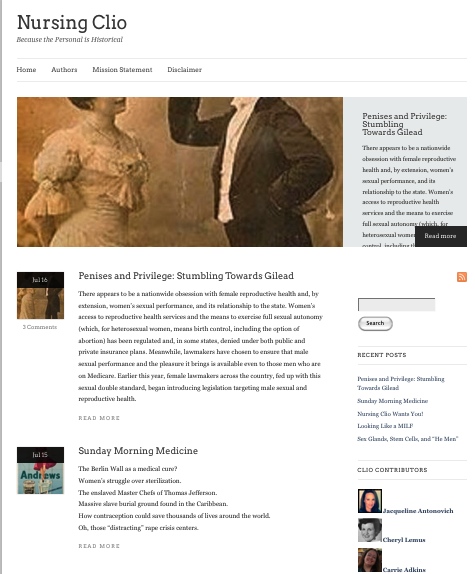
Nursing Clio is a collaborative blog project that ties historical scholarship to present-day political, social, and cultural issues surrounding gender and medicine. Men’s and women’s bodies, their reproductive rights, and their health care are often at the center of political debate and have also become a large part of the social and cultural discussions in popular media. Read More
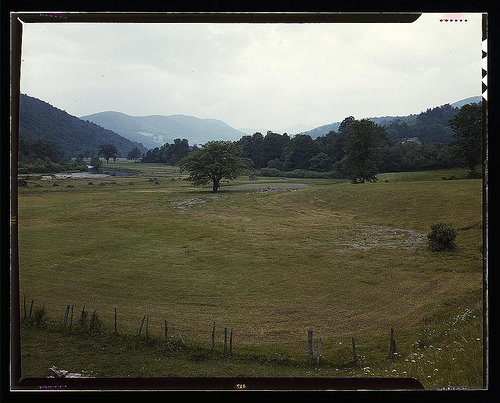
In addition to the photos that have accompanied Zach McKiernan’s “Letters from Chile” series this spring, there have been many more that we didn’t post with the articles, but which we’re including here in a visual addendum to the series. All are by the author unless otherwise noted. Read More
Sign Up to Receive News and Announcements Emails from NCPH
You may unsubscribe or change your preferences at anytime by emailing [email protected] Cavanaugh Hall 127, 425 University Blvd., Indianapolis, IN 46202-5140 (317) 274-2716 [email protected]




 The New York Times blog recently posted a piece about the recent AHA conference in New Orleans. Touching briefly on panels about horses and trash in history, the author pauses momentarily to describe a discussion about “The Public Practice of History in a Digital Age.” Read More