Editor’s Note: This piece continues a series of posts related to the Guantánamo Public Memory Project, a collaboration of public history programs across the country to raise awareness of the long history of the US naval base at Guantánamo Bay (GTMO) and foster dialogue on its future.Read More
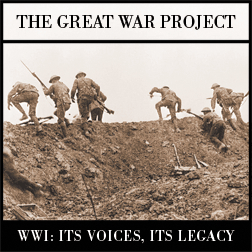
That was all that a young man shopping recently at a farmers market in Santa Monica, California, could say about World War I. He’s not alone. Most Americans seem to know very little about the war, which somehow has gotten lost in our collective memory about our past. Read More
I learned about Museum Selfie Day on Facebook just a couple of days before the event. I made a mental note and visited the Harvard Museum of Natural History on January 22. The results were silly and less skillful than I’d anticipated. Read More
Public historians are communicators. We tweet, blog, analyze, interpret, and document events for a variety of different publics. We make connections, linking widespread evidence into a single narrative.
It is that skill set that we are looking for at “Energy Efficiency + Climate Change: A Conversation with the National Trust for Historic Preservation” on Thursday from 8:30-10 a.m. Read More
Sustainability is an increasingly attractive concept that resonates across disciplines and many facets of public life. A quick Google search turns up over 69 million results, including “sustainable development,” “sustainable seafood,” “sustainable performance,” “sustainable capitalism,” “sustainable travel,” and my favorite, “sustainable dance club.” Read More
EDITOR’S NOTE: This post as it originally appeared on March 10 was a draft version, posted in error. The correct version appears below. We apologize to the authors and to our readers for the confusion.
Picture, for a moment, children of all ages loose in your museum; free to grab, change, move, and build with whatever their hands happen to come across. Read More
Like many community museums, we’ve had a difficult time encouraging and maintaining a young adult audience. We know that members of generation Y love information, history, museums, and artifacts. We also know that members of generation Y sometimes like to focus more on presentation style, technology, and media than on content. Read More
Unlike corporations that use historical images as a marketing strategy, museums, archives, libraries, and national historic sites are caretakers of history whose goal is not to distract from serious investigation but rather to promote it. We want people to understand context, to ask questions, and to dig deeper into sources. Read More
Suppose you’d never heard of @HistoryinPics, and I told you that a new social media account had grown to more than a million followers by featuring a different historical image in its feed every couple of hours.
As a public historian, you might be intrigued. Read More
I am a sucker for the drama of the Olympics. Yet while watching the ongoing Winter Games in Sochi, Russia, I have been struck once again by the continuous invocation of the past during the Olympics and–at the same time–the limited historical consciousness exhibited by the International Olympic Committee, national organizing bodies, corporate sponsors, and host cities. Read More
Sign Up to Receive News and Announcements Emails from NCPH
You may unsubscribe or change your preferences at anytime by emailing [email protected] Cavanaugh Hall 127, 425 University Blvd., Indianapolis, IN 46202-5140 (317) 274-2716 [email protected]