How are public history and environmental history connected?
As this year’s liaison between the National Council on Public History’s Annual Meeting in Monterey and the annual Conference of the American Society for Environmental History in San Francisco, I am tasked with this question. Read More
I am generally not a fan of sound-bite history. In this age of information overload and attention deficits, however, I suppose we must consider ways of packaging history in short, audio-visual formats in order to reach a larger public audience. Richard Heinberg’s Post Carbon Institute video, “The Ultimate Roller Coast Ride,” is a worthy effort in this regard. Read More
Ironbound Community Corporation, a non-profit community organization in Newark, New Jersey, which celebrates its 45th anniversary in 2014, began working on an archive in 2011, partnering with the New Jersey Council for the Humanities. ICC’s unique environmental justice history, which gained it an early national reputation, is important to its city, state, and the country at large. Read More
Editor’s Note: This piece continues a series of posts related to the Guantánamo Public Memory Project, a collaboration of public history programs across the country to raise awareness of the long history of the US naval base at Guantánamo Bay (GTMO) and foster dialogue on its future. Read More
For most of my experience as a public-historian-in-training, I did not often think about the arts in any purposeful way. I played in an orchestra from elementary school through college, have a not-so-secret love for musicals (my roommates are probably tired of hearing me sing Disney songs in the shower!), Read More
It was a June morning when I got out of my car and walked towards the barbed wire and concrete of the Danville Correctional Center, a medium-security men’s prison in central Illinois. The guards behind the plate-glass windows cleared me through the six mechanical locked doors to enter the facility. Read More
This summer I prepared to facilitate a series of introductory public history workshops for fellow students in my graduate history program at Princeton. In thinking about how to present a range of formats and venues for public history, I planned to highlight alternatives to the usual, institution-hosted projects–an important message on a hidebound campus such as mine. Read More
I’ve written before about differences I see between education and engagement as strategies (and goals) for programming at cultural sites. Two features crucial to making programs “engaging” as well as “educational” are:
The inclusion of activities that encourage visitors to use multiple senses and their full concentration, freeing the mind from other thoughts and distractions; and
Information or activities that cause some type of positive change in individuals beyond their visit to the site.
One of the biggest challenges public history educators face is managing community partnerships. Such partnerships offer rich learning experiences for both undergraduate and graduate students, but they often entail numerous complications, which may lead some students and instructors to seek to avoid them altogether. Read More
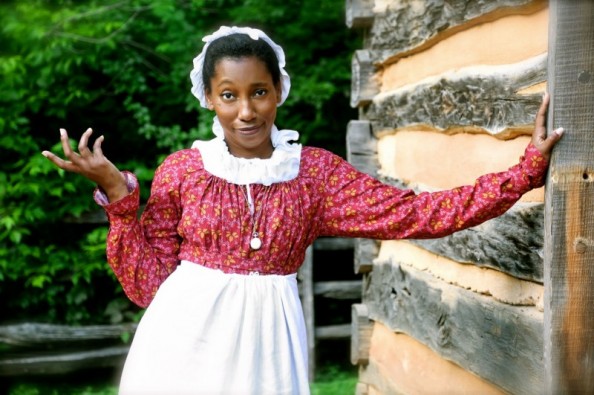
“Ask a Slave” is a brand-spanking new comedy web series that is going viral in certain circles. In the series (just two episodes at time of writing; there will be six total), actress/comedienne/NYU grad Azie Mira Dungey portrays the character “Lizzie Mae” who is supposed to be an enslaved housemaid for America’s founding couple–George and Martha Washington. Read More
Sign Up to Receive News and Announcements Emails from NCPH
You may unsubscribe or change your preferences at anytime by emailing [email protected] Cavanaugh Hall 127, 425 University Blvd., Indianapolis, IN 46202-5140 (317) 274-2716 [email protected]