Editor’s note: This is the fifth in a series of posts on deindustrialization and industrial heritage commissioned by The Public Historian, expanding the conversation begun with the November 2017 special issue on the topic.
In the late nineteenth century, Cape Breton, the island on Canada’s east coast at the northern tip of the province of Nova Scotia, was rich in coal and ripe for resource extraction. Read More
Public history education is exploding, with new graduate and undergraduate programs appearing every year–or so it seems. The National Council on Public History has long supported the professionalization of public history education by developing best practices documents for public history programs and other resources for educators. Read More
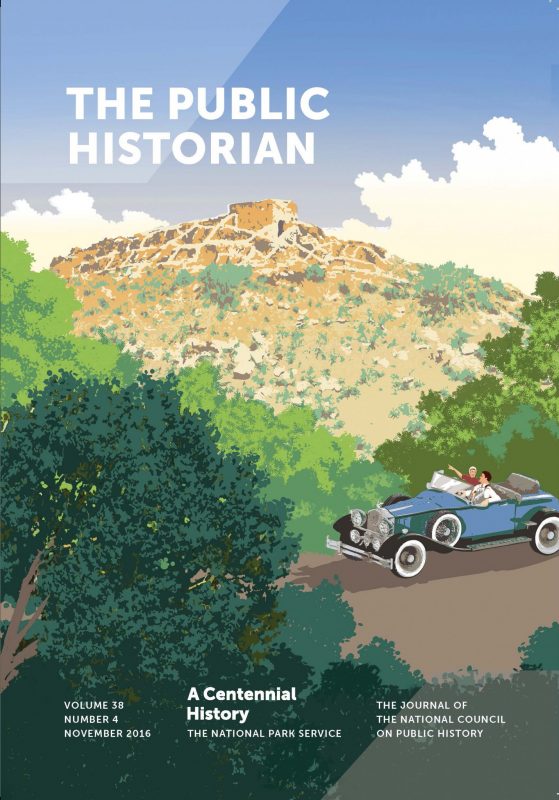
Editor’s note: This is the third of a series of blog posts commissioned by The Public Historian on the topic of history and the interpretation of climate change in the national parks, extending the conversation on history in the national parks during this centennial year begun in its November 2016 issue.Read More
Editor’s note: This is the second of a series of blog posts commissioned by The Public Historian on the topic of history and the interpretation of climate change in the national parks, extending the conversation on history in the national parks during this centennial year begun in its November 2016 issue.Read More
Editor’s note: This is the first of a series of blog posts commissioned by The Public Historian on the topic of history and the interpretation of climate change in the national parks, extending the conversation on history in the national parks during this centennial year begun in its November 2016 issue. Read More
On October 15, 1966, President Lyndon B. Johnson signed the National Historic Preservation Act (NHPA) into law and formally established historic preservation as a priority of the federal government. Since that time, individuals and communities across the nation have used the structures and powers it established, such as the National Register, state and tribal preservation offices, and the Section 106 review process, to both draw attention to important and threatened places significant to our local, state, and national stories and to preserve those places so that future generations will also be able to connect with the stories that they hold. Read More
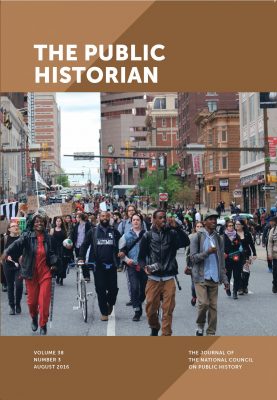
Editor’s note: We publish TPH editor James Brooks’s introduction to the August 2016 issue of The Public Historian. This digital version of the piece differs slightly from the print edition. The entire issue is available online to National Council on Public History members.Read More
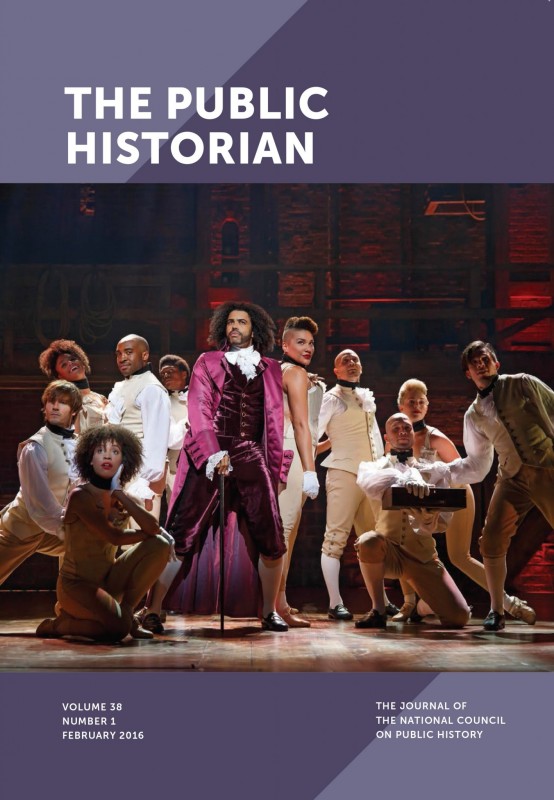
This blog published four responses to the piece, including one by Annette Gordon-Reed, who wrote that my review was an expression of “our duty to use what we know of history and culture to comment” on artistic explorations of the past. Read More
Editor’s note: We publish TPH editor James Brooks’s introduction to the May 2016 issue of The Public Historian. This digital version of the piece differs slightly from the print edition. The entire issue is available online to National Council on Public History members.Read More
Sign Up to Receive News and Announcements Emails from NCPH
You may unsubscribe or change your preferences at anytime by emailing [email protected] Cavanaugh Hall 127, 425 University Blvd., Indianapolis, IN 46202-5140 (317) 274-2716 [email protected]




 Editor’s note: We publish TPH editor
  Editor’s note: We publish TPH editor James Brooks’s introduction to the August 2016 issue of The Public Historian. This digital version of the piece differs slightly from the print edition. The
  In the four months since