Turn to the sixth page of the 2013 Program of the American Historical Association and you will spot a genial turn of phrase: “the malleable PhD.” It refers to the idea—already engrained in the practice of public history—that graduate training need not limit one to a tenure-track teaching career. Read More
In our last History@Work post, we charted the recent burst of academic public history jobs in the past few years. This year’s job market has continued the trend, with thirty jobs seeking either major or minor public history specialties posted on the Academic Wiki. Read More
This is an initial post in a series to discuss the genesis of the idea for the “What Employers Seek in Public History Graduates” session at the 2013 National Council on Public History meeting in Ottawa. Session panelists will share their thoughts on the topic in entries in the coming weeks. Read More
During the fall 2012 semester, I taught the third iteration of my undergraduate research seminar “Preserving Places, Making Spaces in Baltimore” for the Department of American Studies at UMBC. The class is designed to expose students to historical documentation skills as well as business practices that can be used in the non-profit world. Read More
In Part 1 of this post, participants in a Northwest History Network professional development program called Who Hires Consulting Historians? talked about some of the “soft skills” that employers look for. Part 2 is an additional excerpt from the discussion. You can hear a podcast of the entire program here. Read More
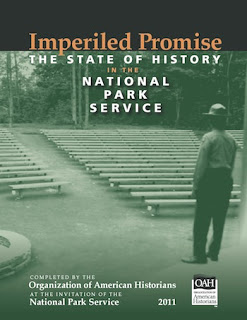
Last Friday, November 2, 2012, National Park Service personnel, public historians, academics, and graduate students from the Northeast met at the Massachusetts State Archives in Boston to discuss the Organization of American Historians’ recent report Imperiled Promise: The State of History in the National Park Service (2011). Read More
~ Annie Cullen and Rachel Boyle, graduate students in Public History at Loyola University Chicago, are the creators of Public History Ryan Gosling, a blog that pairs the popular “Hey Girl” meme with public history theory. The project has reached over 60,000 people and stimulated meaningful conversation in various corners of the Internet. Read More
I’ve been thinking about failure and public history. Failure—and mistakes more generally—aren’t concepts we like to consider. The word is intertwined with feelings of shame and humiliation, private emotions which are the antithesis of the public nature of public history. Many people’s impulse is to hide failure or “spin” it, the clichéd strategy of “making lemons out of lemonade.” Read More
Sign Up to Receive News and Announcements Emails from NCPH
You may unsubscribe or change your preferences at anytime by emailing [email protected] Cavanaugh Hall 127, 425 University Blvd., Indianapolis, IN 46202-5140 (317) 274-2716 [email protected]




 Turn to the sixth page of the 2013 Program of the American Historical Association and you will spot a genial turn of phrase: “the malleable PhD.” It refers to the idea—already engrained in the practice of public history—that graduate training need not limit one to a tenure-track teaching career. Read More