I am generally not a fan of sound-bite history. In this age of information overload and attention deficits, however, I suppose we must consider ways of packaging history in short, audio-visual formats in order to reach a larger public audience. Richard Heinberg’s Post Carbon Institute video, “The Ultimate Roller Coast Ride,” is a worthy effort in this regard. Read More
Ironbound Community Corporation, a non-profit community organization in Newark, New Jersey, which celebrates its 45th anniversary in 2014, began working on an archive in 2011, partnering with the New Jersey Council for the Humanities. ICC’s unique environmental justice history, which gained it an early national reputation, is important to its city, state, and the country at large. Read More
I’ve written before about differences I see between education and engagement as strategies (and goals) for programming at cultural sites. Two features crucial to making programs “engaging” as well as “educational” are:
The inclusion of activities that encourage visitors to use multiple senses and their full concentration, freeing the mind from other thoughts and distractions; and
Information or activities that cause some type of positive change in individuals beyond their visit to the site.
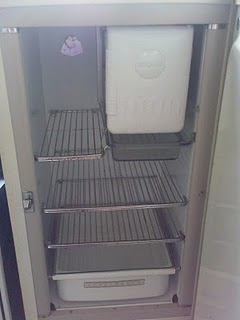
I teach a course in material culture studies, so I am in the habit of using historic artifacts to think about our changing relationship with the environment. But nothing made this lesson clearer to me than a 1950s Hotpoint refrigerator.
When I acquired the refrigerator it was over 50 years old and looked it–there were dents, scratches, and rust decorating its exterior. Read More
Public historians have long engaged with environmental topics and environmental historians to explore the long-term material effects of the decisions, actions, and conceptions of people in the past. As we move toward the 2014 NCPH conference, with its theme of “Sustainable Public History,” this is a good moment to take stock of some of those disciplinary conversations and to think about how to move them forward in a time of accelerating environmental challenges and crises. Read More
Was I the only one who noticed this? There was an eerie similarity between Michael Arad’s “Reflecting Absence” memorial in the footprint of the Twin Towers and the virally-circulating AP photo of seawater rushing into the foundations of new skyscrapers at the World Trade Center construction site during Hurricane Sandy’s storm surge last week. Read More
“I am from a small agrarian town in northeastern Pennsylvania – just south of Binghamton, New York and north of Scranton, Pennsylvania,” is what I told people in Boston when I first moved to New England to start graduate school in 2008. Read More
Around the time that I took on my current position with The Trustees of Reservations, the organization made an internal change: our historic resources department became the cultural landscapes department, our historic resources staff the cultural resources staff. Why was this significant? Read More
There are two sides sides to historic preservation. On one side preservationists work to save places, using community character and history to enhance the quality of living through transportation, smart growth, and sustainability. On the other we are seen as obstructionist, the party of “no,” and a limiting factor to the development and modernization of what a community wants to accomplish. Read More
Sign Up to Receive News and Announcements Emails from NCPH
You may unsubscribe or change your preferences at anytime by emailing [email protected] Cavanaugh Hall 127, 425 University Blvd., Indianapolis, IN 46202-5140 (317) 274-2716 [email protected]