Editor’s Note: This piece continues a series of posts related to the Guantánamo Public Memory Project, a collaboration of public history programs across the country to raise awareness of the long history of the US naval base at Guantánamo Bay (GTMO) and foster dialogue on its future. Read More
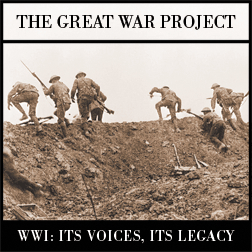
That was all that a young man shopping recently at a farmers market in Santa Monica, California, could say about World War I. He’s not alone. Most Americans seem to know very little about the war, which somehow has gotten lost in our collective memory about our past. Read More
In December 2013, an African American man was detained by Decatur, Georgia, police after he was seen leaving his home. An officer issued a suspicious person alert based on the “reasonable articulable suspicion” premise–the legal basis for many states’ “stop and frisk” laws. Read More
Ironbound Community Corporation, a non-profit community organization in Newark, New Jersey, which celebrates its 45th anniversary in 2014, began working on an archive in 2011, partnering with the New Jersey Council for the Humanities. ICC’s unique environmental justice history, which gained it an early national reputation, is important to its city, state, and the country at large. Read More
When I was researching the The Politics of Public Memory: Tourism, History, and Ethnicity in Monterey, California (State University of New York Press, 1993) in the late 1980s, I was deeply affected by the disparity between the haves and have-nots in Monterey. Read More
The newruskinarchives database website has recently been launched in response to the destruction last year of most of the archive of student records at Ruskin College, the historic trade union and labour movement college in Oxford.
There was much press coverage of the scandal and widespread criticism of the actions of the (now former) Principal, Audrey Mullender. Read More
In July 1963, tens of thousands of visitors flocked to Gettysburg, Pennsylvania, to commemorate the 100th anniversary of the battle widely touted as the turning point of the American Civil War. Despite the profusion of toy souvenirs and 19th-century garb, the fact that this anniversary coincided with heightened street confrontation over civil rights, increased international condemnation of racial injustices in the US, and shifts in Cold War politics did not go unnoticed. Read More
Editor’s Note: This piece continues a series of posts related to the Guantánamo Public Memory Project, a collaboration of public history programs across the country to raise awareness of the long history of the US naval base at Guantánamo Bay (GTMO) and foster dialogue on its future. Read More
Editor’s Note: This piece continues a series of posts related to the Guantánamo Public Memory Project, a collaboration of public history programs across the country to raise awareness of the long history of the US naval base at Guantánamo Bay and foster dialogue on its future. Read More
I do not know how many of the learned people who follow this forum know that 40 years ago today the United States government—and to point political fingers at political figures: President Richard Nixon, Secretary of State Henry Kissinger, and CIA Director Richard Helms—actively and illegally supported a bloody military coup that overthrew the democratically elected government in Chile. Read More
Sign Up to Receive News and Announcements Emails from NCPH
You may unsubscribe or change your preferences at anytime by emailing [email protected] Cavanaugh Hall 127, 425 University Blvd., Indianapolis, IN 46202-5140 (317) 274-2716 [email protected]