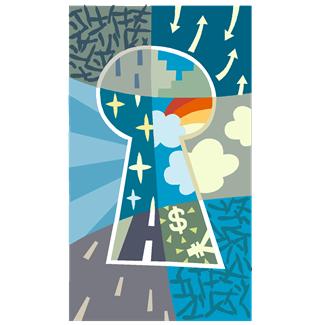
You never know where history might pop up. This Underground Railroad panel is part of U-Haul’s “Venture across America and Canada” SuperGraphics program, which features a different design for each of the 50 states and 12 provinces and territories. While many focus on technological, natural, and even supernatural wonders, several are history-themed, and many, like the Ontario entry, also feature extensive web pages. Read More
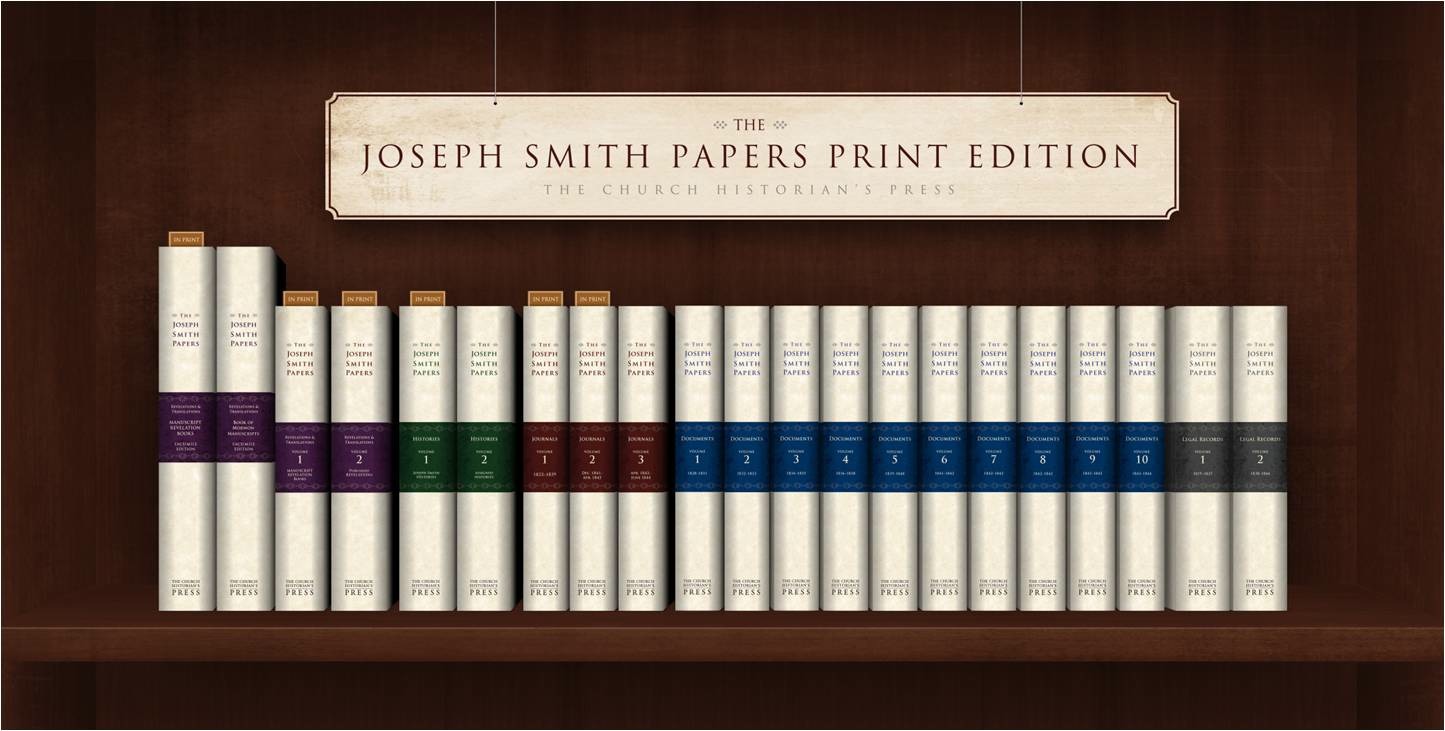
Historians working on the Joseph Smith Papers have to navigate a balancing act between our various audiences—much like those who do contract history work. For the most part, the project has succeeded in its attempts to be balanced. In a review of the first volume of the Journals series in the journal Documentary Editing, Kenneth Minkema, executive editor of the Works of Jonathan Edwards, declared, “Readers need not raise a skeptical eyebrow when they see this edition is produced by LDS members and printed by an LDS press.” Read More
MNopedia is a new born-digital, open-access encyclopedia of Minnesota. It is a project of the Minnesota Historical Society, one of the largest and oldest historical societies in the nation. Funding so far has come from a special statewide fund established in 2008 by the taxpayers of Minnesota, the Arts and Cultural Heritage Fund (ACHF), a portion of which is specifically dedicated to projects that preserve Minnesota’s historical and cultural heritage. Read More
In my years as a historical consultant, I did several projects for agencies such as the National Park Service and the U.S. Army Corps of Engineers. Much like the church for which I now work, these agencies are interested in their past, but also are sensitive to criticisms that have been levied against them by opposing groups, such as environmental organizations. Read More
In the 1950s, South Carolina embarked on a massive statewide building spree in an effort to provide “separate but equal” schools for its African American and white students. Hundreds of new elementary and high schools in the Modern style sprung up across the state. Read More
Some time ago, I had the opportunity of hearing a presentation by Daniel Walker Howe, a historian who won the 2008 Pulitzer Prize for his book What Hath God Wrought: A History of the United States, 1815-1848. In the course of the seminar, Howe made a plea for academic historians to stop ignoring the general public in their work, declaring that it was time for historians to stop talking only to each other and to engage the larger public. Read More
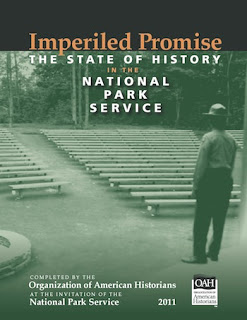
Last Friday, November 2, 2012, National Park Service personnel, public historians, academics, and graduate students from the Northeast met at the Massachusetts State Archives in Boston to discuss the Organization of American Historians’ recent report Imperiled Promise: The State of History in the National Park Service (2011). Read More
Public history has been at the forefront of democratizing historical knowledge and utilizing nontraditional modes of inquiry—from oral history to personal archives—since its inception. In that time, it—we—have substantially affected the larger practice of history in the academy.[1] But, to vastly oversimplify, the promises and possibilities of the digital have risen as a challenge to all historians to rethink how we disseminate our work and, at the same time, to spur conversations that question and critique the role of technology in the 21st century. Read More
I got my first sense of how present the Mormon past is in Salt Lake City on the shuttle ride from the airport to the convention center where the American Association for State and Local History conference was taking place. The friendly woman in the seat behind me explained that she and her family were in town for the semi-annual Mormon general conference, and pointed out that you can still see the sweep of the founders’ vision in the extraordinary four- or even six-lane width of most of the major streets. Read More
Sign Up to Receive News and Announcements Emails from NCPH
You may unsubscribe or change your preferences at anytime by emailing [email protected] Cavanaugh Hall 127, 425 University Blvd., Indianapolis, IN 46202-5140 (317) 274-2716 [email protected]