This is a personal letter. It is personal because I came to Chile to write and participate in the history of the museum project “National Stadium, National Memory,” whose aim is “the material establishment of national memory in respect… to the Concentration Camp… in 1973.” Read More
Beloved community activist Bob Moses once asked a family living in the Mississippi Delta, “How do you build and organize a community?” He was answered, “By throwing a ball into your neighbor’s yard; that way you have to cross the fence and engage in a dialogue with them. Read More
In Chile between 1973 and 1990, according to the 2004 National Commission on Political Imprisonment and Torture (The Valech Report), 1,132 sites were utilized as centers of detention, torture, and extermination. They ranged from hospitals and soccer stadiums to police precincts and private houses. Read More
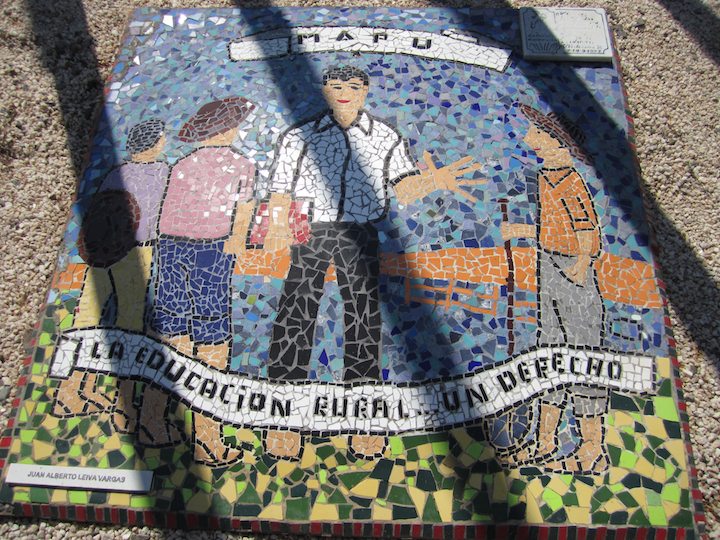
Raúl Lazo liked to ride horses. Luis Gaete worked with his hands in the fields. Juan Leiva believed rural education was a right. José Castro had a red tractor. Juan Leonardo, president of the Association of the Relatives of the Disappeared and Executed Detainees of Paine (AFDD-Paine), explained on a sunny countryside morning that this was a principal point of Memorial Paine: to (re)humanize those community members who fell victim to Pinochet’s repression in the rural region for which the memorial is named. Read More
Horns honk, people push, patience is short; Santiago is teeming with activity, a modern metropolis in the throes of summer heat. But 45 minutes from the city’s center sits a quiet place of rest, respite, and reflection, filled with the pleasant sounds of birds in birch trees and the smell of roses and bougainvillea. Read More
Bike culture in Santiago de Chile has boomed in recent years, and today bicycles are veritable mainstays throughout the city. The reasons are many: an uptick in Chileans’ environmental consciousness, skyrocketing public transport prices and the slashing of services, and most importantly, according to the folks at Bicicultura, the cultural dissociation between bicycles and poverty. Read More
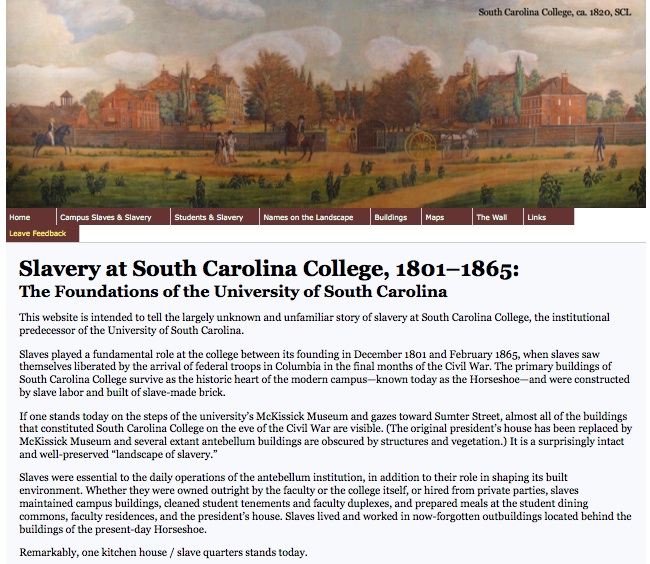
The Public History Program at the University of South Carolina welcomes comments on a new website, “Slavery at South Carolina College, 1801–1865: The Foundations of the University of South Carolina.” While many American colleges and universities in recent years have been researching their historical connections to the institution of racial slavery, this website is the first public acknowledgement of the role of slaves and slavery at the antebellum college that became the University of South Carolina. Read More
[EDITOR’S NOTE: Zachary McKiernan, a doctoral student in public history at the University of California/Santa Barbara and a regular reviewer for “Off the Wall,” is working on a series of “Letters from Chile,” based on his current dissertation research. Read More
I have been traveling to and from Chile for various reasons at various times since 2005, acquiring a deep appreciation for the country and its cultural subtleties and social mores—to say nothing of a Spanish accent steeped in Chilean slang. But if I have learned anything since my initial days, it is that one must exercise sensitivity when approaching the dictatorial past. Read More
Sign Up to Receive News and Announcements Emails from NCPH
You may unsubscribe or change your preferences at anytime by emailing [email protected] Cavanaugh Hall 127, 425 University Blvd., Indianapolis, IN 46202-5140 (317) 274-2716 [email protected]




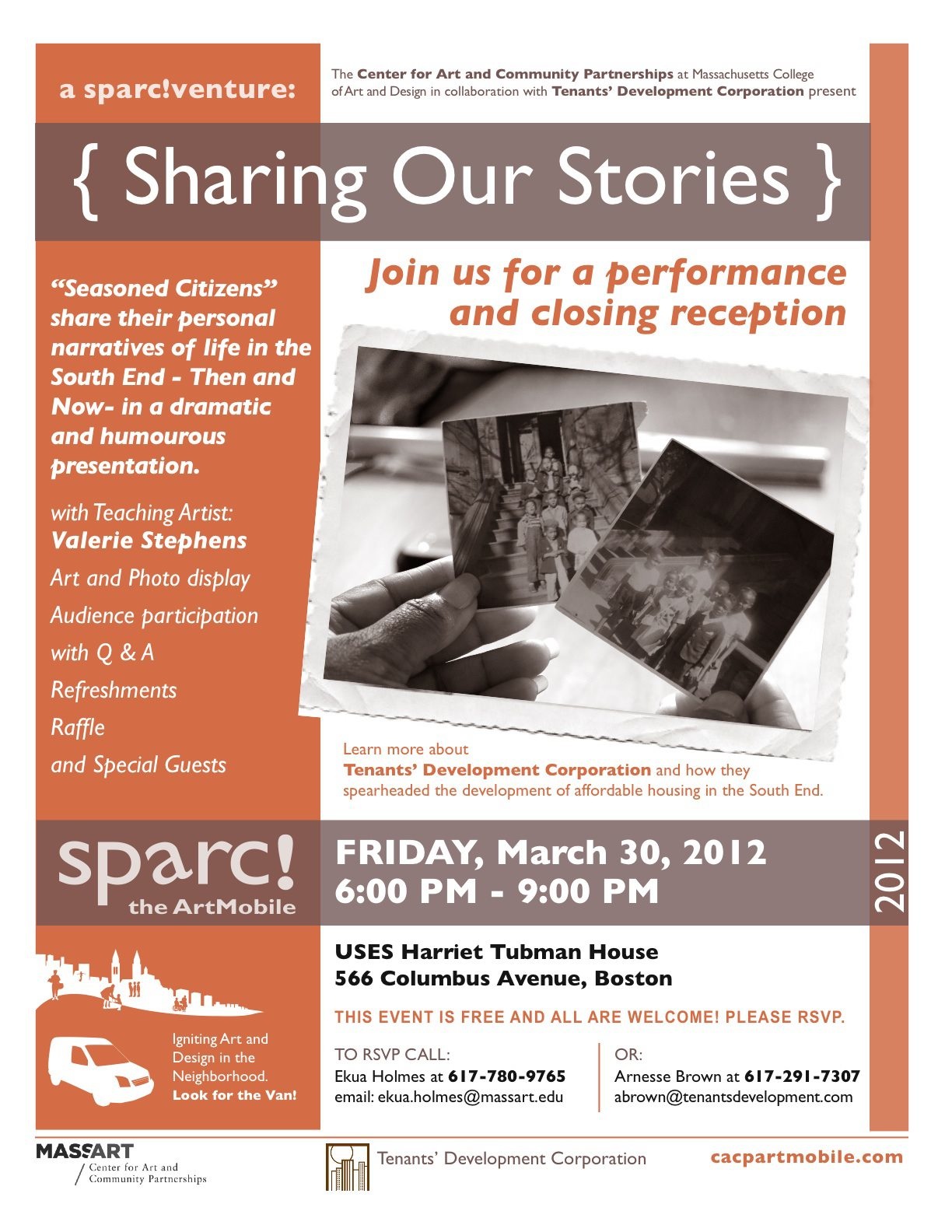 I recently attended an event in Boston’s South End neighborhood called “Sharing our Stories: The Power of Place,” a sensational evening sponsored by the Tenants Development Corporation, Inc. and the Center for Art and Community Partnershipsat the Massachusetts College of Art and Design. Read More