In her 1903 work Social Culture, Annie Randall White encouraged unmarried women over the age of thirty to form domestic partnerships with each other: “Many of our ‘bachelor girls’ live together and are the happiest people imaginable.” [1]
Like “public history,” “public humanities” is a concept that seems relatively straightforward but quickly proves hard to define and explain (especially when we are asked to do so by our friends and relatives). Read More
From around the field this week: Day of Public Humanities on May 9; nominate US public historians for Herbert Feis Award; journal issue seeks contributions on “Museums in the Age of Trump”; biographers converge on Boston; new issues of oral history, city museums journals Read More
In 2015, the Tibbits Opera House in Coldwater, Michigan began a two-year project called “Cultural Exchange Coldwater” aimed at sharing the stories and experiences of Arab American residents in this southwest Michigan city. Arab Americans, most of Yemeni heritage, are the largest minority population in this largely white city of 10,000. Read More
This past fall in Houston, the National Trust for Historic Preservation gathered for its annual conference, PastForward. One of the key features of the conference is a series of marquee presentations called TrustLive. TrustLive presentations often feature a single speaker followed by a short panel discussion on a topic relevant to today’s preservation movement. Read More
From around the field this week: Awards for US western scholars and midwestern museum professionals; archivists’ marketplace of ideas in Oregon; placeless memories in York; and registration now open for summer institute on digital humanities in Texas. Read More
Repeat photography is the practice of photographing a specific location at two or more points in time. It is a powerful visual resource for scientific study and education in forest and landscape management. To take advantage of this technology, the Forest History Society (FHS) recently started the Repeat Photography Project. Read More
James Oliver Horton, emeritus professor of history and American Studies at the George Washington University, died on February 20, 2017 after a long illness.
Jim Horton was, at heart, a teacher. A former student, Dr. Laurel Clark Shire, recalled his tremendous faith that “all history, no matter how sophisticated or basic, could be presented to any audience.” Read More
Sign Up to Receive News and Announcements Emails from NCPH
You may unsubscribe or change your preferences at anytime by emailing [email protected] Cavanaugh Hall 127, 425 University Blvd., Indianapolis, IN 46202-5140 (317) 274-2716 [email protected]




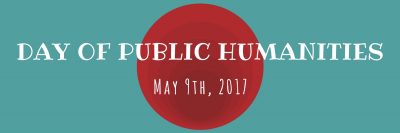 Like “public history,” “public humanities” is a concept that seems relatively straightforward but quickly proves hard to define and explain (especially when we are asked to do so by our friends and relatives).
  From around the field this week: Day of Public Humanities on May 9; nominate US public historians for Herbert Feis Award; journal issue seeks contributions on “Museums in the Age of Trump”; biographers converge on Boston; new issues of oral history, city museums journals