I learned about Museum Selfie Day on Facebook just a couple of days before the event. I made a mental note and visited the Harvard Museum of Natural History on January 22. The results were silly and less skillful than I’d anticipated. Read More
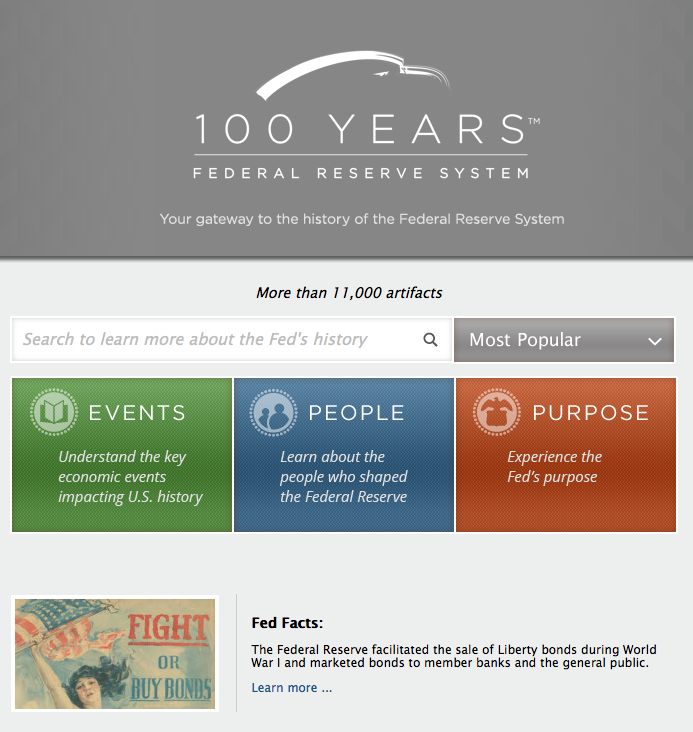
Dec. 23, 2013, marked the 100th anniversary of the passage of the Federal Reserve Act, which established the Federal Reserve as the central bank for the United States. Financial panics and bank runs plagued the nation during the 19th and early 20th centuries, and the Panic of 1907 prompted many Americans to call for a central bank. Read More
Unlike corporations that use historical images as a marketing strategy, museums, archives, libraries, and national historic sites are caretakers of history whose goal is not to distract from serious investigation but rather to promote it. We want people to understand context, to ask questions, and to dig deeper into sources. Read More
Suppose you’d never heard of @HistoryinPics, and I told you that a new social media account had grown to more than a million followers by featuring a different historical image in its feed every couple of hours.
As a public historian, you might be intrigued. Read More
Ironbound Community Corporation, a non-profit community organization in Newark, New Jersey, which celebrates its 45th anniversary in 2014, began working on an archive in 2011, partnering with the New Jersey Council for the Humanities. ICC’s unique environmental justice history, which gained it an early national reputation, is important to its city, state, and the country at large. Read More
There is a misconception in our American culture that young professionals are proficient at using technology. However, discussions among historians, humanists, and prospective employers indicate that many public history graduates are entering the field without practical training or consideration of the complex intersection between digital technology and public history. Read More
The depression of 1893 hit the Atlanta Suburban Land Company hard. The Georgia firm, founded in 1890 to develop residential subdivisions along a new six-mile streetcar line linking downtown Atlanta with Decatur to the east, had bought nearly 2,000 acres in its first two years in business. Read More
The digital humanities are rapidly transforming both the discipline of history and the pedagogy of public history. When I taught my first Introduction to Public History course six years ago, my course schedule had two weeks devoted to digital history; today it occupies more than half of the semester. Read More
Beginning tomorrow, the weekly Public History News Update (PHNU) emails from the National Council on Public History will be sent only to NCPH members. So if you’re a non-member who has found these regular messages a handy source of public history information, now is a good time to think about joining NCPH. Read More
Sign Up to Receive News and Announcements Emails from NCPH
You may unsubscribe or change your preferences at anytime by emailing [email protected] Cavanaugh Hall 127, 425 University Blvd., Indianapolis, IN 46202-5140 (317) 274-2716 [email protected]