“There was this young man from West Philadelphia,” our tour guide, Barbara, told the group of us assembled on hard plastic chairs. “He was a tagger, a graffiti artist, kept getting in trouble. He finally got sent to jail, and when he got out his girlfriend told him she didn’t want him around their baby anymore. Read More
In addition to the photos that have accompanied Zach McKiernan’s “Letters from Chile” series this spring, there have been many more that we didn’t post with the articles, but which we’re including here in a visual addendum to the series. All are by the author unless otherwise noted. Read More
In 2004, I completed my MA graduate program in History with a sure sense of what was going to happen next: teach for a year, and then start a Ph.D. program. By 2007, I wasn’t sure if a Ph.D. was in my future and started exploring other options. Read More
At the outset of this series, I proposed two seemingly simple questions in hopes of unpacking the complexity of sites of memory and how they “engage citizens in human rights issues” vis-à-vis the past. What type of historic work is taking place? Read More
This past Sunday, June 10, the right-wing Corporation 11 de Septiembre held an homage to the dead dictator Augusto Pinochet under the auspices of a documentary screening at the iconic Teatro Caupolican in Santiago Centro. That day it was answered and challenged in sometimes violent ways by diverse sectors of society and weeks before when many of Santiago’s notably non-violent human rights organizations and sites of memory maneuvered to use legal and political recourse to prevent a ceremony that celebrated a leader infamous for overseeing an era of human rights violations. Read More
Founded in 1984 to combat graffiti, Philadelphia’s Mural Arts Program replaced tags and bubble letters with larger-than-life murals that were designed collaboratively by community members and professional artists, becoming one of the most influential public arts organizations of its kind. Since that time, more than 3,000 murals—memorializing famous Philadelphians, commemorating immigration and migration stories, and acknowledging groups ranging from veterans to people with disabilities—have put a visual face on many neighborhoods, identifying and crystallizing their unique character.[1] Read More
As a professor at a community college, I am typically absorbed in teaching, focused on my classes and students–as many as five classes and upwards of 120-150 students per semester. But recently, I’ve been increasingly engaged in public history by way of developing an associate’s degree program in the field and through involvement in other activities, including the utilization of a restored 1808 manor house on campus, which was the centerpiece of a horse farm when the region had a thriving thoroughbred racing and breeding industry. Read More
This is a personal letter. It is personal because I came to Chile to write and participate in the history of the museum project “National Stadium, National Memory,” whose aim is “the material establishment of national memory in respect… to the Concentration Camp… in 1973.” Read More
Nearly thirty years ago, a small collective of twenty- and thirty-something LGBT activists in Chicago founded the Gerber/Hart Library and Archives. Active in the Gay Liberation movement and other social protest movements of the 1960s and 1970s, these grassroots historians collected LGBT materials and reclaimed the past as part of the production of a proud political identity. Read More
Sign Up to Receive News and Announcements Emails from NCPH
You may unsubscribe or change your preferences at anytime by emailing [email protected] Cavanaugh Hall 127, 425 University Blvd., Indianapolis, IN 46202-5140 (317) 274-2716 [email protected]




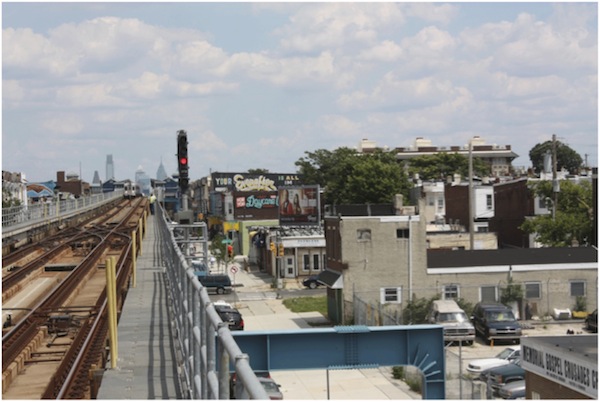 “There was this young man from West Philadelphia,” our tour guide, Barbara, told the group of us assembled on hard plastic chairs. “He was a tagger, a graffiti artist, kept getting in trouble. He finally got sent to jail, and when he got out his girlfriend told him she didn’t want him around their baby anymore. Read More