Since my September arrival in Chile, the Museum of Memory and Human Rights has become a common ground for my historical work, with handfuls of visits to its Center of Documentation for conversations and conferences, and the permanent exhibit. Although not a physical or recovered site connected to human rights violations, it sits squarely in the memory landscape of Chile, a barely-born institution that has made waves since its 2010 inauguration under then-President Michele Bachalet. Read More
Our public history program works to help students develop an understanding of the role that history can play in fostering a sense of community identity. We also train students to practice as responsible and ethical professionals. Service-learning opportunities provide the core pedagogical method for both these goals. Read More
In the two years that I have worked in my current position as Western Region Engagement Manager with The Trustees of Reservations, I get asked one question more than any other: “What is an Engagement Manager?”
Although I have a short response–“I oversee any point of contact between our properties and the public”–the frequency with which I encounter the question motivates me again and again to contemplate the work of “engagement” and what it really means to “manage” it at our sites. Read More
“The one thing I’ve learned from this experience about public history is that I don’t want anything to do with it.”
Charlotte–a talented, enthusiastic graduate student in our History department–made this statement as she was reflecting on her first foray into the realm of public history. Read More
NCPH/OAH Annual Conference, Milwaukee, April 20, 2012
Panelists discussed specific ways historians can think about and contribute to solutions about climate change. Chair Phil Scarpino (IUPUI) began by asking, “Why should historians talk about the future? Read More
The program committee for next year’s NCPH conference in Ottawa has issued its call for proposals (below). It’s not too early to start thinking about our 2013 gathering in Ottawa – proposals are due July 15!
“Knowing your Public(s)—The Significance of Audiences in Public History”
2013 Annual Meeting, National Council on Public History
Ottawa, Ontario, Canada, April 17-20, 2013
In 2013 the National Council on Public History will meet at the Delta Ottawa City Centre, in the heart of downtown Ottawa, Canada, with Canada’s Parliament buildings, historic ByWard market, national museums and historic sites, river trails, the UNESCO World Heritage Site of the Rideau Canal, and numerous cafes and restaurants within easy walking distance. Read More
Beloved community activist Bob Moses once asked a family living in the Mississippi Delta, “How do you build and organize a community?” He was answered, “By throwing a ball into your neighbor’s yard; that way you have to cross the fence and engage in a dialogue with them. Read More
Today’s “Lightning Talk” session was a great one-hour showcase for about a dozen digital projects:
Larry Cebula: Spokane Historical, a web and mobile platform for telling stories of Spokane and Eastern Washington, developed by the Public History program at Eastern Washington University using Curatescape and Omeka
Cathy Stanton: History@Work (hey, that’s us)
Bobby Allen: University of North Carolina/Chapel Hill’s Digital Innovation Lab, an American-Studies-based project that is developing, testing, and documenting best-practice models for faculty and graduate student work in public humanities that integrates community engagement, digital technologies, and interdisciplinary inquiry
Andrew Hurley: the Virtual City Project, which uses three-dimensional imaging technologies to create electronic representations of lost historic landscapes
Trevor Owens: Viewshare, a free web application developed by the Library of Congress for curators and collections managers to create and customize unique, dynamic online views of images from their collections.
We have an ever-growing body of scholarship about how and why historic sites are created, but a panel today focuses on what happens when they close. Chaired by NPS Ranger Chuck Arning of the Blackstone River Valley National Heritage Corridor and featuring panelists Barbara Franco (Gettysburg Seminary Ridge Museum), Bob Beatty (American Association for State & Local History), Sheila Kirshbaum, Tsongas Industry History Center), and Bruce Beesley (Indiana State Museum & Historic Sites), the panel will offer ideas and best practices for making the best out of bad times. Read More
Historians, preservationists, government officials, and elected representatives stand at a frontier of possibility and hope, or anguish and betrayal as the nation enters the sesquicentennial years of the Civil War. This proposed roundtable, in cooperation with audience members, dares to imagine how our Civil War battlefields should be managed for the next 150 years. Read More
Sign Up to Receive News and Announcements Emails from NCPH
You may unsubscribe or change your preferences at anytime by emailing [email protected] Cavanaugh Hall 127, 425 University Blvd., Indianapolis, IN 46202-5140 (317) 274-2716 [email protected]




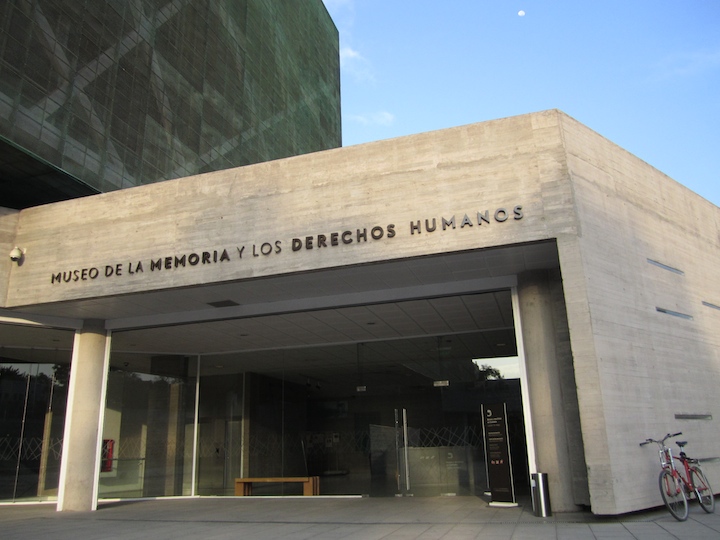 Since my September arrival in Chile, the Museum of Memory and Human Rights has become a common ground for my historical work, with handfuls of visits to its Center of Documentation for conversations and conferences, and the permanent exhibit. Although not a physical or recovered site connected to human rights violations, it sits squarely in the memory landscape of Chile, a barely-born institution that has made waves since its 2010 inauguration under then-President Michele Bachalet. Read More