Public historians who enjoy a regular paycheck find certain aspects of consulting curious–none more so than the issue of money. I expect that this curiosity also extends to the ranks of those who are considering a leap in the consulting direction. Read More
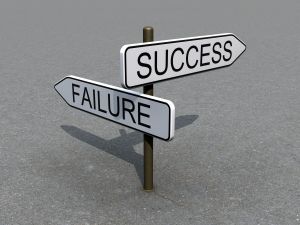
I’ve been thinking about failure and public history. Failure—and mistakes more generally—aren’t concepts we like to consider. The word is intertwined with feelings of shame and humiliation, private emotions which are the antithesis of the public nature of public history. Many people’s impulse is to hide failure or “spin” it, the clichéd strategy of “making lemons out of lemonade.” Read More
Before the mid-1960s, except for domestics and a few other exceptions, South Decatur was exclusively white. It was a place Decatur’s blacks knew to not be after sundown. They knew that they were welcome to clean houses, cut lawns, and bag groceries there during the day but the suburban dream being lived by their white employers was beyond reach. Read More
Prompted by Adina Langer, my colleague on the NCPH Consultants Committee and one of the editors of this blog, I am going to relate how I have pursued a research agenda independently of my work for clients. Admittedly, my career as a historical consultant has been somewhat eclectic, but I hope that you may find at least some of what I have to say applicable to your own situation. Read More
What if after you bought the historic house of your dreams in a neighborhood that billed itself as “historic” you found out that your definition of historic clashed with that of your new neighbors? As a historian with nearly thirty years under my belt in history and historic preservation, that’s precisely what happened in 2011 when my wife and I bought a small Craftsman-influenced home in a Decatur, Georgia, neighborhood. Read More
Around the time that I took on my current position with The Trustees of Reservations, the organization made an internal change: our historic resources department became the cultural landscapes department, our historic resources staff the cultural resources staff. Why was this significant? Read More
What kind of knowledge and skills do you need in order to create a viable historical consulting practice?
Becoming a consultant requires more than simply deciding to work for yourself. It requires the shift to a new mindset, because as an independent consultant you become a creature of the marketplace. Read More
I was fortunate enough to be invited to China earlier this summer for a conference on urban planning, historic preservation, and cultural development. With so much hyperbole in the press about the “Chinese century,” I expected to be swept away by the stunning economic growth of the Asian giant. Read More
I am pleased to report that the National Council on Public History has now signed a formal Interim Agreement to house the editorial offices of The Public Historian at the University of California, Santa Barbara (UCSB) through December 2014.
Sign Up to Receive News and Announcements Emails from NCPH
You may unsubscribe or change your preferences at anytime by emailing [email protected] Cavanaugh Hall 127, 425 University Blvd., Indianapolis, IN 46202-5140 (317) 274-2716 [email protected]