Editor’s note: The National Historic Preservation Act will turn 50 in 2016. While this is a time to celebrate how the NHPA has transformed public history, it’s also an appropriate moment to convene a national conversation on the Act, its legacy, and its future.Read More
In the final post of this series, we consider how the “Slavery at South Carolina College” project has been received. The most important effects have been local. The website has acted as a catalyst that has increased awareness of slavery at the university and an interest among students and faculty in speaking plainly about that history. Read More
As well as trying to convey a sense of these enslaved workers as people, the team of graduate students working on the “Slavery at South Carolina College” website also sought to connect this history to the physical landscape. Read More
Written on the landscape of the University of South Carolina is an untold yet well-documented story of slavery. Enslaved people constructed the buildings of the university’s antebellum predecessor, South Carolina College, attended to the wants of white students and faculty, and performed countless tasks essential to running the college. Read More
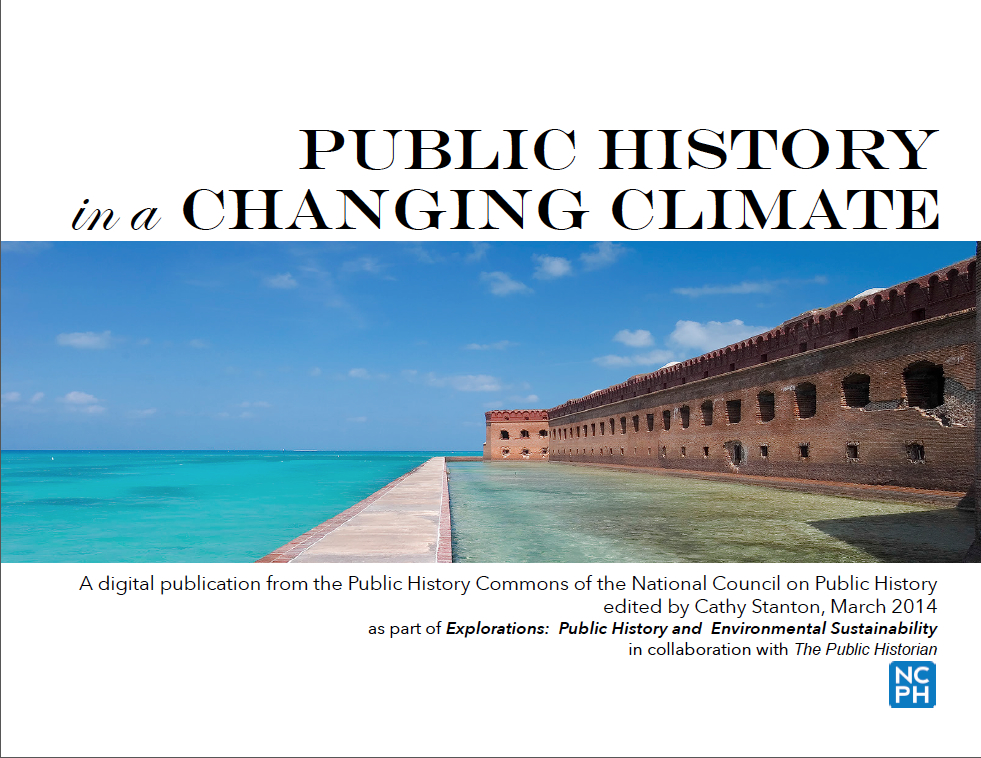
Conference-goers at the National Council on Public History’s annual meeting in Monterey, California, last March were given an advance look at a digital anthology compiled to complement the conference theme of “Sustainable Public History.” Containing some materials from this blog, some from previous conference working groups focusing on environmental issues, and some new materials, the anthology, called “Public History in a Changing Climate,” was an effort to gather together some of the threads of what is still an emergent discussion within the field. Read More
Editor’s Note: In “What I’ve Learned Along the Way: A Public Historian’s Intellectual Odyssey,” outgoing NCPH President Bob Weyeneth issued a call to action to public historians to include the public more fully in our work by “pulling back the curtain” on our interpretive process-how we choose the stories we tell.Read More
Editor’s Note: In “What I’ve Learned Along the Way: A Public Historian’s Intellectual Odyssey,” outgoing NCPH President Bob Weyeneth issued a call to action to public historians to include the public more fully in our work by “pulling back the curtain” on our interpretive process—how we choose the stories we tell.Read More
Editor’s Note: In “What I’ve Learned Along the Way: A Public Historian’s Intellectual Odyssey,” outgoing NCPH President Bob Weyeneth issued a call to actionto public historians to include the public more fully in our work by “pulling back the curtain” on our interpretive process—how we choose the stories we tell. Read More
Editor’s Note: In “What I’ve Learned Along the Way: A Public Historian’s Intellectual Odyssey,” outgoing NCPH President Bob Weyeneth issued a call to action to public historians to include the public more fully in our work by “pulling back the curtain” on our interpretive process—how we choose the stories we tell.Read More
Editor’s Note: In “What I’ve Learned Along the Way: A Public Historian’s Intellectual Odyssey,” outgoing NCPH President Bob Weyeneth issued a call to action to public historians to include the public more fully in our work by “pulling back the curtain” on our interpretive process—how we choose the stories we tell.Read More
Sign Up to Receive News and Announcements Emails from NCPH
You may unsubscribe or change your preferences at anytime by emailing [email protected] Cavanaugh Hall 127, 425 University Blvd., Indianapolis, IN 46202-5140 (317) 274-2716 [email protected]