A little over six years ago, I landed my first museum job. As a newly minted assistant curator, I did what you might imagine curators do. I was responsible for a collection of objects; I conducted research on those artifacts and artworks, I brainstormed new ways of telling their stories, and I developed exhibits. Read More
The following point paper was developed by participants in the Public Historians and Sustainability Working Group, which met in Milwaukee in April 2012. The paper is currently being circulated to the National Council on Public History Board, and the Working Group invites comments on it here as well. Read More
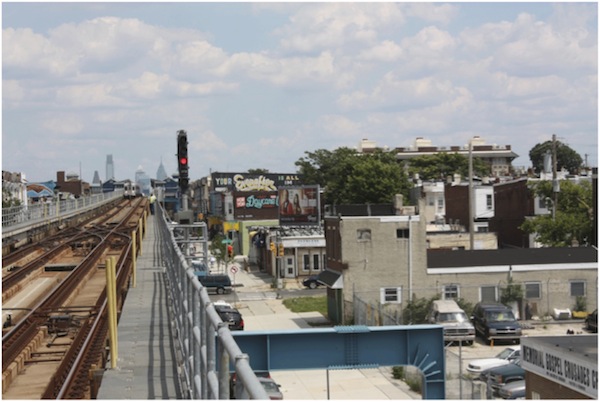
During a slow moment on the Love Letters tour, while the couples snuggle each other casually, I ask Barbara to talk more about the effect of the murals. A nurse by training, she tells me that she sees them as having a public health impact—images of hearts helping people’s hearts—and improving people’s attitudes. Read More
Looking from across the pond, the maturity and scale of public history as a discipline and a sector in the US is a striking phenomenon. The narrative is well-established: the crisis in the academic job market; the emergence of new contexts for historical employment, in preservation, education and regeneration; the entrepreneurship of universities in structuring the supply of skilled professionals through new programmes emphasising workplace skills and experience. Read More
On June 20, 2012 the Northwest History Network, a non-profit organization in Portland, Oregon, hosted a professional development program entitled A Future in Historical Consulting: Is It for You? Four consulting historians sat on a panel and answered a series of questions. Read More
“There was this young man from West Philadelphia,” our tour guide, Barbara, told the group of us assembled on hard plastic chairs. “He was a tagger, a graffiti artist, kept getting in trouble. He finally got sent to jail, and when he got out his girlfriend told him she didn’t want him around their baby anymore. Read More
David Walsh’s article on the History News Network, “Public History’s Great Showing at the 2012 NCPH/OAH Annual Meeting,” observed not only the vitality of public historians within the historical field, but also the unique relationship between public history and digital history. Read More
In addition to the photos that have accompanied Zach McKiernan’s “Letters from Chile” series this spring, there have been many more that we didn’t post with the articles, but which we’re including here in a visual addendum to the series. All are by the author unless otherwise noted. Read More
The National Archives at Kansas City welcomed four local Wikipedians for a Meetup and Scanathon Saturday on June 16, 2012. The meetup theme was “Between the Rivers” and focused on photos and textual holdings related to the Missouri and Mississippi Rivers. Read More
In 2004, I completed my MA graduate program in History with a sure sense of what was going to happen next: teach for a year, and then start a Ph.D. program. By 2007, I wasn’t sure if a Ph.D. was in my future and started exploring other options. Read More
Sign Up to Receive News and Announcements Emails from NCPH
You may unsubscribe or change your preferences at anytime by emailing [email protected] Cavanaugh Hall 127, 425 University Blvd., Indianapolis, IN 46202-5140 (317) 274-2716 [email protected]