Editors’ Note: We publish the editor’s introduction to the May 2026 issue of The Public Historian here. The entire issue is available online to National Council on Public History members and others with subscription access.
Our special issue, “Public History and Labor,” takes a careful look at the work of public historians. Read More
Since the 1970s, community groups—often working alongside professional historians—have created a growing number of public history organizations, including museums, archives, and preservation groups to document, preserve, and share the histories of their communities. Notably, the growth of public history developed in tandem with the growth of Ethnic Studies.Read More
What do cherry blossoms and nuclear reactors have in common? They were among the many topics discussed by the National Council on Public History (NCPH) World War II Home Front Working Group, a three-year collaboration between NCPH and the National Park Service (NPS) that brought together practitioners and scholars working on World War II home front history to make connections and learn from each other.Read More
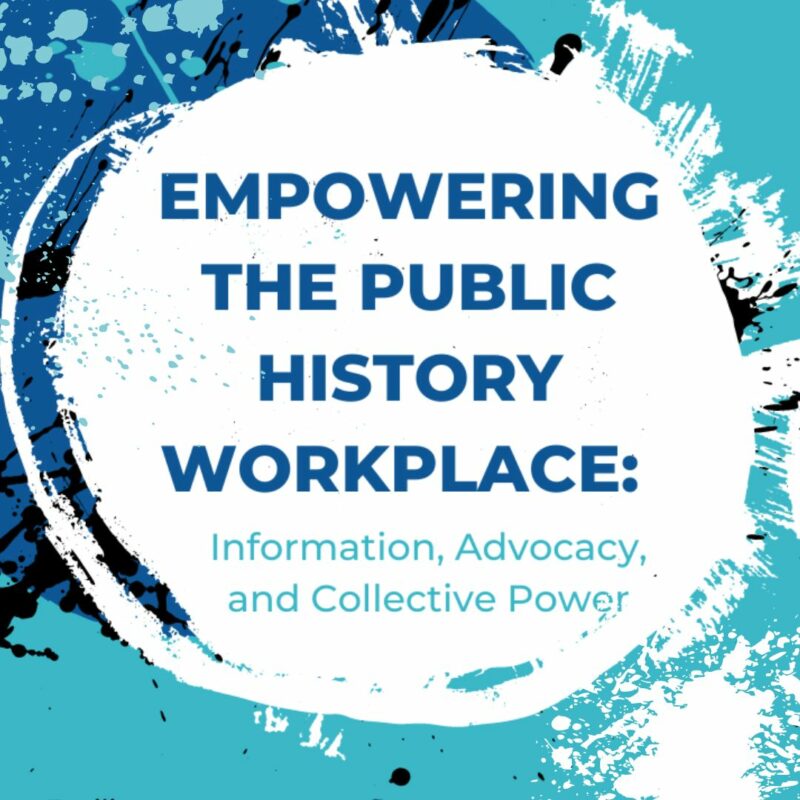
From Amazon and Starbucks unionization drives to the waves of strikes that have roiled higher education in recent months, American workers are thinking critically about labor and moving towards action. Museum and historical site professionals are no different. Projects like Art/Museums Salary Transparency 2019, and Instagram accounts like Museumworkersspeak, and Changethemuseum, have stimulated the conversation among art museum workers, but public historians have been comparatively silent. Read More
Authors’ Note: This is the second of three posts resulting from discussions of our 2019 NCPH annual meeting working group on improving existing National Register nominations. (The first post focused on technical matters.) In this series, we’ll highlight best practices we developed—using our working group member case statements as a starting point—to encourage frequent revisions of National Register nominations.Read More
Authors’ Note: This is the first of three posts resulting from discussions of our 2019 NCPH annual meeting working group on improving existing National Register nominations. In this series, we’ll highlight best practices we developed—using our working group member case statements as a starting point—to encourage frequent revisions of National Register nominations.Read More
“Public History Parents: Leaning In, Opting Out, and Finding a Work-Life Balance” is a working group created in conjunction with the 2020 National Council on Public History (NCPH) annual meeting. It formed to address the unique needs of parents in the public history field. Read More
Authors’ Note: As you may be aware, NCPH annual meeting status has changed. We are planning to proceed with the group’s work, though we are not sure as to format as yet. We will talk with co-facilitators when we have a sense of the remote alternatives and be in communication with NCPH and prospective participants about the plan.Read More
Editors’ Note: This is the second of two posts by leaders of the National Council on Public History (NCPH)’s Committee on Environmental Sustainability. You can get involved by attending the Green Meetings Working Group session on Saturday, March 21, at the annual meeting in Atlanta, Georgia.Read More
Sign Up to Receive News and Announcements Emails from NCPH
You may unsubscribe or change your preferences at anytime by emailing [email protected] Cavanaugh Hall 127, 425 University Blvd., Indianapolis, IN 46202-5140 (317) 274-2716 [email protected]




 From Amazon and Starbucks unionization drives to the waves of strikes that have roiled higher education in recent months, American workers are thinking critically about labor and moving towards action. Museum and historical site professionals are no different. Projects like