Typically, the origins of public history education have been traced either to early twentieth-century applied history programs or to the first named public history program established in the 1970s at the University of California, Santa Barbara. Neither group of founders understood public history as a distinct field. Read More
Several years ago, on a visit to the Levine Museum of the New South in Charlotte, North Carolina, I encountered an exhibit that asked me to participate. No, this was not high tech. No selfies, no QR codes, no downloads, just pencil and paper–yellow sticky notes. Read More
Public historians are occasionally presented with opportunities to engage in projects relevant not just to our local communities, but of immediate importance to the entire country. Last summer, Donald J. Trump’s nomination as the presidential candidate of the Republican Party, combined with the decision to close Atlantic City’s Trump Taj Mahal in the midst of a labor strike, offered me just such an opportunity. Read More
It is Halloween time and ghosts are once again a topic of discussion. Last October works like Tiya Miles’s book Tales from the Haunted South and Sarah Handly-Cousins’s post on “Nursing Clio” argued that popular ghost tours depend on stories that demonize those who suffer. Read More
Hear, Here: Voices of Downtown La Crosse is an audio-documentary project that allows people to hear stories from the past in the exact location where they occurred. The project, which debuted in 2015, trades the traditional historical plaque for mobile phone technology. Read More
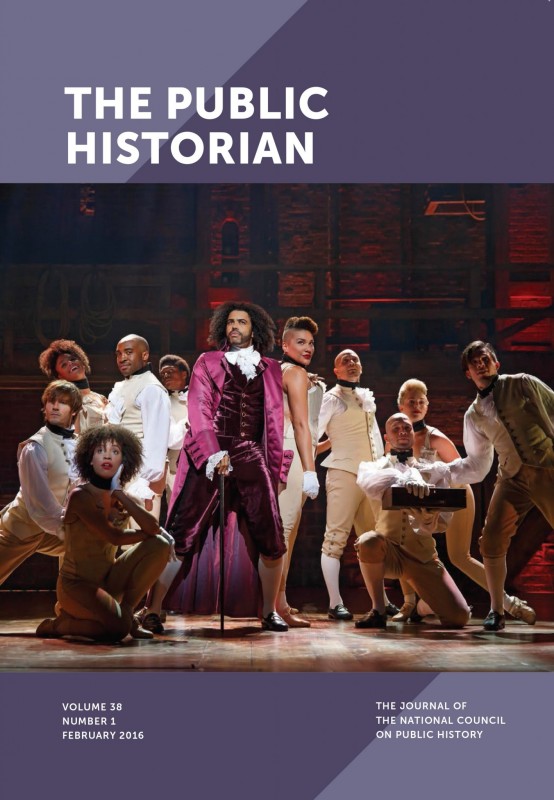
This blog published four responses to the piece, including one by Annette Gordon-Reed, who wrote that my review was an expression of “our duty to use what we know of history and culture to comment” on artistic explorations of the past. Read More
Residents of Washington, D.C.’s Bloomingdale neighborhood are using history to plan for the gentrifying area’s future. Through a process of collaborative research and land use planning, they hope to mitigate the adverse effects of displacement, rising housing costs, and the loss of a sense of community. Read More
Sign Up to Receive News and Announcements Emails from NCPH
You may unsubscribe or change your preferences at anytime by emailing [email protected] Cavanaugh Hall 127, 425 University Blvd., Indianapolis, IN 46202-5140 (317) 274-2716 [email protected]




 In the four months since